PoliticalTests
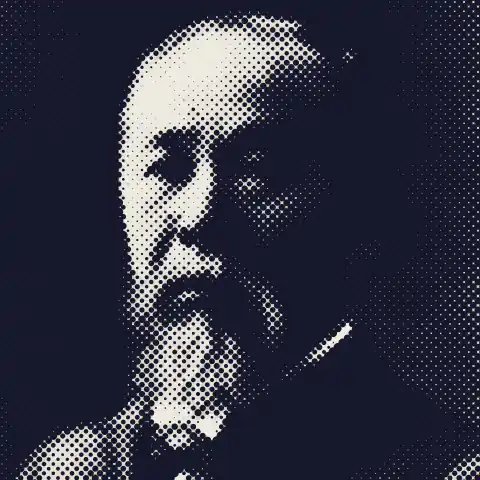
Portrait of Ito Hirobumi
1841-1909Japan

Portrait: Unknown author, Public domain, via Wikimedia Commons

Ito Hirobumi

Prime Minister of Japan (1885-1888, 1892-1896, 1898, 1900-1901) · President of the Privy Council · Founder and first president of the Rikken Seiyukai · Resident-General of Korea (1905-1909)

Meiji statesman who became Japan's first prime minister, oversaw the 1889 constitution and founded the Seiyukai party, and who was assassinated in 1909 after serving as Japan's first Resident-General of Korea.

ECONOMYSTATE AND LIBERTYSOCIETYWORLDOwnershipMarketsWelfareAuthoritySecurityStructureMoralityReligionTechnologyCultureTradeForeign
  • Position
  • Solid, past the ring: second pole
  • Short, inside the ring: first pole
  • Balanced

★ Ito Hirobumi on 12 axes

Share of each pole

Economy

Equality / Markets
  • OwnershipMild: Public
    PublicPrivate
  • MarketsMild: Planned
    PlannedFree
  • WelfareMild: Self-reliant
    SharedSelf-reliant

State and liberty

Liberty / Authority
  • AuthorityModerate: Strong leader
    DemocraticStrong leader
  • SecurityModerate: Order
    LibertyOrder
  • StructureStrong: Central
    LocalCentral

Society

Progress / Tradition
  • MoralityModerate: Traditional
    ProgressiveTraditional
  • ReligionModerate: Religious
    SecularReligious
  • TechnologyModerate: Embrace
    EmbraceCaution
  • CultureModerate: National identity
    MulticulturalNational identity

World

Global / Nation
  • TradeMild: Global
    GlobalProtected
  • Foreign policyModerate: Strength
    CooperationStrength

How we placed it

Judgment calls

Positions summarize typical stances from primary sources and reference works. Where an axis is genuinely contested, the reasoning is below.

Ownership
The Meiji state founded and ran mines, factories and railways while Ito helped build the banking and currency system; scored slightly toward public ownership.
Welfare
The Meiji state spent on industry, education and the military rather than social programs, and no support for redistribution is documented; scored mildly self-reliant.
Authority
Wrote a constitution that kept sovereignty with the emperor and gave the elected Diet limited powers, but later backed the first party cabinet and founded a party; scored toward strong leadership.
Religion
Described the imperial house as the spiritual axis of the nation, filling the role he saw Christianity playing in the West, while the constitution allowed freedom of belief within limits; scored toward religion in public life.
Technology
Studied in Britain, served as Minister of Public Works and championed Western science and industry; scored toward embrace.
Trade
Called Japan a nation of commerce and favored economic cooperation with China over territorial gain; scored mildly toward open trade.
Foreign policy
Negotiated the 1895 Treaty of Shimonoseki and ran the Korean protectorate, but preferred an entente with Russia to the British alliance and at first resisted outright annexation.

Who was Ito Hirobumi?

Ito Hirobumi was born in Choshu domain in 1841 and in 1863 was one of five young men who travelled secretly to Britain to study. After the Meiji Restoration he joined the Iwakura Mission to the United States and Europe and served as Minister of Public Works. He set up the cabinet system in 1885 and became Japan's first prime minister, holding the post four times. He led the drafting of the Constitution of the Empire of Japan, promulgated in 1889, and in 1900 founded the Rikken Seiyukai party. After the 1905 protectorate treaty he became the first Resident-General of Korea. He resigned in June 1909 and was shot dead at Harbin that October by the Korean independence activist An Jung-geun.

Political views

  • Modelled the 1889 constitution on Prussian ideas that kept considerable power with the emperor.

    Source: en.wikipedia.org
  • Held that the constitution was granted by the emperor, who was declared sacred and inviolable and the source of sovereignty.

    Source: ndl.go.jp
  • Backed Japan's first party cabinet in 1898 and founded the Seiyukai in 1900, while insisting that the emperor appoints ministers.

    Source: en.wikipedia.org
  • Favored Western practical science and modern schooling, which he also pressed on Korea in place of Confucian learning.

    Source: en.wikipedia.org
  • Opposed the Anglo-Japanese Alliance and argued for an understanding with Russia instead.

    Source: en.wikipedia.org
  • As Resident-General, forced the abdication of Emperor Gojong in 1907 and the disbanding of the Korean army, and approved the annexation plan in 1909.

    Source: en.wikipedia.org

Legacy

In Japan, Ito is remembered as a chief architect of the modern state: the cabinet, the Privy Council, the peerage and the constitution that governed the country until 1947. Historians have described him as a statesman of knowledge, and his portrait appeared on the 1,000 yen note from 1963 to 1986. Admirers stress his gradualism, his support for party government and his caution about war and annexation. In Korea he is widely seen as a symbol of Japanese imperialism, the official who imposed the protectorate, deposed the emperor and backed harsh measures against armed resistance: Japanese forces fought the Righteous Army uprisings from 1907, and official Japanese statistics recorded about 16,700 Korean deaths by 1910. His assassin, An Jung-geun, is honored there as a national hero. Debate continues over whether Ito's plans for a self-governing Korea under Japan were sincere.

★ Free · 12 Axes Political Test ★

How close are you to Ito Hirobumi?

Take the free 12 Axes test to see your match with Ito Hirobumi and 347 other historical figures, axis by axis.

OptionalWant every axis explained? The Full Political Profile is an optional $9.99 deep dive. See what is inside

FAQ

Ito Hirobumi: questions

What political party was Ito Hirobumi?

Ito founded the Rikken Seiyukai in 1900 and led it until 1903. For most of his career he governed as a Meiji oligarch above parties, appointed by the emperor.

What did Ito Hirobumi do?

He became Japan's first prime minister in 1885, led the drafting of the 1889 Meiji Constitution, negotiated the treaty that ended the First Sino-Japanese War and served as the first Resident-General of Korea.

How did Ito Hirobumi die?

He was shot at Harbin railway station on 26 October 1909 by An Jung-geun, a Korean independence activist who opposed Japanese control of Korea.