 Japan
Who was Nobusuke Kishi?
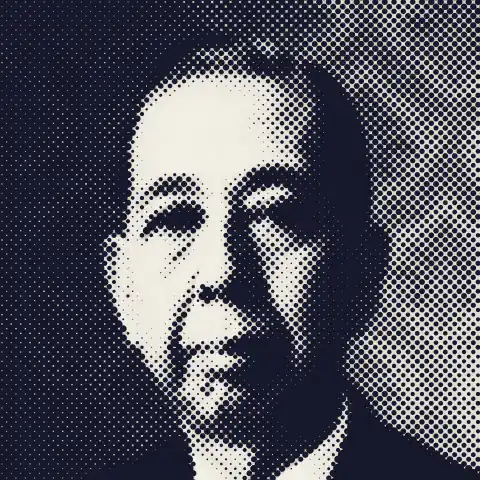
Nobusuke Kishi was born Nobusuke Sato in Yamaguchi Prefecture in 1896 and adopted into the Kishi family; his younger brother Eisaku Sato and grandson Shinzo Abe also became prime minister. A top graduate of Tokyo Imperial University, he joined the commerce ministry and from 1936 directed industrial development in Manchukuo, the Japanese puppet state in northeast China. As minister of commerce and industry under Hideki Tojo he co-signed the 1941 declaration of war. Held at Sugamo Prison as a Class A war crime suspect, he was released untried in 1948, returned to the Diet in 1953 and helped merge the conservative parties into the LDP in 1955. He was prime minister from 1957 until July 1960 and remained in the Diet until 1979.
Political views
Revised the US-Japan Security Treaty in 1960 to correct what his government saw as inequities in the 1951 agreement.
Source: jimin.jpEnacted the National Pensions Law and a Minimum Wage Law, and revised health insurance law toward universal coverage in 1961.
Source: jimin.jpIntroduced a bill in 1958 to expand police powers, then withdrew it after heavy opposition.
Source: en.wikipedia.orgSought for decades to revise the constitution to remove Article 9 and rearm Japan.
Source: en.wikipedia.orgPressed for the release of convicted Class B and C war criminals during his premiership.
Source: en.wikipedia.orgNegotiated war reparations with Southeast Asian countries, including Indonesia in 1958, paid in goods rather than cash.
Source: en.wikipedia.org
Legacy
Supporters credit Kishi with building the Liberal Democratic Party that governed Japan for most of the following decades, with placing the US alliance on a more equal footing and with laying foundations of the pension and health systems. Critics point to his role in Manchukuo, where forced labor was used in industry he directed, and to his place in the cabinet that took Japan into the Pacific War. His handling of the May 1960 treaty vote set off the Anpo protests, the largest in Japan's modern history, and he announced his resignation once the treaty took effect in June 1960; a man with right-wing ties stabbed him shortly before he left office. Scholars have also documented corruption allegations around reparations contracts.