 France
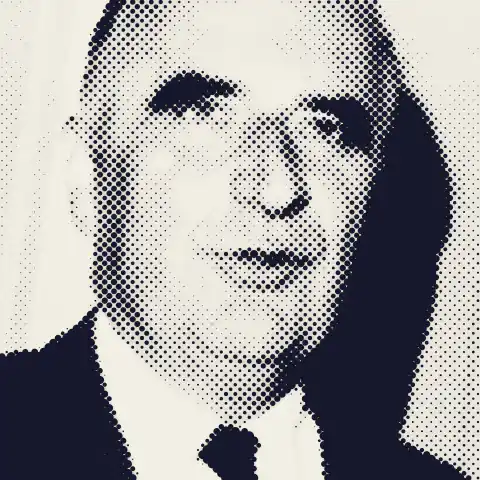
Who was Georges Pompidou?
Georges Pompidou was the son of teachers from the Cantal who studied at the École normale supérieure and taught literature before joining de Gaulle's staff in 1944. He later worked at the Rothschild bank, became director of de Gaulle's private office in 1958 and helped prepare the Fifth Republic's constitution. Appointed prime minister in 1962 although not a member of parliament, he held the post until 1968, steering negotiations with unions and employers during the May 1968 crisis. After de Gaulle resigned, Pompidou won the 1969 presidential election against Alain Poher with about 58 percent of the vote. He died in office in April 1974 from an illness he had kept secret.
Political views
Led the Grenelle negotiations with unions and employers in May 1968, which ended the general strike with large wage rises.
Source: en.wikipedia.orgPursued heavy state investment in cars, steel, telecommunications, nuclear power and aerospace, launching the TGV and Ariane projects.
Source: en.wikipedia.orgHelped relaunch European cooperation at the 1969 Hague Summit, which set terms for British membership and opened work on economic and monetary union.
Source: elysee.frCalled a referendum in April 1972 that approved the entry of Britain, Ireland, Denmark and Norway into the European Community.
Source: en.wikipedia.orgKept the Gaullist line of French autonomy in foreign policy while working with both the United States and the Soviet Union.
Source: elysee.frHis presidency saw the 1970 law against "casseurs", which made organizers of demonstrations liable for violence committed during them.
Source: fr.wikipedia.orgChampioned modern architecture in Paris, including the arts centre at Beaubourg that now bears his name.
Source: en.wikipedia.org
Legacy
Supporters remember Pompidou as the president of the last years of the postwar boom, a pragmatic Gaullist who modernized French industry and opened the European Community to Britain without giving up national independence. The Centre Pompidou keeps his name in Paris. Critics on the left saw his governments as close to business and heavy handed toward protest, pointing to the 1970 anti-casseurs law. Others regretted his urban projects, such as the expressway on the right bank of the Seine and the demolition of the old Les Halles market. His decision to pardon the former collaborator Paul Touvier in 1971 caused a lasting outcry. The secrecy over his illness also led to calls for more openness about presidential health.
In their words
Happy peoples are not noted in history, I therefore hope that historians do not have much to say about my term-of-office