PoliticalTests
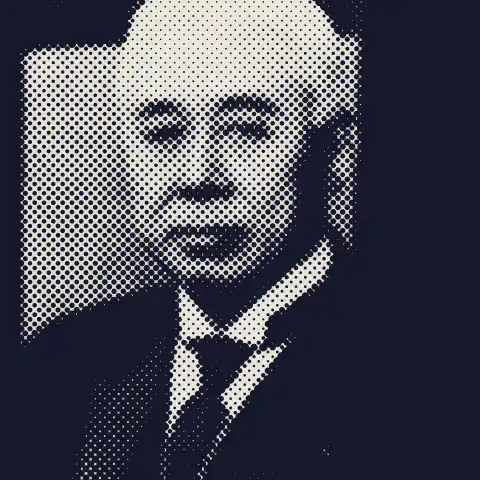
Portrait of Hara Takashi
1856-1921Japan

Portrait: Unknown author, Public domain, via Wikimedia Commons

Hara Takashi

Prime Minister of Japan (1918-1921) · President of the Rikken Seiyukai (1914-1921) · Home Minister (1906-1908, 1911-1912, 1913-1914) · Member of the House of Representatives for Morioka

Seiyukai leader who became Japan's first commoner prime minister in 1918, ran its first full party cabinet, widened access to universities and railways while resisting universal suffrage, and was assassinated in 1921.

ECONOMYSTATE AND LIBERTYSOCIETYWORLDOwnershipMarketsWelfareAuthoritySecurityStructureMoralityReligionTechnologyCultureTradeForeign
  • Position
  • Solid, past the ring: second pole
  • Short, inside the ring: first pole
  • Balanced

★ Hara Takashi on 12 axes

Share of each pole

Economy

Equality / Markets
  • OwnershipMild: Private
    PublicPrivate
  • MarketsMild: Free
    PlannedFree
  • WelfareMild: Self-reliant
    SharedSelf-reliant

State and liberty

Liberty / Authority
  • AuthorityMild: Democratic
    DemocraticStrong leader
  • SecurityModerate: Order
    LibertyOrder
  • StructureMild: Central
    LocalCentral

Society

Progress / Tradition
  • MoralityNo clear record
    ProgressiveTraditional
  • ReligionNo clear record
    SecularReligious
  • TechnologyMild: Embrace
    EmbraceCaution
  • CultureMild: National identity
    MulticulturalNational identity

World

Global / Nation
  • TradeNo clear record
    GlobalProtected
  • Foreign policyModerate: Cooperation
    CooperationStrength

How we placed it

Judgment calls

Positions summarize typical stances from primary sources and reference works. Where an axis is genuinely contested, the reasoning is below.

Ownership
Built his party on close ties with business and on public works rather than state enterprise; scored mildly toward private ownership.
Welfare
Spent on schools, railways and roads after the First World War but introduced no social insurance; scored near the middle.
Authority
Led Japan's first full party cabinet and worked to weaken unelected oligarchs and bureaucrats, yet refused universal male suffrage and used redistricting to secure his majority; scored slightly toward democratic checks.
Security
Met the 1919 March 1st independence movement in Korea with force before turning to milder rule, and resisted the suffrage campaign; scored toward order.
Morality
Little documented about his views on family or social questions; left null.
Religion
Baptized a Catholic, but no documented position on religion in public life; left null.
Culture
His colonial policy aimed at assimilating Korea and Taiwan under civilian rule, while allowing Korean language and history in schools; scored toward national identity.
Trade
No clear documented trade position; left null.
Foreign policy
Joined the League of Nations as a founding member, sought cooperation with the United States, limited military expansion and began the withdrawal from Siberia.

3 axes are marked as no clear record: there is no reasonable basis to place Hara Takashi there, so matching leaves them out.

Who was Hara Takashi?

Hara Takashi, also known as Hara Kei, was born in 1856 near Morioka to a samurai family from a domain that had fought against the Meiji Restoration. He gave up his samurai status, worked as a journalist and diplomat, and joined the Rikken Seiyukai founded by Ito Hirobumi. As Home Minister in several cabinets he built the party's influence over local officials and public works. He became party president in 1914 and, after the 1918 Rice Riots brought down the government, prime minister. As a commoner with no noble title, he was called the commoner prime minister. His party won a large majority in the 1920 election. On 4 November 1921 he was stabbed to death at Tokyo Station by a young railway worker.

Political views

  • Formed Japan's first full party cabinet, made up mainly of elected members of the Diet.

    Source: nippon.com
  • Limited military expansion after the First World War to invest in education, transport and communications, including an ordinance that allowed many private and public universities.

    Source: nippon.com
  • Refused to use his majority to pass universal male suffrage, keeping a tax qualification for voters.

    Source: en.wikipedia.org
  • Lowered the tax qualification for voting from 10 yen to 3 yen in 1919 and moved most seats to single-member districts.

    Source: en.wikipedia.org
  • Answered the March 1st Movement in Korea with force, then appointed a new Governor-General and moved toward civilian rule.

    Source: en.wikipedia.org
  • Took Japan into the League of Nations as a founding member and sought cooperation with the United States.

    Source: nippon.com

Legacy

Admirers see Hara as the founder of party government in Japan, a skilled organizer who moved power from the Meiji oligarchs and the bureaucracy toward elected politicians, and whose spending on universities and branch railways shaped the country for decades. His diary, published under the terms of his will, is a major source on the period. Critics argue that he governed through patronage, rewarding regions that voted for his party, and that he blocked universal suffrage when students, journalists and unions campaigned for it. His colonial policy in Korea began with the violent suppression of the 1919 independence protests. His murder in office was followed by a period of weaker party cabinets.

★ Free · 12 Axes Political Test ★

How close are you to Hara Takashi?

Take the free 12 Axes test to see your match with Hara Takashi and 347 other historical figures, axis by axis.

OptionalWant every axis explained? The Full Political Profile is an optional $9.99 deep dive. See what is inside

FAQ

Hara Takashi: questions

What political party was Hara Takashi?

Hara led the Rikken Seiyukai, the party founded by Ito Hirobumi in 1900. He was its president from 1914 until his death in 1921.

Why was Hara Takashi called the commoner prime minister?

He had given up his samurai status as a young man and held no noble title, so he was the first prime minister without a peerage, unlike the Meiji oligarchs before him.

How did Hara Takashi die?

He was stabbed at Tokyo Station on 4 November 1921 by Nakaoka Kon'ichi, a young railway worker, and died in office.