PoliticalTests
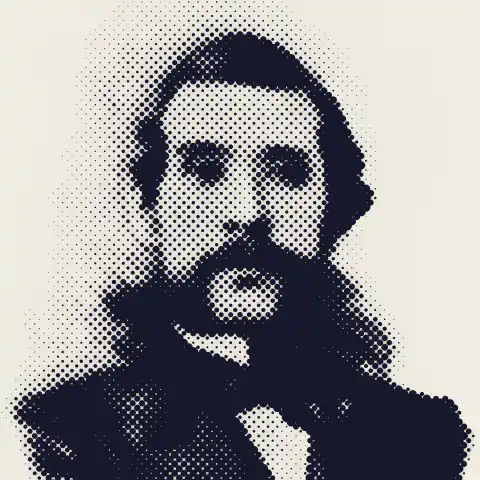
Portrait of Okubo Toshimichi
1830-1878Japan

Portrait: Unknown author, Public domain, via Wikimedia Commons

Okubo Toshimichi

Lord of Home Affairs (Home Minister, 1873-1878) · Minister of Finance (1871-1873) · Leader of the Meiji Restoration from Satsuma · Vice-ambassador of the Iwakura Mission (1871-1873)

Satsuma samurai who helped lead the Meiji Restoration, abolished the feudal domains, built the Home Ministry and a state-led industrial policy, crushed the Satsuma Rebellion and was assassinated in 1878.

ECONOMYSTATE AND LIBERTYSOCIETYWORLDOwnershipMarketsWelfareAuthoritySecurityStructureMoralityReligionTechnologyCultureTradeForeign
  • Position
  • Solid, past the ring: second pole
  • Short, inside the ring: first pole
  • Balanced

★ Okubo Toshimichi on 12 axes

Share of each pole

Economy

Equality / Markets
  • OwnershipMild: Public
    PublicPrivate
  • MarketsModerate: Planned
    PlannedFree
  • WelfareNo clear record
    SharedSelf-reliant

State and liberty

Liberty / Authority
  • AuthorityStrong: Strong leader
    DemocraticStrong leader
  • SecurityStrong: Order
    LibertyOrder
  • StructureStrong: Central
    LocalCentral

Society

Progress / Tradition
  • MoralityMild: Traditional
    ProgressiveTraditional
  • ReligionNo clear record
    SecularReligious
  • TechnologyModerate: Embrace
    EmbraceCaution
  • CultureMild: National identity
    MulticulturalNational identity

World

Global / Nation
  • TradeNo clear record
    GlobalProtected
  • Foreign policyMild: Strength
    CooperationStrength

How we placed it

Judgment calls

Positions summarize typical stances from primary sources and reference works. Where an axis is genuinely contested, the reasoning is below.

Ownership
Led state-directed industrialization through government factories, model enterprises and support for private firms such as Mitsubishi shipping; scored mildly toward public ownership.
Markets
His program of increasing production and promoting industry put the state in charge of building new sectors; scored toward planning.
Welfare
No documented position comparable to modern welfare debates; left null.
Authority
Ran the government as its dominant figure and wanted any assembly to be mainly consultative, with the emperor keeping significant authority; scored strongly toward strong leadership.
Security
Wrote restrictive press and libel laws in 1875 and directed the suppression of the Saga and Satsuma rebellions; scored strongly toward order.
Structure
Helped abolish the feudal domains in 1871 and replace them with centrally appointed prefectures, and built the Home Ministry; scored strongly central.
Morality
A samurai statesman of his time with no documented reformist views on family or gender; scored mildly traditional.
Religion
No clear documented position on religion in public life; left null.
Technology
Returned from the Iwakura Mission convinced that Japan had to adopt Western industry and technology; scored toward embrace.
Trade
Japan's tariffs were then fixed by the unequal treaties, and no separate trade position is documented; left null.
Foreign policy
Opposed the 1873 plan to invade Korea in favor of reform at home, but sanctioned the 1874 expedition to Taiwan; scored near the middle, slightly toward strength.

3 axes are marked as no clear record: there is no reasonable basis to place Okubo Toshimichi there, so matching leaves them out.

Who was Okubo Toshimichi?

Okubo Toshimichi was born in Kagoshima in Satsuma domain in 1830. With Saigo Takamori and leaders from Choshu he helped overthrow the Tokugawa shogunate and restore imperial rule in 1868. In the new government he served as Minister of Finance and helped carry out the abolition of the feudal domains in 1871. He then travelled with the Iwakura Mission to the United States and Europe, where he met Otto von Bismarck. Back in Japan he led the opposition to invading Korea in 1873, which split the leadership, and as head of the new Home Ministry became the most powerful figure in the government. He directed the defeat of the Satsuma Rebellion led by his old friend Saigo in 1877. On 14 May 1878 he was killed in Tokyo by disaffected samurai who accused him of monopolizing power.

Political views

  • Helped dismantle the feudal domains in 1871, replacing them with prefectures under central government control.

    Source: en.wikipedia.org
  • Argued against invading Korea in 1873, insisting that internal development had to come first.

    Source: en.wikipedia.org
  • Led government-directed industrialization, founding agricultural schools, promoting textiles and supporting Mitsubishi shipping.

    Source: en.wikipedia.org
  • Proposed in 1873 a limited constitutional monarchy in which the emperor kept significant authority and an assembly would be mainly consultative.

    Source: en.wikipedia.org
  • Wrote restrictive press and libel laws in 1875 to curb criticism of the government.

    Source: en.wikipedia.org
  • Sanctioned the 1874 expedition to Taiwan, then negotiated an indemnity from China in Beijing.

    Source: en.wikipedia.org
  • Directed the suppression of the Satsuma Rebellion of 1877, ending armed samurai resistance to the new state.

    Source: en.wikipedia.org

Legacy

Okubo is regarded as one of the main founders of modern Japan. Admirers credit him with turning a loose collection of domains into a centralized state, choosing reform at home over a risky war in Korea and starting the industrial policy that carried Japan's growth. Critics, then and since, describe his rule as autocratic: he curbed the press, ruled through appointed officials, put down rebellions by force and postponed an elected assembly. His break with Saigo Takamori, who is remembered more warmly by many Japanese, has long colored his popular image.

★ Free · 12 Axes Political Test ★

How close are you to Okubo Toshimichi?

Take the free 12 Axes test to see your match with Okubo Toshimichi and 347 other historical figures, axis by axis.

OptionalWant every axis explained? The Full Political Profile is an optional $9.99 deep dive. See what is inside

FAQ

Okubo Toshimichi: questions

What was Okubo Toshimichi known for?

He was one of the three great nobles of the Meiji Restoration. He helped abolish the feudal domains, led the Home Ministry and a state-led industrial policy, and defeated the Satsuma Rebellion of 1877.

Why did Okubo Toshimichi oppose invading Korea?

After touring the United States and Europe with the Iwakura Mission, he argued that Japan had to modernize at home before risking a foreign war. The dispute in 1873 drove Saigo Takamori and others out of the government.

How did Okubo Toshimichi die?

He was assassinated in Tokyo on 14 May 1878 by Shimada Ichiro and other former samurai, who accused him of tyranny and of monopolizing authority.