PoliticalTests
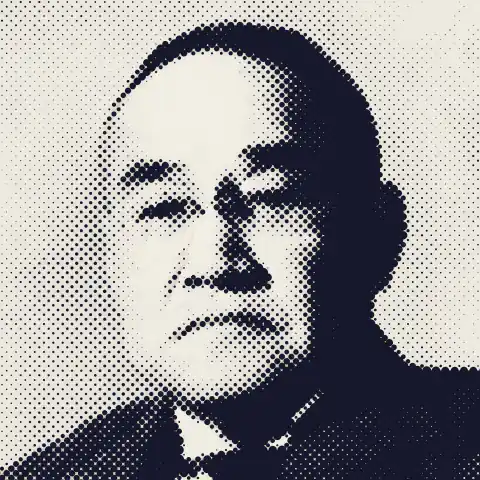
Portrait of Shigeru Yoshida
1878-1967Japan

Portrait: Unknown author, Public domain, via Wikimedia Commons

Shigeru Yoshida

Prime Minister of Japan (1946-1947, 1948-1954) · President of the Liberal Party · Minister for Foreign Affairs (1945-1947, 1948-1952) · Ambassador to the United Kingdom (1936-1938)

Diplomat and conservative prime minister of the occupation years who signed the San Francisco Peace Treaty and the first US-Japan Security Treaty, and whose economy-first strategy became known as the Yoshida Doctrine.

ECONOMYSTATE AND LIBERTYSOCIETYWORLDOwnershipMarketsWelfareAuthoritySecurityStructureMoralityReligionTechnologyCultureTradeForeign
  • Position
  • Solid, past the ring: second pole
  • Short, inside the ring: first pole
  • Balanced

★ Shigeru Yoshida on 12 axes

Share of each pole

Economy

Equality / Markets
  • OwnershipModerate: Private
    PublicPrivate
  • MarketsMild: Free
    PlannedFree
  • WelfareMild: Self-reliant
    SharedSelf-reliant

State and liberty

Liberty / Authority
  • AuthorityMild: Strong leader
    DemocraticStrong leader
  • SecurityModerate: Order
    LibertyOrder
  • StructureNo clear record
    LocalCentral

Society

Progress / Tradition
  • MoralityNo clear record
    ProgressiveTraditional
  • ReligionNo clear record
    SecularReligious
  • TechnologyNo clear record
    EmbraceCaution
  • CultureModerate: National identity
    MulticulturalNational identity

World

Global / Nation
  • TradeModerate: Global
    GlobalProtected
  • Foreign policyModerate: Cooperation
    CooperationStrength

How we placed it

Judgment calls

Positions summarize typical stances from primary sources and reference works. Where an axis is genuinely contested, the reasoning is below.

Welfare
Carried out the Dodge Line austerity of 1949, which ended hyperinflation at the cost of bankruptcies and public-sector layoffs; scored toward self-reliance.
Authority
Governed under the Allied occupation and the new parliamentary constitution, but was known for a domineering personal style; scored mildly toward strong leadership.
Security
His government dismissed tens of thousands of communists and union activists from public and private jobs in the Red Purge of 1949-1950; scored toward order.
Structure
Little documented about his views on central and local government; left null.
Religion
Little documented about his views on religion in public life; left null.
Culture
Held that the 1947 constitution did not fundamentally change the national polity centred on the emperor; scored mildly toward national identity.
Trade
Put economic recovery and trade ahead of military power and oriented Japan toward Western markets; scored toward open trade.
Foreign policy
The Yoshida Doctrine relied on the US alliance and kept Japan's own forces to a minimum, resisting rapid rearmament; scored toward cooperation.

4 axes are marked as no clear record: there is no reasonable basis to place Shigeru Yoshida there, so matching leaves them out.

Who was Shigeru Yoshida?

Shigeru Yoshida was born in Tokyo in 1878, graduated in law from Tokyo Imperial University and joined the Foreign Ministry in 1906, serving in China and Italy and as ambassador to Britain from 1936 to 1938. Associated with circles seeking an early peace, he was arrested in April 1945. After the surrender he became foreign minister and in May 1946 prime minister as president of the Liberal Party. He oversaw the adoption of the postwar constitution, lost office in 1947 and returned in October 1948, governing until December 1954, when defections to the new Democratic Party forced his cabinet to resign. His protégés Hayato Ikeda and Eisaku Sato later became prime ministers. He died in 1967.

Political views

  • Signed the San Francisco Peace Treaty in September 1951, which ended the occupation in April 1952.

    Source: en.wikipedia.org
  • Signed the first US-Japan Security Treaty the same day, allowing American forces to remain based in Japan.

    Source: en.wikipedia.org
  • Relied on the US alliance, kept Japan's own defense forces small and gave priority to economic recovery, a strategy later called the Yoshida Doctrine.

    Source: en.wikipedia.org
  • Implemented the Dodge Line austerity program from 1949, balancing the budget and ending postwar hyperinflation.

    Source: en.wikipedia.org
  • Dismissed communists from government jobs and in 1950, at MacArthur's order, barred the Japanese Communist Party's central committee from political activity.

    Source: en.wikipedia.org
  • Accepted the 75,000-strong National Police Reserve authorized in 1950 after the Korean War began, the forerunner of the Self-Defense Forces.

    Source: en.wikipedia.org

Legacy

Admirers, Richard Nixon among them, credit Yoshida with steering Japan out of defeat and occupation and with a strategy that let the country concentrate on the growth that followed; most historians judge the Yoshida Doctrine a wise choice. Critics argue that it left Japan dependent on the United States for its security and accepted American bases on Japanese soil, and some later conservatives faulted him for putting the economy ahead of defense. The Red Purge and the Dodge Line layoffs cost tens of thousands of workers their jobs, and his abrasive style made him many enemies in his own camp.

★ Free · 12 Axes Political Test ★

How close are you to Shigeru Yoshida?

Take the free 12 Axes test to see your match with Shigeru Yoshida and 347 other historical figures, axis by axis.

OptionalWant every axis explained? The Full Political Profile is an optional $9.99 deep dive. See what is inside

FAQ

Shigeru Yoshida: questions

What political party was Shigeru Yoshida?

Yoshida led the Liberal Party and its successor the Democratic Liberal Party. These conservative parties were forerunners of the Liberal Democratic Party, founded in 1955 after he left office.

What was the Yoshida Doctrine?

It was Yoshida's postwar strategy of relying on the US alliance for security, keeping Japan's own military small and concentrating national effort on economic recovery and trade.

Did Shigeru Yoshida support rearming Japan?

Only slowly. He accepted the National Police Reserve created in 1950, which became the Self-Defense Forces in 1954, but resisted American pressure for rapid, large-scale rearmament.