 Japan
Who was Eisaku Sato?
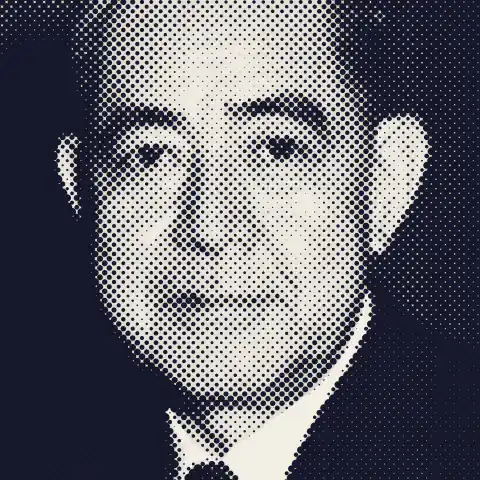
Eisaku Sato was born in Yamaguchi Prefecture in 1901, the younger brother of Nobusuke Kishi and great-uncle of Shinzo Abe. After Tokyo Imperial University he spent his early career in the Ministry of Railways, becoming vice minister of transport. He entered the Diet in 1949 as a Liberal Party member under Shigeru Yoshida and held cabinet posts under Yoshida, Kishi and Hayato Ikeda, including finance minister. He succeeded Ikeda in November 1964 and served until July 1972, the longest stint of any prime minister until then, during a period of rapid growth. His popularity fell after the 1971 Nixon shocks, and he resigned in 1972. He shared the Nobel Peace Prize in 1974 and died after a stroke in June 1975.
Political views
Normalized diplomatic relations with South Korea through the 1965 Treaty on Basic Relations.
Source: en.wikipedia.orgNegotiated the return of Okinawa from US administration in 1972, with American bases remaining on the islands.
Source: en.wikipedia.orgAnnounced the Three Non-Nuclear Principles in December 1967: Japan would not manufacture, possess or bring in nuclear weapons.
Source: en.wikipedia.orgSigned the Nuclear Non-Proliferation Treaty in 1970, cited by the Nobel Committee in awarding him the 1974 Peace Prize.
Source: nobelprize.orgConvened the 1970 Pollution Diet, which passed 14 pollution control laws.
Source: en.wikipedia.orgLet the US-Japan Security Treaty renew automatically in 1970 despite large street protests.
Source: en.wikipedia.org
Legacy
Admirers credit Sato with regaining Okinawa through negotiation rather than war, settling relations with South Korea and anchoring Japan's non-nuclear policy, and with presiding over years of strong growth. Critics note that he made secret arrangements with Washington that allowed US nuclear weapons to be reintroduced to Okinawa in an emergency, contradicting his own principles, and documents declassified in 2008 show him discussing the possible use of nuclear weapons against China with US officials in 1965. Opponents also pointed to Japan's support for the US war in Vietnam and the force used to end the student protests, and Nixon's surprise opening to Beijing in 1971 left his China policy exposed.
In their words
This policy states that we shall not manufacture nuclear weapons, that we shall not possess them and that we shall not bring them into our country.