PoliticalTests
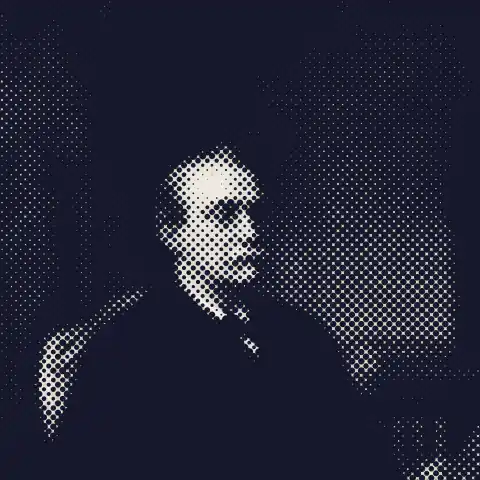
Portrait of Antonio Cánovas del Castillo
1828-1897Spain

Portrait: Ricardo de Madrazo, Public domain, via Wikimedia Commons

Antonio Cánovas del Castillo

Prime Minister of Spain (six terms, 1874-1897) · Leader of the Liberal-Conservative Party · Principal author of the Constitution of 1876 · Director of the Royal Academy of History · Historian

Spanish conservative statesman and historian who designed the Bourbon Restoration of 1874, wrote the 1876 Constitution and alternated in power with the Liberals until his assassination in 1897.

ECONOMYSTATE AND LIBERTYSOCIETYWORLDOwnershipMarketsWelfareAuthoritySecurityStructureMoralityReligionTechnologyCultureTradeForeign
  • Position
  • Solid, past the ring: second pole
  • Short, inside the ring: first pole
  • Balanced

★ Antonio Cánovas del Castillo on 12 axes

Share of each pole

Economy

Equality / Markets
  • OwnershipModerate: Private
    PublicPrivate
  • MarketsModerate: Free
    PlannedFree
  • WelfareModerate: Self-reliant
    SharedSelf-reliant

State and liberty

Liberty / Authority
  • AuthorityModerate: Strong leader
    DemocraticStrong leader
  • SecurityStrong: Order
    LibertyOrder
  • StructureModerate: Central
    LocalCentral

Society

Progress / Tradition
  • MoralityModerate: Traditional
    ProgressiveTraditional
  • ReligionModerate: Religious
    SecularReligious
  • TechnologyNo clear record
    EmbraceCaution
  • CultureModerate: National identity
    MulticulturalNational identity

World

Global / Nation
  • TradeStrong: Protected
    GlobalProtected
  • Foreign policyModerate: Strength
    CooperationStrength

How we placed it

Judgment calls

Positions summarize typical stances from primary sources and reference works. Where an axis is genuinely contested, the reasoning is below.

Authority
Built a constitutional monarchy with a parliament and peaceful rotation of parties, but on restricted suffrage until 1890 and with elections widely managed through local political bosses, so scored on the strong leader side of the middle.
Security
Reflects the mass arrests and torture of detainees at Montjuïc after the 1896 Barcelona bombing and the anti-anarchist law passed that year.
Religion
The 1876 Constitution made Catholicism the state religion while tolerating private worship of other faiths.
Trade
Declared himself a doctrinal protectionist in an 1891 speech, favoring tariff protection over free trade.
Foreign policy
Fought to keep Cuba Spanish against the independence war of 1895, a hard line that led toward war with the United States after his death.

One axis is marked as no clear record: there is no reasonable basis to place Antonio Cánovas del Castillo there, so matching leaves it out.

Who was Antonio Cánovas del Castillo?

Antonio Cánovas del Castillo was born in Málaga in 1828 and became known as a historian before entering politics under General O'Donnell. He served as a minister under Isabel II and, after the revolution of 1868, led the movement to restore the Bourbons, drafting the Sandhurst Manifesto for the future Alfonso XII. When the monarchy returned at the end of 1874 he became head of government, and he held the office in six periods until 1897. He designed the Constitution of 1876 and a system in which his Conservatives alternated in power with Práxedes Mateo Sagasta's Liberals. He was assassinated by the Italian anarchist Michele Angiolillo in August 1897.

Political views

  • Wrote the brief Constitution of 1876, based on sovereignty shared between the king and the Cortes, which lasted until 1923.

    Source: congreso.es
  • Built a two-party system of peaceful alternation with the Liberals, formalized in the 1885 Pact of El Pardo.

    Source: congreso.es
  • Opposed universal suffrage, restoring a franchise limited by wealth and education in 1878, and argued that universal suffrage would naturally lead to socialism.

    Source: es.wikipedia.org
  • Ended the Basque provinces' traditional self-government (fueros) in 1876 after the Third Carlist War, later replaced by the 1878 Basque Economic Agreement.

    Source: en.wikipedia.org
  • Defended tariff protection for Spanish producers, publishing a speech in 1891 on how he had become a doctrinal protectionist.

    Source: es.wikipedia.org
  • Committed his last government to crushing the Cuban independence rising of 1895 and in 1896 sent General Valeriano Weyler, whose policy of confining rural Cubans in camps is estimated to have caused 170,000 to 400,000 civilian deaths.

    Source: en.wikipedia.org

Legacy

Cánovas is widely seen as the architect of the Restoration, the longest period of constitutional stability in nineteenth century Spain, ending the cycle of military coups and civil wars. Admirers credit him with reconciling the monarchy with parliamentary government and bringing Carlists and Catholics into the system. Critics point out that the rotation of parties rested on rigged elections and local bosses known as caciques, that it excluded republicans, socialists and regional movements, and that his government repressed anarchists harshly, including the torture of prisoners at Montjuïc that his assassin cited as his motive. His handling of the Cuban war is also criticized as leading toward the defeat of 1898.

★ Free · 12 Axes Political Test ★

How close are you to Antonio Cánovas del Castillo?

Take the free 12 Axes test to see your match with Antonio Cánovas del Castillo and 347 other historical figures, axis by axis.

OptionalWant every axis explained? The Full Political Profile is an optional $9.99 deep dive. See what is inside

FAQ

Antonio Cánovas del Castillo: questions

What was the turno pacífico?

The peaceful rotation in government between Cánovas's Conservatives and Sagasta's Liberals during the Restoration, sustained in practice by managed elections.

How did Cánovas del Castillo die?

He was shot by the Italian anarchist Michele Angiolillo at the spa of Santa Águeda in Gipuzkoa on 8 August 1897.

Was Cánovas a liberal or a conservative?

He led the Liberal-Conservative Party, usually called the Conservative Party: a constitutional conservative who accepted parliament but defended the monarchy, the Church and a restricted franchise.