PoliticalTests
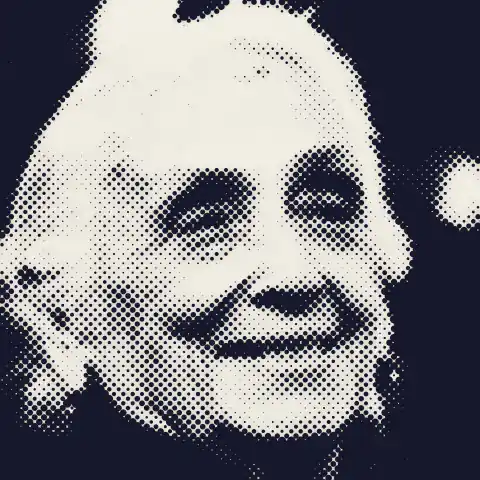
Portrait of Dolores Ibárruri
1895-1989Spain

Portrait: Nemo, CC BY-SA 3.0, via Wikimedia Commons. Halftone version: CC BY-SA 3.0

Dolores Ibárruri

General Secretary of the Communist Party of Spain (1942-1960) · President of the Communist Party of Spain (1960-1989) · Deputy in the Cortes for Asturias (1936-1939, 1977-1979) · Journalist and orator known as La Pasionaria

Basque-born communist leader and orator, known as La Pasionaria, whose 'No pasarán' broadcast of July 1936 became the Republic's rallying cry and who led the Spanish Communist Party in exile.

ECONOMYSTATE AND LIBERTYSOCIETYWORLDOwnershipMarketsWelfareAuthoritySecurityStructureMoralityReligionTechnologyCultureTradeForeign
  • Position
  • Solid, past the ring: second pole
  • Short, inside the ring: first pole
  • Balanced

★ Dolores Ibárruri on 12 axes

Share of each pole

Economy

Equality / Markets
  • OwnershipStrong: Public
    PublicPrivate
  • MarketsStrong: Planned
    PlannedFree
  • WelfareStrong: Shared
    SharedSelf-reliant

State and liberty

Liberty / Authority
  • AuthorityModerate: Strong leader
    DemocraticStrong leader
  • SecurityModerate: Order
    LibertyOrder
  • StructureNo clear record
    LocalCentral

Society

Progress / Tradition
  • MoralityModerate: Progressive
    ProgressiveTraditional
  • ReligionModerate: Secular
    SecularReligious
  • TechnologyNo clear record
    EmbraceCaution
  • CultureNo clear record
    MulticulturalNational identity

World

Global / Nation
  • TradeNo clear record
    GlobalProtected
  • Foreign policyNo clear record
    CooperationStrength

How we placed it

Judgment calls

Positions summarize typical stances from primary sources and reference works. Where an axis is genuinely contested, the reasoning is below.

Authority
Scored on her loyalty to Stalin's Soviet Union and her support for the campaign against the anti-Stalinist POUM during the Civil War; she returned to sit in a democratic parliament in 1977, so the score is below the maximum.
Security
Called for tough measures against the 'enemy within' in the Republican zone, including rival left-wing groups, during the war.
Morality
Went further than most communist leaders of her time in demanding equality and economic and political emancipation for women.
Religion
Raised in a devout Catholic family, she renounced Catholicism and adopted the Marxist view of religion.
Foreign policy
Her internationalism was tied to the Soviet Union rather than to a general doctrine on diplomacy or military power, so no score is assigned.

5 axes are marked as no clear record: there is no reasonable basis to place Dolores Ibárruri there, so matching leaves them out.

Who was Dolores Ibárruri?

Isidora Dolores Ibárruri Gómez was born in 1895 in Gallarta, a mining village in Biscay, into a large and devout family. She married a miner, turned to Marxism and joined the Communist Party of Spain around its founding, writing under the name La Pasionaria. Elected to the Cortes for Asturias in February 1936, she became the Republic's best-known propagandist in the Civil War. In exile in the Soviet Union from 1939, she led the party as general secretary from 1942 to 1960, when she became its president. She returned to Spain in 1977, was elected again for Asturias and died in Madrid in 1989.

Political views

  • Rallied supporters of the Republic in a radio broadcast on 19 July 1936 with the slogan that the rebels would not pass.

    Source: marxists.org
  • Supported the Popular Front strategy of alliances among communists, socialists and republicans against fascism.

    Source: encyclopedia.com
  • Demanded that women be treated as men's equals and that their emancipation be a primary goal of the communist movement.

    Source: encyclopedia.com
  • Vigorously backed the communists' wartime campaign to eliminate the anti-Stalinist POUM.

    Source: encyclopedia.com
  • Bade farewell to the International Brigades in Barcelona in November 1938, calling them an example of democracy's solidarity.

    Source: encyclopedia.com
  • Supported Santiago Carrillo's policy of national reconciliation from 1956, which sought alliances with non-communist opponents of Franco.

    Source: theguardian.com

Legacy

Ibárruri became internationally famous as a symbol of Republican resistance and of working-class women in politics. Admirers celebrate her courage, her oratory and her campaigns for women and for the families of workers jailed after the 1934 Asturias rising, and her return to Spain in 1977 was widely read as a sign of national reconciliation. Critics stress her unswerving loyalty to Stalin, her support for the persecution of the POUM and anarchists during the war and decades spent defending Soviet policy from Moscow. Historians also note that the communist movement deliberately built her image as a symbol of the Republic. Her own memoirs are generally considered uncritical of her political career.

In their words

They want with fire and sword to turn democratic Spain, the Spain of the people, into a hell of terrorism and torture. But they shall not pass!
Radio broadcast, Madrid, 19 July 1936, translated from Spanish

★ Free · 12 Axes Political Test ★

How close are you to Dolores Ibárruri?

Take the free 12 Axes test to see your match with Dolores Ibárruri and 347 other historical figures, axis by axis.

OptionalWant every axis explained? The Full Political Profile is an optional $9.99 deep dive. See what is inside

FAQ

Dolores Ibárruri: questions

Why was Dolores Ibárruri called La Pasionaria?

It was the pen name, meaning the passion flower, that she used in the workers' press as a young activist, and it stayed with her for life.

Did La Pasionaria say 'No pasarán'?

Yes. Her radio broadcast of 19 July 1936 ended with the words that the rebels would not pass, and the phrase became the best-known slogan of the Republican side.

Sources

  1. 01encyclopedia.com
  2. 02marxists.org
  3. 03elsaltodiario.com
  4. 04en.wikipedia.org

Image credits

Portrait of Dolores Ibárruri: Dolores002.jpg by Nemo, licensed CC BY-SA 3.0, via Wikimedia Commons. Cropped, converted to grayscale and printed as a halftone by politicaltests.org; the halftone version is licensed CC BY-SA 3.0.

All portrait credits and licenses