PoliticalTests
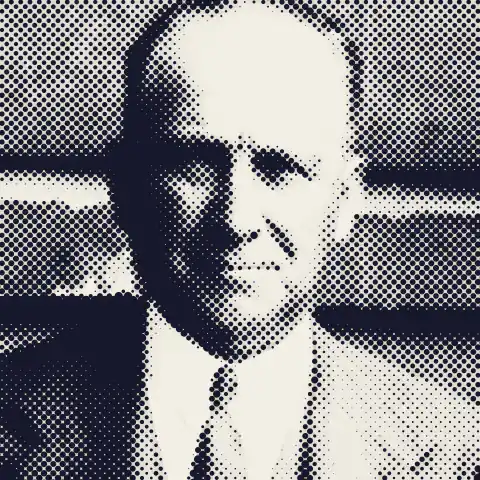
Portrait of Francisco Largo Caballero
1869-1946Spain

Portrait: Agence de presse Meurisse, Public domain, via Wikimedia Commons

Francisco Largo Caballero

Prime Minister of Spain (1936-1937) · Minister of Labour (1931-1933) · Secretary General of the UGT trade union (1918-1938) · President of the Spanish Socialist Workers' Party (PSOE) · Plasterer

Spanish trade union leader and socialist who led the UGT for two decades, enacted major labor laws as minister, radicalized toward revolution in 1933 to 1934 and was the Republic's prime minister early in the Civil War.

ECONOMYSTATE AND LIBERTYSOCIETYWORLDOwnershipMarketsWelfareAuthoritySecurityStructureMoralityReligionTechnologyCultureTradeForeign
  • Position
  • Solid, past the ring: second pole
  • Short, inside the ring: first pole
  • Balanced

★ Francisco Largo Caballero on 12 axes

Share of each pole

Economy

Equality / Markets
  • OwnershipStrong: Public
    PublicPrivate
  • MarketsStrong: Planned
    PlannedFree
  • WelfareStrong: Shared
    SharedSelf-reliant

State and liberty

Liberty / Authority
  • AuthorityModerate: Strong leader
    DemocraticStrong leader
  • SecurityMild: Order
    LibertyOrder
  • StructureMild: Central
    LocalCentral

Society

Progress / Tradition
  • MoralityNo clear record
    ProgressiveTraditional
  • ReligionModerate: Secular
    SecularReligious
  • TechnologyNo clear record
    EmbraceCaution
  • CultureNo clear record
    MulticulturalNational identity

World

Global / Nation
  • TradeNo clear record
    GlobalProtected
  • Foreign policyMild: Cooperation
    CooperationStrength

How we placed it

Judgment calls

Positions summarize typical stances from primary sources and reference works. Where an axis is genuinely contested, the reasoning is below.

Authority
Scored on his 1933 to 1934 calls for socialist revolution and the dictatorship of the proletariat, his role in the 1934 revolutionary strike and his earlier cooperation with the Primo de Rivera dictatorship; as wartime prime minister he worked within the Republic's institutions.
Security
As war premier he rebuilt state authority over the militias, integrating the party and union militias into a disciplined army.
Structure
His government concentrated the war effort and command in Madrid and later Valencia, and he clashed with the Catalan authorities during the May 1937 crisis.
Morality
No documented position on family, sexuality or personal morality beyond the general secular program of the Republic.
Foreign policy
Accepted Soviet arms and aid and presented the Republic abroad as a democracy fighting for constitutional rule, which suggests cooperation rather than a doctrine of national strength.

4 axes are marked as no clear record: there is no reasonable basis to place Francisco Largo Caballero there, so matching leaves them out.

Who was Francisco Largo Caballero?

Francisco Largo Caballero was born in Madrid in 1869 and worked as a plasterer for three decades while rising through the socialist union UGT, which he joined in 1890, and the PSOE. He was secretary general of the UGT from 1918 to 1938. Under the Primo de Rivera dictatorship he accepted a seat on the Council of State, a choice that split the socialists. From 1931 to 1933 he was labor minister. In September 1936 he became prime minister and war minister, leading a coalition that included anarchists and communists, until he left office after the May 1937 fighting in Barcelona. In exile in France he was arrested and sent to the Nazi camp at Sachsenhausen, and he died in Paris in 1946.

Political views

  • As labor minister introduced the Labor Contract Law, joint labor arbitration boards, decrees protecting local farm workers and a 40-hour working week.

    Source: es.wikipedia.org
  • Abandoned reformism after 1933, led the left wing of the PSOE and the Socialist Youth, and argued for a revolutionary workers' front and the dictatorship of the proletariat, earning the nickname 'the Spanish Lenin'.

    Source: enciclopedia.cat
  • Called the UGT general strike of October 1934, launched when the conservative CEDA entered the government, whose most violent episode was the rising in Asturias.

    Source: universalis.fr
  • Headed a Popular Front government from September 1936 while keeping the war ministry, and in November moved the seat of government from Madrid to Valencia.

    Source: universalis.fr
  • Integrated the socialist, communist and anarchist militias into the mixed brigades of a reorganized, disciplined army, ending the improvised militia system of the first weeks of the war.

    Source: es.wikipedia.org
  • Was forced to resign in May 1937, after the fighting in Barcelona, under pressure from the Soviet Union, the communists and moderate socialists, and lost the UGT leadership later that year.

    Source: universalis.fr

Legacy

Largo Caballero embodied the union wing of Spanish socialism. Admirers remember a self-taught worker who built the UGT into a mass organization, wrote lasting labor protections into Spanish law and survived a Nazi concentration camp. Critics argue that his revolutionary rhetoric of 1933 and 1934 and the October 1934 rising weakened the democratic Republic and deepened polarization, and his rival in the PSOE, Indalecio Prieto, attacked him as a fanatic. Others note that once in power during the war he moderated, rebuilt the army and defended the coalition against communist pressure. His remains were returned to Madrid in 1978, when hundreds of thousands attended his funeral.

★ Free · 12 Axes Political Test ★

How close are you to Francisco Largo Caballero?

Take the free 12 Axes test to see your match with Francisco Largo Caballero and 347 other historical figures, axis by axis.

OptionalWant every axis explained? The Full Political Profile is an optional $9.99 deep dive. See what is inside

FAQ

Francisco Largo Caballero: questions

Why was Largo Caballero called the Spanish Lenin?

In 1933 and 1934 he argued that the Republic was not enough for workers and called for a socialist revolution, so supporters and critics began calling him 'the Spanish Lenin'. He was never a communist.

Why did Largo Caballero stop being prime minister?

After the May 1937 fighting in Barcelona, the communists left his cabinet when he refused to suppress the POUM, and President Azaña asked Juan Negrín to form a new government.