PoliticalTests
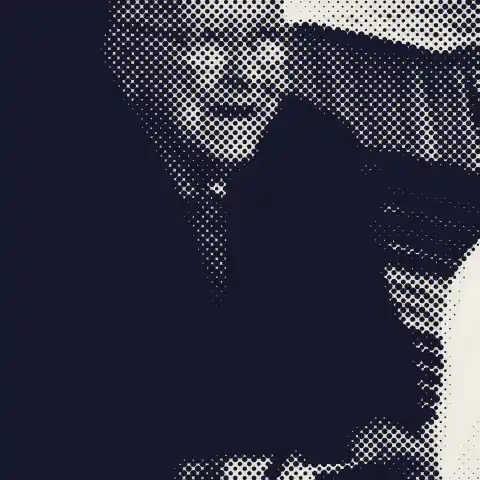
Portrait of Santiago Carrillo
1915-2012Spain

Portrait: photoAtlas, CC BY 2.0, via Wikimedia Commons. Halftone version: CC BY 2.0

Santiago Carrillo

General Secretary of the Communist Party of Spain (1960-1982) · Deputy in the Congress of Deputies for Madrid (1977-1986) · Councillor for public order in the Madrid Defence Junta (1936) · Secretary General of the Socialist Youth (1934-1936)

Spanish communist leader who led the PCE in exile and through the transition to democracy, championed Eurocommunism and remains contested over the 1936 Paracuellos killings.

ECONOMYSTATE AND LIBERTYSOCIETYWORLDOwnershipMarketsWelfareAuthoritySecurityStructureMoralityReligionTechnologyCultureTradeForeign
  • Position
  • Solid, past the ring: second pole
  • Short, inside the ring: first pole
  • Balanced

★ Santiago Carrillo on 12 axes

Share of each pole

Economy

Equality / Markets
  • OwnershipModerate: Public
    PublicPrivate
  • MarketsModerate: Planned
    PlannedFree
  • WelfareStrong: Shared
    SharedSelf-reliant

State and liberty

Liberty / Authority
  • AuthorityBalanced
    DemocraticStrong leader
  • SecurityMild: Order
    LibertyOrder
  • StructureNo clear record
    LocalCentral

Society

Progress / Tradition
  • MoralityNo clear record
    ProgressiveTraditional
  • ReligionModerate: Secular
    SecularReligious
  • TechnologyNo clear record
    EmbraceCaution
  • CultureNo clear record
    MulticulturalNational identity

World

Global / Nation
  • TradeNo clear record
    GlobalProtected
  • Foreign policyMild: Cooperation
    CooperationStrength

How we placed it

Judgment calls

Positions summarize typical stances from primary sources and reference works. Where an axis is genuinely contested, the reasoning is below.

Authority
Averages a long career: a Stalinist party disciplinarian in the 1930s to 1950s who later embraced Eurocommunism, parliamentary democracy and a negotiated transition after Franco.
Security
Reflects his wartime responsibility for public order in Madrid, set against his later defense of civil liberties in the transition, so scored near the middle.
Foreign policy
Distanced the party from Moscow and condemned the 1968 Soviet invasion of Czechoslovakia, favoring peaceful coexistence over bloc loyalty.

5 axes are marked as no clear record: there is no reasonable basis to place Santiago Carrillo there, so matching leaves them out.

Who was Santiago Carrillo?

Santiago Carrillo Solares was born in Gijón in 1915, the son of a socialist leader, and rose in the socialist youth movement, becoming its secretary general in 1934. Jailed after the October 1934 rising, he moved toward the communists in 1936 and merged the socialist and communist youth groups. In November 1936, aged 21, he was put in charge of public order in besieged Madrid. After the war he worked for the communist movement abroad and succeeded Dolores Ibárruri as the PCE's general secretary in 1960. He returned secretly to Spain in 1976, led the legalized party into the 1977 election and sat in parliament until 1986. He died in Madrid in 2012.

Political views

  • Called as a young socialist for the 'bolshevisation' of the PSOE and supported the revolutionary rising in Asturias in October 1934.

    Source: theguardian.com
  • Promoted from 1956 a policy of national reconciliation, seeking alliances with non-communist opponents of the Franco regime.

    Source: theguardian.com
  • Condemned the Soviet invasion of Czechoslovakia in 1968 and moved the party away from Moscow.

    Source: en.wikipedia.org
  • Launched Eurocommunism with Enrico Berlinguer and Georges Marchais at a meeting in Madrid in March 1977, setting out his ideas in Eurocommunism and the State.

    Source: en.wikipedia.org
  • Accepted a negotiated transition with reformers of the Franco regime, leading the PCE into the first democratic election of June 1977, where it won about 9 percent of the vote.

    Source: theguardian.com
  • Took part through his party in drafting the 1978 Constitution, in which the communist deputy Jordi Solé Tura sat on the seven-member drafting panel.

    Source: congreso.es

Legacy

Carrillo is remembered as one of the architects of Spain's peaceful transition: supporters credit him with leading the communists into democratic politics and accepting compromise for the sake of reconciliation. His past remains contested. In November 1936, while he was responsible for public order in Madrid, around 2,000 or more prisoners taken from the city's jails were shot at Paracuellos del Jarama and Torrejón de Ardoz, the largest atrocity in the Republican zone. Carrillo denied knowledge of the killings; historian Paul Preston concludes that the evacuation was a collective decision by several authorities, but that Carrillo was a crucial part of its organization. Critics within his own party also faulted his authoritarian leadership style, and the PCE vote fell sharply in 1982, leading to his resignation.

★ Free · 12 Axes Political Test ★

How close are you to Santiago Carrillo?

Take the free 12 Axes test to see your match with Santiago Carrillo and 347 other historical figures, axis by axis.

OptionalWant every axis explained? The Full Political Profile is an optional $9.99 deep dive. See what is inside

FAQ

Santiago Carrillo: questions

What was Santiago Carrillo's role in the Paracuellos killings?

He was responsible for public order in Madrid in November 1936 when about 2,000 prisoners were shot at Paracuellos and Torrejón. He denied knowledge of the killings; historians debate his exact responsibility, and some, such as Paul Preston, conclude he played a crucial part in organizing the evacuations.

What is Eurocommunism?

A current led in the 1970s by the Spanish, Italian and French communist parties that accepted parliamentary democracy and political pluralism and sought independence from the Soviet Union.

Sources

  1. 01theguardian.com
  2. 02congreso.es
  3. 03en.wikipedia.org

Image credits

Portrait of Santiago Carrillo: Santiago Carrillo firmando en la Feria del Libro de Madrid en 2006 (cropped).jpg by photoAtlas, licensed CC BY 2.0, via Wikimedia Commons. Cropped, converted to grayscale and printed as a halftone by politicaltests.org; the halftone version is licensed CC BY 2.0.

All portrait credits and licenses