PoliticalTests
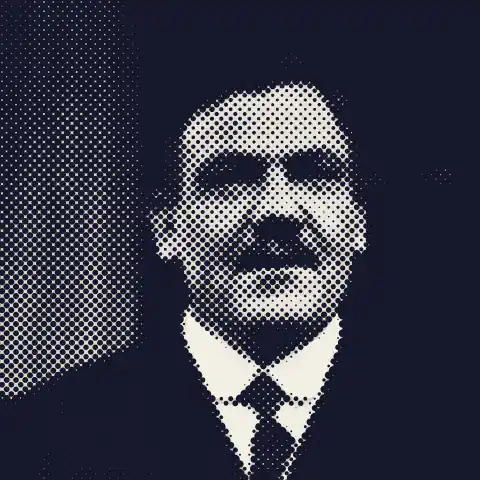
Portrait of Plutarco Elías Calles
1877-1945Mexico

Portrait: National Photo Company Collection., Public domain, via Wikimedia Commons

Plutarco Elías Calles

President of Mexico (1924-1928) · Founder of the National Revolutionary Party (1929) · Secretary of the Interior (1920-1923) · Governor of Sonora · Schoolteacher

Mexican revolutionary general and president who built key state institutions, enforced the Constitution's anticlerical laws, which led to the Cristero War, and dominated politics as 'Jefe Máximo' until 1935.

ECONOMYSTATE AND LIBERTYSOCIETYWORLDOwnershipMarketsWelfareAuthoritySecurityStructureMoralityReligionTechnologyCultureTradeForeign
  • Position
  • Solid, past the ring: second pole
  • Short, inside the ring: first pole
  • Balanced

★ Plutarco Elías Calles on 12 axes

Share of each pole

Economy

Equality / Markets
  • OwnershipMild: Public
    PublicPrivate
  • MarketsMild: Planned
    PlannedFree
  • WelfareMild: Shared
    SharedSelf-reliant

State and liberty

Liberty / Authority
  • AuthorityStrong: Strong leader
    DemocraticStrong leader
  • SecurityStrong: Order
    LibertyOrder
  • StructureStrong: Central
    LocalCentral

Society

Progress / Tradition
  • MoralityModerate: Progressive
    ProgressiveTraditional
  • ReligionStrong: Secular
    SecularReligious
  • TechnologyMild: Embrace
    EmbraceCaution
  • CultureModerate: National identity
    MulticulturalNational identity

World

Global / Nation
  • TradeMild: Protected
    GlobalProtected
  • Foreign policyMild: Strength
    CooperationStrength

How we placed it

Judgment calls

Positions summarize typical stances from primary sources and reference works. Where an axis is genuinely contested, the reasoning is below.

Ownership
He distributed about three million hectares to ejidos and asserted national ownership of oil, but saw the ejido as a step toward private farming and later called the land reform a failure, so the score stays near the middle.
Authority
Elected in 1924, he then dominated the next three presidents as the 'Jefe Máximo' during the Maximato of 1928 to 1934 and founded the party that would rule Mexico for decades.
Morality
His civil code reforms gave women legal equality and recognized divorce, while as governor of Sonora he tried to ban alcohol; the score leans progressive.
Religion
Scored on his strict enforcement of the anticlerical articles of the 1917 Constitution through the 1926 Calles Law, which led to the Cristero War.
Culture
Reflects his revolutionary nationalism, including the rule that only Mexicans by birth could serve as clergy, rather than a documented immigration policy.

Who was Plutarco Elías Calles?

Francisco Plutarco Elías Campuzano, known as Plutarco Elías Calles, was born in Guaymas, Sonora, in 1877 and worked as a schoolteacher and businessman before joining the revolution against Huerta in 1913. He rose under Álvaro Obregón, governed Sonora and served as secretary of the interior. Elected president in 1924, he built new financial and development institutions and fought the Cristero rebellion. After Obregón's assassination in 1928 he founded the National Revolutionary Party and dominated the presidents who followed, a period called the Maximato. He broke with President Lázaro Cárdenas, was expelled to the United States in 1936 and was allowed to return in the early 1940s. He died in 1945.

Political views

  • Founded the Bank of Mexico, introduced a federal income tax in 1925 and created national commissions for irrigation and roads.

    Source: memoriapoliticademexico.org
  • Reformed the civil code to give women legal equality and to recognize divorce, and backed collective bargaining through the CROM labor confederation.

    Source: memoriapoliticademexico.org
  • Enforced the constitutional limits on the Church through the 1926 Calles Law, which restricted worship and religious schooling and required clergy to be Mexican by birth.

    Source: memoriapoliticademexico.org
  • Fought the Cristero War of 1926 to 1929, in which almost 100,000 people died on both sides and many priests were killed or expelled.

    Source: en.wikipedia.org
  • Passed a 1925 petroleum law asserting national ownership of the subsoil, which strained relations with the United States until the Calles-Morrow agreement.

    Source: history.state.gov
  • Created the National Revolutionary Party in 1929 to bring the revolutionary factions into one organization and settle the succession peacefully.

    Source: memoriapoliticademexico.org

Legacy

Calles is credited with turning the revolution's armed factions into a stable state: he founded institutions such as the Bank of Mexico, professionalized the army and created the party that, under later names, governed Mexico until 2000. Supporters see a modernizer who defended the secular state and national control of resources. Critics point to the persecution of Catholics and the violence of the Cristero War, the execution without trial of Father Miguel Pro and others in 1927, the killing of the opposition candidate Francisco Serrano at Huitzilac, and a personal grip on power that made elections largely a formality. His later turn against strikes and land reform led to his break with Lázaro Cárdenas, who sent him into exile.

In their words

We must enter and take hold of the consciences of children, of the consciences of youth, because they belong and must belong to the Revolution.
Speech in Guadalajara (the 'Grito de Guadalajara'), 20 July 1934, translated from Spanish

★ Free · 12 Axes Political Test ★

How close are you to Plutarco Elías Calles?

Take the free 12 Axes test to see your match with Plutarco Elías Calles and 347 other historical figures, axis by axis.

OptionalWant every axis explained? The Full Political Profile is an optional $9.99 deep dive. See what is inside

FAQ

Plutarco Elías Calles: questions

What was the Calles Law?

It was a 1926 law that put the anticlerical articles of the 1917 Constitution into force, with penalties for priests who broke rules on worship, dress and religious education. Catholic bishops responded by suspending public worship, and the Cristero War followed.

What was the Maximato?

It is the period from 1928 to 1934 when Calles, called the Jefe Máximo of the Revolution, held decisive influence over Presidents Emilio Portes Gil, Pascual Ortiz Rubio and Abelardo L. Rodríguez.

Did Calles found the PRI?

He founded its predecessor, the National Revolutionary Party, in 1929. It was reorganized under Cárdenas in 1938 and renamed the Institutional Revolutionary Party (PRI) in 1946.