PoliticalTests
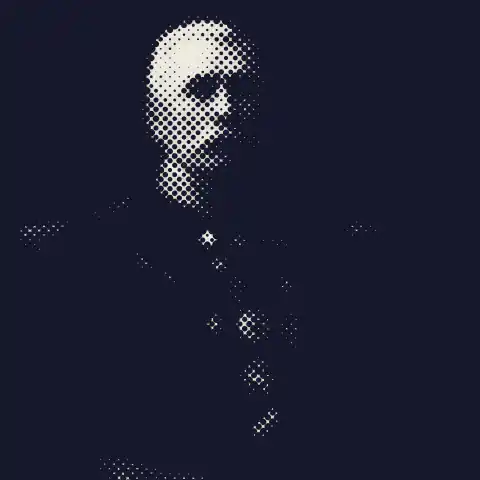
Portrait of Porfirio Díaz
1830-1915Mexico

Portrait: El Ágora, CC BY-SA 3.0, via Wikimedia Commons. Halftone version: CC BY-SA 3.0

Porfirio Díaz

President of Mexico (1876-1880, 1884-1911) · Governor of Oaxaca (1881-1883) · General in the war against the French intervention

Mexican general who seized power in 1876 and dominated the country for about 35 years, the Porfiriato, combining rapid railway-led growth and foreign investment with rigged re-elections and repression.

ECONOMYSTATE AND LIBERTYSOCIETYWORLDOwnershipMarketsWelfareAuthoritySecurityStructureMoralityReligionTechnologyCultureTradeForeign
  • Position
  • Solid, past the ring: second pole
  • Short, inside the ring: first pole
  • Balanced

★ Porfirio Díaz on 12 axes

Share of each pole

Economy

Equality / Markets
  • OwnershipModerate: Private
    PublicPrivate
  • MarketsModerate: Free
    PlannedFree
  • WelfareStrong: Self-reliant
    SharedSelf-reliant

State and liberty

Liberty / Authority
  • AuthorityStrong: Strong leader
    DemocraticStrong leader
  • SecurityStrong: Order
    LibertyOrder
  • StructureStrong: Central
    LocalCentral

Society

Progress / Tradition
  • MoralityModerate: Traditional
    ProgressiveTraditional
  • ReligionMild: Religious
    SecularReligious
  • TechnologyModerate: Embrace
    EmbraceCaution
  • CultureMild: National identity
    MulticulturalNational identity

World

Global / Nation
  • TradeMild: Global
    GlobalProtected
  • Foreign policyMild: Cooperation
    CooperationStrength

How we placed it

Judgment calls

Positions summarize typical stances from primary sources and reference works. Where an axis is genuinely contested, the reasoning is below.

Ownership
Land survey and vacant land laws transferred vast areas, much of it held by villages, to private estates and companies, and mining, oil and railways were opened to private and foreign capital. The government did take control of the main railways in 1908.
Welfare
His government left employers free to set terms with workers and intervened in labor disputes mainly to suppress strikes, with no social insurance of note.
Religion
A liberal by origin, he left the anticlerical Reform Laws on the books but stopped enforcing them and reached an accommodation with the Catholic hierarchy, so he is scored only slightly toward the religious side.
Culture
His governments encouraged European immigration and foreign investors while waging campaigns against the Yaqui and Maya; the score balances openness to foreigners against forced assimilation and deportation.
Trade
Growth was export-led and built on foreign investment, though tariffs remained a major source of revenue, so the score sits toward the open side rather than at the pole.

Who was Porfirio Díaz?

José de la Cruz Porfirio Díaz Mori was born in Oaxaca in 1830 and rose to fame as a liberal general against the French intervention. After rebelling against Juárez in 1871 under the banner of no re-election, he took power through the 1876 Plan of Tuxtepec. He stepped aside for Manuel González from 1880 to 1884, then had the constitution changed to allow continuous re-election and governed until 1911. His long rule, the Porfiriato, brought political stability and economic modernization. Facing the revolution launched by Francisco I. Madero, he resigned in May 1911 and died in exile in Paris in 1915.

Political views

  • Launched the 1876 Plan of Tuxtepec against President Lerdo under the principle of no re-election.

    Source: es.wikisource.org
  • Had Congress approve re-election, first for one more term and in 1890 without limit, and controlled the legislature and state governors.

    Source: memoriapoliticademexico.org
  • Promoted railways, mining, oil and export agriculture through concessions, subsidies and tax exemptions for domestic and foreign investors.

    Source: memoriapoliticademexico.org
  • Restricted the press and jailed critical journalists, and used the army and rural police against strikes such as those at Cananea and Río Blanco.

    Source: memoriapoliticademexico.org
  • Waged long campaigns against the Yaqui and Maya, whose captured members were deported and sold into forced labor on plantations.

    Source: memoriapoliticademexico.org
  • Told the journalist James Creelman in 1908 that Mexico was ready for democracy and that he would welcome an opposition party.

    Source: es.wikisource.org

Legacy

Díaz remains one of the most contested figures in Mexican history. Admirers credit him with ending decades of civil war and foreign invasion, expanding the railways to some 19,000 miles by his own count, attracting investment and bringing a rebellious army under control, and some historians argue for a more nuanced view of his modernization. Critics describe the Porfiriato as a dictatorship in which elections were staged, the press was muzzled and opponents were jailed, exiled or killed. They also stress the concentration of land in large estates, debt peonage, the violent campaigns against Indigenous peoples and the gap between a prosperous elite and a poor majority. His refusal to leave power in 1910 helped set off the Mexican Revolution, and his reputation became a symbol of the old regime for the governments that followed.

In their words

To avoid the shedding of torrents of blood, it was necessary to shed a little. Peace was necessary, even a forced peace, so that the nation might have time to think and to work.
Interview with James Creelman for Pearson's Magazine, 1908, translated from the Spanish edition

★ Free · 12 Axes Political Test ★

How close are you to Porfirio Díaz?

Take the free 12 Axes test to see your match with Porfirio Díaz and 347 other historical figures, axis by axis.

OptionalWant every axis explained? The Full Political Profile is an optional $9.99 deep dive. See what is inside

FAQ

Porfirio Díaz: questions

Was Porfirio Díaz a dictator?

He held formal elections throughout his rule, but they were controlled, opposition parties were suppressed and the constitution was changed to let him be re-elected without limit, so historians widely describe his rule as a dictatorship.

What was the Porfiriato?

It is the name for the period from 1876 to 1911 when Díaz dominated Mexican politics, marked by political stability, railway building and foreign investment alongside repression and growing inequality.

Why did Porfirio Díaz fall from power?

After claiming victory in the 1910 election, he faced the armed uprising called by Francisco I. Madero. Rebel victories, including the capture of Ciudad Juárez, led him to resign in May 1911 and leave for France.

Sources

  1. 01memoriapoliticademexico.org
  2. 02es.wikisource.org
  3. 03es.wikisource.org
  4. 04en.wikipedia.org

Image credits

Portrait of Porfirio Díaz: Porfirio Diaz.jpg by El Ágora, licensed CC BY-SA 3.0, via Wikimedia Commons. Cropped, converted to grayscale and printed as a halftone by politicaltests.org; the halftone version is licensed CC BY-SA 3.0.

All portrait credits and licenses