PoliticalTests
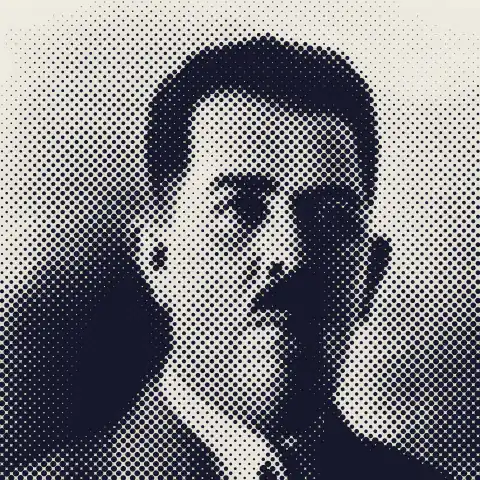
Portrait of Lázaro Cárdenas
1895-1970Mexico

Portrait: Aurelio Escobar Castellanos, CC BY 2.5, via Wikimedia Commons. Halftone version: CC BY 2.5

Lázaro Cárdenas

President of Mexico (1934-1940) · Secretary of National Defense (1942-1945) · Governor of Michoacán (1928-1932) · President of the National Revolutionary Party (PNR) · Army general

Mexican president who carried out the largest land reform in the country's history, nationalized the railways and expropriated the foreign oil companies in 1938, creating the basis for Pemex.

ECONOMYSTATE AND LIBERTYSOCIETYWORLDOwnershipMarketsWelfareAuthoritySecurityStructureMoralityReligionTechnologyCultureTradeForeign
  • Position
  • Solid, past the ring: second pole
  • Short, inside the ring: first pole
  • Balanced

★ Lázaro Cárdenas on 12 axes

Share of each pole

Economy

Equality / Markets
  • OwnershipStrong: Public
    PublicPrivate
  • MarketsModerate: Planned
    PlannedFree
  • WelfareModerate: Shared
    SharedSelf-reliant

State and liberty

Liberty / Authority
  • AuthorityModerate: Strong leader
    DemocraticStrong leader
  • SecurityMild: Liberty
    LibertyOrder
  • StructureModerate: Central
    LocalCentral

Society

Progress / Tradition
  • MoralityMild: Progressive
    ProgressiveTraditional
  • ReligionModerate: Secular
    SecularReligious
  • TechnologyNo clear record
    EmbraceCaution
  • CultureMild: Multicultural
    MulticulturalNational identity

World

Global / Nation
  • TradeModerate: Protected
    GlobalProtected
  • Foreign policyModerate: Cooperation
    CooperationStrength

How we placed it

Judgment calls

Positions summarize typical stances from primary sources and reference works. Where an axis is genuinely contested, the reasoning is below.

Authority
He ruled within a dominant-party system and organized it into corporate sectors, including the army, but he ended the Maximato, issued an amnesty and handed over power in 1940; scored well short of a personal dictatorship.
Religion
He kept socialist, secular schooling under Article 3, but eased the conflict with the Catholic Church that had marked the Calles years.
Technology
No documented position on technology regulation; left null.
Culture
Reflects the reception of tens of thousands of Spanish Republican refugees, balanced against an indigenista policy aimed at integrating Indigenous peoples into national life.
Foreign policy
Scored on his support for the Spanish Republic in the League of Nations and asylum policy, a diplomacy of principle rather than force.

One axis is marked as no clear record: there is no reasonable basis to place Lázaro Cárdenas there, so matching leaves it out.

Who was Lázaro Cárdenas?

Lázaro Cárdenas del Río was born in Jiquilpan, Michoacán, joined the revolutionary forces in 1913 and rose to general under Plutarco Elías Calles. He governed Michoacán from 1928 to 1932, led the ruling National Revolutionary Party and served as secretary of war before taking office as president in 1934. In 1936 he expelled Calles from the country, ending the period of Calles' informal rule. He later served as secretary of national defense during the Second World War and led river basin development commissions until the 1960s. He died in Mexico City in 1970.

Political views

  • Distributed about 18 million hectares of land to roughly one million peasants, with the communal ejido as the main rural unit, and created a national bank for ejido credit.

    Source: memoriapoliticademexico.org
  • Expropriated nearly all foreign oil companies on 18 March 1938 and created a state oil monopoly, later agreeing to compensate US and British firms.

    Source: history.state.gov
  • Nationalized the railways in 1937 under worker administration and backed the founding of the Confederation of Mexican Workers (CTM) in 1936.

    Source: memoriapoliticademexico.org
  • Reorganized the ruling party in 1938 as the Party of the Mexican Revolution, built on peasant, labor, military and popular sectors.

    Source: memoriapoliticademexico.org
  • Supported the Spanish Republic with arms sales and diplomacy, and received an estimated 20,000 to 40,000 Spanish refugees.

    Source: en.wikipedia.org
  • Granted asylum to Leon Trotsky and created a cabinet-level Department of Indigenous Affairs in 1936.

    Source: en.wikipedia.org

Legacy

Cárdenas is widely regarded in Mexico as the president who fulfilled the social promises of the Revolution, and the oil expropriation is still commemorated every 18 March as an act of economic sovereignty. Admirers credit him with land for peasants, organized labor, a state oil industry and a humane refugee policy. Critics argue that the ejido system kept many farmers poor and dependent on state credit, that the corporatist party he built tied unions and peasants to the government, and that his choice of successor set the custom of presidents naming the next president. Business groups and conservatives at the time opposed his reforms, and his socialist education policy provoked rural resistance before he moderated it.

In their words

I will make a government of friends, not a government for friends.
Presidential campaign pledge, 1933-1934, translated from Spanish

★ Free · 12 Axes Political Test ★

How close are you to Lázaro Cárdenas?

Take the free 12 Axes test to see your match with Lázaro Cárdenas and 347 other historical figures, axis by axis.

OptionalWant every axis explained? The Full Political Profile is an optional $9.99 deep dive. See what is inside

FAQ

Lázaro Cárdenas: questions

Why did Lázaro Cárdenas nationalize oil?

After a long labor dispute between oil workers and the foreign oil companies, he expropriated their assets on 18 March 1938 and created a state oil industry, later known as Pemex.

Was Lázaro Cárdenas a socialist?

He is usually described as a left-wing nationalist. He promoted land reform, unions, state ownership of oil and railways and socialist education, but worked within a mixed economy and a dominant-party system rather than a communist program.

What party did Lázaro Cárdenas belong to?

He belonged to the National Revolutionary Party, which he reorganized in 1938 as the Party of the Mexican Revolution, a forerunner of the Institutional Revolutionary Party (PRI).

Sources

  1. 01memoriapoliticademexico.org
  2. 02history.state.gov
  3. 03en.wikipedia.org

Image credits

Portrait of Lázaro Cárdenas: Lazaro cardenas2.jpg by Aurelio Escobar Castellanos, licensed CC BY 2.5, via Wikimedia Commons. Cropped, converted to grayscale and printed as a halftone by politicaltests.org; the halftone version is licensed CC BY 2.5.

All portrait credits and licenses