PoliticalTests
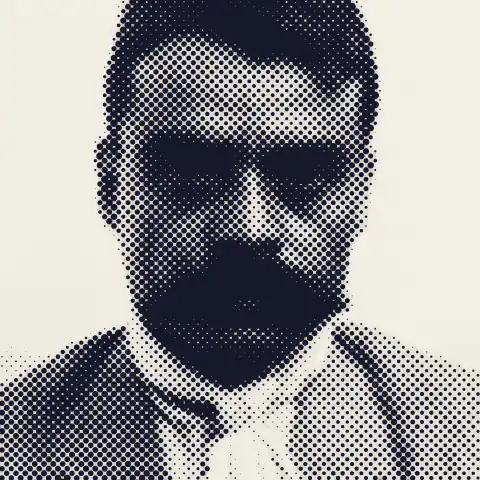
Portrait of Emiliano Zapata
1879-1919Mexico

Portrait: Agustín Casasola, Public domain, via Wikimedia Commons

Emiliano Zapata

Leader of the Liberation Army of the South (1911-1919) · General in the Mexican Revolution · Peasant leader from Anenecuilco, Morelos

Peasant leader of the Mexican Revolution from Morelos whose Plan of Ayala demanded the return of village lands and the breakup of large estates, and who fought every national government from Díaz to Carranza.

ECONOMYSTATE AND LIBERTYSOCIETYWORLDOwnershipMarketsWelfareAuthoritySecurityStructureMoralityReligionTechnologyCultureTradeForeign
  • Position
  • Solid, past the ring: second pole
  • Short, inside the ring: first pole
  • Balanced

★ Emiliano Zapata on 12 axes

Share of each pole

Economy

Equality / Markets
  • OwnershipStrong: Public
    PublicPrivate
  • MarketsModerate: Planned
    PlannedFree
  • WelfareModerate: Shared
    SharedSelf-reliant

State and liberty

Liberty / Authority
  • AuthorityMild: Democratic
    DemocraticStrong leader
  • SecurityNo clear record
    LibertyOrder
  • StructureStrong: Local
    LocalCentral

Society

Progress / Tradition
  • MoralityNo clear record
    ProgressiveTraditional
  • ReligionNo clear record
    SecularReligious
  • TechnologyNo clear record
    EmbraceCaution
  • CultureMild: Multicultural
    MulticulturalNational identity

World

Global / Nation
  • TradeNo clear record
    GlobalProtected
  • Foreign policyNo clear record
    CooperationStrength

How we placed it

Judgment calls

Positions summarize typical stances from primary sources and reference works. Where an axis is genuinely contested, the reasoning is below.

Ownership
His program returned land to villages and, from 1915, expropriated large estates without compensation for communal use, with seized sugar mills run as public enterprises. It aimed at village and smallholder ownership rather than state ownership of the economy.
Markets
Under Zapatista rule in Morelos, farmers were encouraged to grow sugar cane for sale to the mills and agricultural credit was set up, so the score is left of center but not at the pole.
Authority
He led an armed rebellion and the Plan of Ayala had revolutionary chiefs choose an interim president, while his 1916 municipal law provided for elected town councils with no re-election.
Security
There is no clear documented position on civil liberties or policing; left null.
Culture
Based on the manifestos his headquarters issued in Nahuatl to Indigenous villages and the restitution of communal lands; there is little record of his views on immigration.

6 axes are marked as no clear record: there is no reasonable basis to place Emiliano Zapata there, so matching leaves them out.

Who was Emiliano Zapata?

Emiliano Zapata Salazar was born in 1879 in Anenecuilco, Morelos, a village in conflict with expanding sugar estates. In 1909 the village chose him to lead its fight to recover its lands, and he joined Madero's revolution in 1911, taking Cuautla. When Madero delayed land reform, Zapata proclaimed the Plan of Ayala in November 1911 and fought the governments of Madero, Huerta and Carranza with the Liberation Army of the South. Allied with Pancho Villa, he entered Mexico City in late 1914. From 1915 his forces ran Morelos and distributed land to the villages. He was killed in an ambush arranged by Carranza's forces at Chinameca on 10 April 1919.

Political views

Legacy

Zapata became the best-known symbol of the struggle for land in Mexico and across Latin America, and the phrase 'the land belongs to those who work it' is linked with his name. Admirers see him as an incorruptible leader of the rural poor who refused to compromise, and the 1917 Constitution's land reform article is often read as a response to his movement. Opponents in his own time called him a bandit and the 'Attila of the South', and the federal and Constitutionalist campaigns against his movement devastated villages in Morelos. Historians debate how far his movement was Indigenous, local or national in outlook. His name was later taken by the Zapatista Army of National Liberation, which rose in Chiapas in 1994.

In their words

★ Free · 12 Axes Political Test ★

How close are you to Emiliano Zapata?

Take the free 12 Axes test to see your match with Emiliano Zapata and 347 other historical figures, axis by axis.

OptionalWant every axis explained? The Full Political Profile is an optional $9.99 deep dive. See what is inside

FAQ

Emiliano Zapata: questions

What did Emiliano Zapata fight for?

He fought for the return of village lands taken by large estates and for land for peasants who had none, as set out in his Plan of Ayala of 1911.

Was Emiliano Zapata ever president of Mexico?

No. He led the revolutionary army of the south and controlled the state of Morelos for long periods, but never held national office.

How did Emiliano Zapata die?

He was shot on 10 April 1919 at the Chinameca hacienda in Morelos, in an ambush set by Colonel Jesús Guajardo, an officer of Carranza's army who had pretended to defect.