PoliticalTests
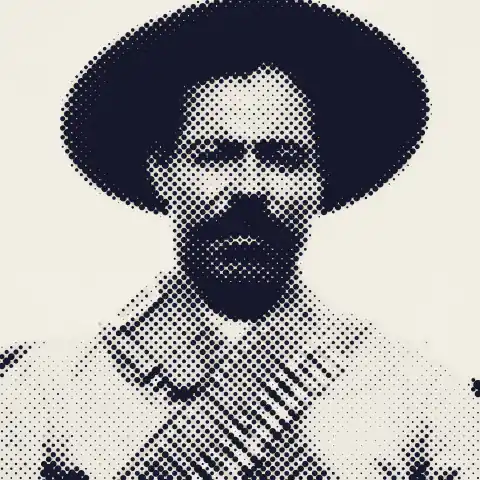
Portrait of Pancho Villa
1878-1923Mexico

Portrait: Bain News Service, publisher. Photographer is unknown., Public domain, via Wikimedia Commons

Pancho Villa

Commander of the Division of the North in the Mexican Revolution (1913-1915) · Provisional Governor of Chihuahua (1913-1914) · General in the Mexican Revolution

Revolutionary general from Durango who led the Division of the North against Huerta, confiscated the great estates of Chihuahua, broke with Carranza and raided Columbus, New Mexico, in 1916.

ECONOMYSTATE AND LIBERTYSOCIETYWORLDOwnershipMarketsWelfareAuthoritySecurityStructureMoralityReligionTechnologyCultureTradeForeign
  • Position
  • Solid, past the ring: second pole
  • Short, inside the ring: first pole
  • Balanced

★ Pancho Villa on 12 axes

Share of each pole

Economy

Equality / Markets
  • OwnershipModerate: Public
    PublicPrivate
  • MarketsMild: Planned
    PlannedFree
  • WelfareModerate: Shared
    SharedSelf-reliant

State and liberty

Liberty / Authority
  • AuthorityModerate: Strong leader
    DemocraticStrong leader
  • SecurityStrong: Order
    LibertyOrder
  • StructureNo clear record
    LocalCentral

Society

Progress / Tradition
  • MoralityNo clear record
    ProgressiveTraditional
  • ReligionNo clear record
    SecularReligious
  • TechnologyNo clear record
    EmbraceCaution
  • CultureModerate: National identity
    MulticulturalNational identity

World

Global / Nation
  • TradeNo clear record
    GlobalProtected
  • Foreign policyModerate: Strength
    CooperationStrength

How we placed it

Judgment calls

Positions summarize typical stances from primary sources and reference works. Where an axis is genuinely contested, the reasoning is below.

Ownership
In Chihuahua he confiscated without compensation the estates of the leading Porfirian families and ran them through a state agency, while his stated ideal was a republic of independent smallholders and military colonies.
Authority
A military chief chosen by his own brigade commanders, he accepted the authority of the 1914 Convention and told John Reed that armies were the main support of tyranny; scored on his record as a regional strongman rather than at the pole.
Security
He imposed strict discipline, executed prisoners and opponents and, after his 1915 defeats, resorted to forced recruitment and mass killings such as the one at San Pedro de la Cueva in Sonora.
Culture
Reflects his expulsion of Spaniards from Chihuahua in 1913 and the killings of Chinese residents by his forces in later years.
Foreign policy
Scored on the 1916 raid on Columbus, New Mexico, and his calls to resist the United States Punitive Expedition.

5 axes are marked as no clear record: there is no reasonable basis to place Pancho Villa there, so matching leaves them out.

Who was Pancho Villa?

Doroteo Arango Arámbula, known as Francisco or Pancho Villa, was born in 1878 near San Juan del Río, Durango, to a poor rural family and lived for years as an outlaw. He joined Madero's revolution in 1910 and, after Madero's murder, built the Division of the North, the strongest revolutionary army of the war against Huerta. He briefly governed Chihuahua in 1913 and 1914. He split with Venustiano Carranza in 1914, allied with Zapata and was defeated by Álvaro Obregón at Celaya in 1915. After the 1916 Columbus raid he evaded a United States expedition, surrendered in 1920 in exchange for a hacienda, and was assassinated in Parral in 1923.

Political views

Legacy

Villa is one of the most famous and divisive figures of the Mexican Revolution. Admirers see a self-taught leader of the poor of the north, a brilliant cavalry commander and a symbol of resistance to the United States, and his remains were moved to the Monument to the Revolution in 1976. Critics, including many historians, stress his record of violence: summary executions, forced recruitment, killings of Chinese residents and massacres of villagers after his defeats, together with looting by his men. His decrees confiscating the property of the Porfirian elite were among the most radical of the revolution, though the estates were mainly run to finance his army rather than divided. The Columbus raid made him a feared name in the United States for years.

In their words

When the new Republic is established there will never be any more army in Mexico. Armies are the greatest support of tyranny. There can be no dictator without an army.
As told to John Reed, Insurgent Mexico, 1914

★ Free · 12 Axes Political Test ★

How close are you to Pancho Villa?

Take the free 12 Axes test to see your match with Pancho Villa and 347 other historical figures, axis by axis.

OptionalWant every axis explained? The Full Political Profile is an optional $9.99 deep dive. See what is inside

FAQ

Pancho Villa: questions

Why did Pancho Villa attack Columbus, New Mexico?

The motives are still debated. The raid of March 1916 came after the United States recognized his rival Carranza and cut off his arms supplies, and historians have pointed to revenge, a bid to provoke intervention and rally Mexicans, and other explanations.

Was Pancho Villa ever president of Mexico?

No. He commanded the Division of the North and governed Chihuahua briefly, but he never held national office.

Was Pancho Villa a hero or a bandit?

Both views have long existed. Supporters remember a leader of the poor and a gifted general, while critics point to his years as an outlaw and the executions and massacres carried out by his forces.