PoliticalTests
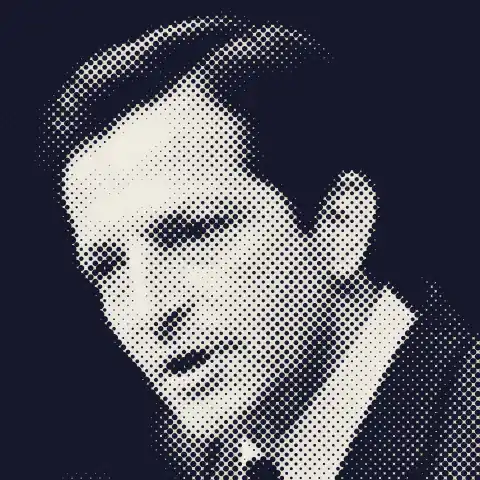
Portrait of Adolfo Suárez
1932-2014Spain

Portrait: Ministerio de la Presidencia. Gobierno de España., Public domain, via Wikimedia Commons

Adolfo Suárez

Prime Minister of Spain (1976-1981) · Founder and leader of the Union of the Democratic Centre (UCD) · Founder of the Democratic and Social Centre (CDS) · Minister Secretary General of the Movimiento (1975-1976) · Deputy for Madrid (1977-1991)

Spanish prime minister who led the transition from the Franco dictatorship to democracy, legalizing parties, calling the 1977 elections and steering the 1978 Constitution through broad consensus.

ECONOMYSTATE AND LIBERTYSOCIETYWORLDOwnershipMarketsWelfareAuthoritySecurityStructureMoralityReligionTechnologyCultureTradeForeign
  • Position
  • Solid, past the ring: second pole
  • Short, inside the ring: first pole
  • Balanced

★ Adolfo Suárez on 12 axes

Share of each pole

Economy

Equality / Markets
  • OwnershipBalanced
    PublicPrivate
  • MarketsBalanced
    PlannedFree
  • WelfareMild: Shared
    SharedSelf-reliant

State and liberty

Liberty / Authority
  • AuthorityModerate: Democratic
    DemocraticStrong leader
  • SecurityMild: Order
    LibertyOrder
  • StructureModerate: Local
    LocalCentral

Society

Progress / Tradition
  • MoralityMild: Traditional
    ProgressiveTraditional
  • ReligionMild: Religious
    SecularReligious
  • TechnologyNo clear record
    EmbraceCaution
  • CultureMild: Multicultural
    MulticulturalNational identity

World

Global / Nation
  • TradeMild: Global
    GlobalProtected
  • Foreign policyMild: Cooperation
    CooperationStrength

How we placed it

Judgment calls

Positions summarize typical stances from primary sources and reference works. Where an axis is genuinely contested, the reasoning is below.

Authority
Scored on his record as the prime minister who dismantled the Franco regime's institutions through legal reform and called free elections; he had built his early career inside the regime's single movement.
Structure
His governments negotiated the 1979 statutes of autonomy for Catalonia and the Basque Country and proposed a gradual, uneven transfer of powers to the regions.
Technology
No documented position on technology regulation; left null.
Culture
The 1978 Constitution passed under his government recognized Spain's nationalities and regional languages; there is little record on immigration, so the score is mild.
Foreign policy
He made entry into the European Economic Community a priority but left the NATO question to Parliament and kept an independent line toward Latin America and the Arab world.

One axis is marked as no clear record: there is no reasonable basis to place Adolfo Suárez there, so matching leaves it out.

Who was Adolfo Suárez?

Adolfo Suárez González, a law graduate from Cebreros in Ávila, rose through the institutions of the Franco regime, serving as civil governor of Segovia, head of state radio and television and minister of the Movimiento. King Juan Carlos I appointed him head of government in July 1976. Within a year the Francoist Cortes voted itself out of existence through the Law for Political Reform, the Communist Party was legalized and Spain held its first free general election since 1936, won by his new Union of the Democratic Centre (UCD). He governed until he resigned in January 1981, weakened by divisions in his party, and later led the smaller Democratic and Social Centre until 1991.

Political views

  • Promoted the Law for Political Reform, approved by the Francoist Cortes in November 1976, which opened the way to an elected parliament.

    Source: historymatters.sites.sheffield.ac.uk
  • Legalized the Communist Party of Spain in April 1977, before the first democratic election.

    Source: lamoncloa.gob.es
  • Backed the October 1977 amnesty law covering politically motivated acts committed before the democratic transition.

    Source: boe.es
  • Negotiated the Moncloa Pacts of 1977 with the opposition parties to tackle inflation and agree economic and political reforms.

    Source: lamoncloa.gob.es
  • Approved the 1979 Statute of Autonomy of Catalonia and promised a gradual process of self-government for the regions.

    Source: boe.es
  • Set entry into the European Economic Community as a foreign policy priority in his 1979 investiture speech, while deferring the NATO debate.

    Source: lamoncloa.gob.es

Legacy

Suárez is widely regarded as the principal political architect of Spain's transition to democracy, and his calm when Lieutenant Colonel Tejero stormed Parliament during the February 1981 coup attempt added to his standing. Admirers credit him with a negotiated, peaceful path out of dictatorship, with the 1978 Constitution and with bringing the left, including the communists, into the system. Critics on the left argue that the pacted transition left Franco-era officials unaccountable, a point linked to the 1977 amnesty, while conservatives at the time accused him of moving too fast, especially on legalizing the Communist Party and on regional autonomy. His party broke apart soon after he left office.

★ Free · 12 Axes Political Test ★

How close are you to Adolfo Suárez?

Take the free 12 Axes test to see your match with Adolfo Suárez and 347 other historical figures, axis by axis.

OptionalWant every axis explained? The Full Political Profile is an optional $9.99 deep dive. See what is inside

FAQ

Adolfo Suárez: questions

What political party was Adolfo Suárez?

He founded and led the Union of the Democratic Centre (UCD), a coalition of centrist, Christian democratic, liberal and social democratic groups, and later founded the Democratic and Social Centre (CDS).

Why is Adolfo Suárez important?

As prime minister from 1976 to 1981 he led the legal dismantling of the Franco regime, legalized political parties, held the first free elections in 1977 and oversaw the 1978 Constitution.

Was Adolfo Suárez left or right?

He is usually described as a centrist. He came from the Franco regime and led a centre-right coalition, but governed by consensus with the left and later led the small centrist CDS.