
PoliticalTests
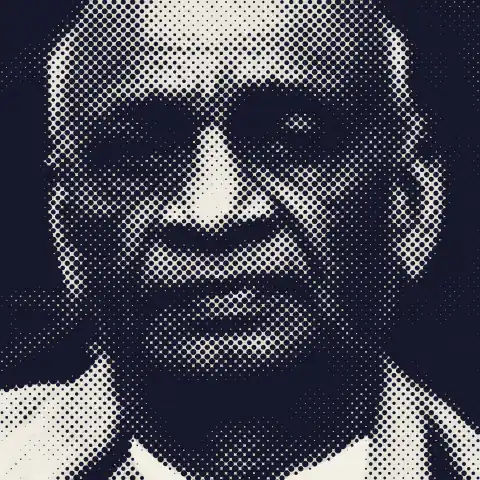
Portrait of Vallabhbhai Patel
1875-1950India

Portrait: Government of India work, Public domain, via Wikimedia Commons

Vallabhbhai Patel

1st Deputy Prime Minister of India (1947-1950) · 1st Minister of Home Affairs of India (1947-1950) · President of the Indian National Congress (1931) · Leader of the Indian independence movement

Independence leader and India's first deputy prime minister and home minister, who merged hundreds of princely states into the Indian Union and built the All India Services.

ECONOMYSTATE AND LIBERTYSOCIETYWORLDOwnershipMarketsWelfareAuthoritySecurityStructureMoralityReligionTechnologyCultureTradeForeign
  • Position
  • Solid, past the ring: second pole
  • Short, inside the ring: first pole
  • Balanced

★ Vallabhbhai Patel on 12 axes

Share of each pole

Economy

Equality / Markets
  • OwnershipMild: Private
    PublicPrivate
  • MarketsMild: Free
    PlannedFree
  • WelfareBalanced
    SharedSelf-reliant

State and liberty

Liberty / Authority
  • AuthorityMild: Strong leader
    DemocraticStrong leader
  • SecurityModerate: Order
    LibertyOrder
  • StructureStrong: Central
    LocalCentral

Society

Progress / Tradition
  • MoralityNo clear record
    ProgressiveTraditional
  • ReligionMild: Secular
    SecularReligious
  • TechnologyNo clear record
    EmbraceCaution
  • CultureModerate: National identity
    MulticulturalNational identity

World

Global / Nation
  • TradeNo clear record
    GlobalProtected
  • Foreign policyModerate: Strength
    CooperationStrength

How we placed it

Judgment calls

Positions summarize typical stances from primary sources and reference works. Where an axis is genuinely contested, the reasoning is below.

Ownership
Opposed making socialism the Congress goal in 1936 and was seen as more pro-capitalist than Nehru, while also helping farmers found the Kaira milk cooperative; scored mildly toward private ownership.
Welfare
Presided over the 1931 Karachi resolution, which backed a minimum wage and the abolition of serfdom, but left little record on redistribution after independence; scored at the middle.
Authority
Worked within elections and the Constituent Assembly, but was called authoritarian by Subhas Chandra Bose's supporters in 1938 and earned the name Iron Man for his firm use of executive power; scored slightly toward strong leadership.
Security
As home minister he imposed curfews and shoot-on-sight orders during the partition riots and banned the RSS after Gandhi's assassination; scored toward order.
Morality
His sources here record little on family, gender or personal morality, so left unscored.
Religion
Argued that a government professing secularism could not reserve evacuee housing for one community, and also pledged the rebuilding of the Somnath temple through a public trust; scored slightly secular.
Technology
No documented position on technology, so left unscored.
Culture
Pressed for a single, unified nation and helped end separate electorates for religious minorities; critics, including Gandhi at times, said he was less attentive to Muslims' fears. Scored toward national identity.
Trade
No documented position on trade separate from the wider economy, so left unscored.

3 axes are marked as no clear record: there is no reasonable basis to place Vallabhbhai Patel there, so matching leaves them out.

Who was Vallabhbhai Patel?

Vallabhbhai Patel was born in Nadiad, Gujarat, in 1875 and trained as a lawyer in London. One of Mohandas Gandhi's earliest lieutenants, he led peasant campaigns in Gujarat, where he was first called Sardar, meaning chief. He presided over the Congress in 1931 and later ran its election machinery. After independence he served as deputy prime minister and home minister under Jawaharlal Nehru and led the integration of the princely states. He died in Bombay in December 1950.

Political views

  • Led nonviolent tax-refusal campaigns by peasants in Kheda and, in 1928, in Bardoli.

    Source: en.wikipedia.org
  • Was perceived as more pro-Western and pro-capitalist than Nehru, and differed with him over the treatment of minorities.

    Source: bbc.com
  • Was among the first Congress leaders to accept partition, telling the party that the choice was between one division and many divisions.

    Source: en.wikipedia.org
  • Persuaded most of the 565 princely rulers to merge their states with India by offering them dignity and privy purses, while using force in Junagadh and Hyderabad.

    Source: web.archive.org
  • Defended the inherited civil service and argued that a united India needed an all-India service free to speak its mind to ministers.

    Source: web.archive.org
  • Banned the RSS after Gandhi's assassination in 1948 and lifted the ban in 1949 once it adopted a written constitution pledging loyalty to the Constitution and the national flag.

    Source: en.wikipedia.org
  • Advised Nehru against taking the Kashmir dispute to the United Nations, insisting that the state's accession to India was valid.

    Source: en.wikipedia.org

Legacy

Patel is remembered as the Iron Man of India who unified the country, and he was awarded the Bharat Ratna in 1991. His birthday is National Unity Day, and the Statue of Unity, the world's tallest statue, was dedicated to him in 2018, though local farmers protested its cost. Congress and the BJP both claim his legacy; historian Ramachandra Guha says that to Nehru, Patel was more comrade than rival. Critics, including Gandhi and secular Muslim leaders at the time, faulted his eagerness for partition and his handling of Muslims' fears. A government-commissioned inquiry later estimated that 27,000 to 40,000 people died during and after the 1948 military action in Hyderabad.

In their words

Remove them and I see nothing but a picture of chaos all over the country.
Speech defending the civil services, Constituent Assembly of India, 10 October 1949

★ Free · 12 Axes Political Test ★

How close are you to Vallabhbhai Patel?

Take the free 12 Axes test to see your match with Vallabhbhai Patel and 347 other historical figures, axis by axis.

OptionalWant every axis explained? The Full Political Profile is an optional $9.99 deep dive. See what is inside

FAQ

Vallabhbhai Patel: questions

What political party was Vallabhbhai Patel?

Patel belonged to the Indian National Congress throughout his career. He was its president in 1931, ran its election organisation in the 1930s and served in Nehru's Congress government until his death.

Why is Sardar Patel called the Iron Man of India?

He earned the name for his firmness in persuading, and when needed pressing, more than 560 princely states to join the Indian Union after independence, including Junagadh and Hyderabad.

Was Patel more right wing than Nehru?

On economics he was seen as more pro-business and opposed declaring socialism the Congress goal, and he took a harder line on Pakistan and Kashmir. Historians stress that the two worked closely together despite their differences.