
PoliticalTests
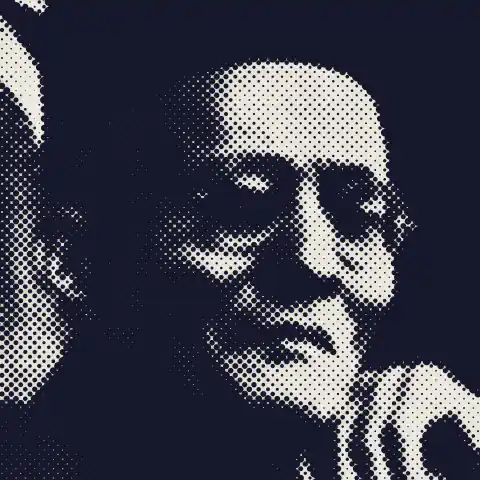
Portrait of Vinayak Damodar Savarkar
1883-1966India

Portrait: User:Jayantanth, Public domain, via Wikimedia Commons

Vinayak Damodar Savarkar

President of the Akhil Bharatiya Hindu Mahasabha (1937-1943) · Revolutionary in the Indian independence movement · Theorist of Hindutva and author of Essentials of Hindutva · Writer and social reformer

Revolutionary, prisoner of the Andaman Cellular Jail and president of the Hindu Mahasabha, who defined Hindutva, campaigned against untouchability and remains one of India's most divisive figures.

ECONOMYSTATE AND LIBERTYSOCIETYWORLDOwnershipMarketsWelfareAuthoritySecurityStructureMoralityReligionTechnologyCultureTradeForeign
  • Position
  • Solid, past the ring: second pole
  • Short, inside the ring: first pole
  • Balanced

★ Vinayak Damodar Savarkar on 12 axes

Share of each pole

Economy

Equality / Markets
  • OwnershipNo clear record
    PublicPrivate
  • MarketsNo clear record
    PlannedFree
  • WelfareNo clear record
    SharedSelf-reliant

State and liberty

Liberty / Authority
  • AuthorityModerate: Strong leader
    DemocraticStrong leader
  • SecurityModerate: Order
    LibertyOrder
  • StructureStrong: Central
    LocalCentral

Society

Progress / Tradition
  • MoralityBalanced
    ProgressiveTraditional
  • ReligionMild: Religious
    SecularReligious
  • TechnologyModerate: Embrace
    EmbraceCaution
  • CultureStrong: National identity
    MulticulturalNational identity

World

Global / Nation
  • TradeNo clear record
    GlobalProtected
  • Foreign policyStrong: Strength
    CooperationStrength

How we placed it

Judgment calls

Positions summarize typical stances from primary sources and reference works. Where an axis is genuinely contested, the reasoning is below.

Ownership
His sources here say little about ownership, markets, welfare or trade, so those axes are left unscored.
Authority
Took part in elections and provincial coalitions, but in 1938 defended Germany's and Italy's right to choose Nazism and Fascism and later contrasted Nehru's democracy unfavourably with them; scored toward strong leadership.
Morality
Campaigned against untouchability and for inter-caste dining and marriage, while describing women's main duties as home and children; mixed, scored at the middle.
Religion
A self-described atheist who mocked practices he saw as irrational, yet he wanted a Hindu Rashtra and urged Hindus to 'Hinduise all politics'; scored mildly toward religion shaping public life, as a cultural more than a devotional identity.
Culture
Defined the nation by a shared Hindu culture and holy land and described Hindus and Muslims as two nations, placing him at the national identity pole.

4 axes are marked as no clear record: there is no reasonable basis to place Vinayak Damodar Savarkar there, so matching leaves them out.

Who was Vinayak Damodar Savarkar?

Vinayak Damodar Savarkar was born in 1883 near Nashik and founded the secret revolutionary society Abhinav Bharat as a young man. In London he joined India House and wrote a history of the 1857 rebellion as a war of independence, which the British banned. Arrested in 1910, he escaped briefly at Marseille, was sentenced to transportation for life and held in the Cellular Jail in the Andamans. Released in 1924 under restrictions after several clemency petitions, he wrote Essentials of Hindutva and later led the Hindu Mahasabha from 1937 to 1943. He was tried and acquitted in the Gandhi assassination case and died in 1966.

Political views

  • Defined a Hindu as a person who regards India as both fatherland and holy land, treating Hindutva as a cultural and political identity rather than a matter of worship.

    Source: en.wikipedia.org
  • Told the Hindu Mahasabha in 1937 that Hindus and Muslims were two nations in the main, a view scholars link to the two-nation theory.

    Source: en.wikipedia.org
  • Opposed the 1942 Quit India movement and urged Hindus to join the armed forces during the Second World War to learn the arts of war.

    Source: en.wikipedia.org
  • Called for the end of caste discrimination and untouchability, founded the Patit Pavan temple at Ratnagiri open to all castes and organised inter-caste meals.

    Source: indianexpress.com
  • Argued in his 1931 essay on the seven shackles of Hindu society that birth into a caste does not determine a person's talent or character.

    Source: indianexpress.com
  • Wrote from the Cellular Jail in 1913 that, if released, he would be the staunchest advocate of constitutional progress and loyalty to the British government.

    Source: timesofindia.indiatimes.com

Legacy

Supporters honour him as Veer, the brave, for his revolutionary youth and years in the Andamans, and as a rationalist reformer against caste; Port Blair's airport was named after him in 2002 and Indira Gandhi's government issued a stamp in his honour in 1970. Critics point to his clemency petitions, his opposition to the Quit India movement and writings they describe as hostile to Muslims and Christians. Some historians, such as Shamsul Islam, argue that Hindu Mahasabha records show a weaker commitment against caste than admirers claim. He was acquitted in 1949 for lack of corroborating evidence, though the Kapur Commission of 1969 later found facts pointing to a conspiracy by Savarkar and his group, a finding his defenders reject. His legacy remains a sharp dividing line between the BJP and the Congress.

In their words

I feel the need to rebel against caste discrimination and untouchability as much as I feel the need to fight against the foreign occupation of India.
Letter to his brother Narayanrao, 6 July 1920 (as translated in The Indian Express)

★ Free · 12 Axes Political Test ★

How close are you to Vinayak Damodar Savarkar?

Take the free 12 Axes test to see your match with Vinayak Damodar Savarkar and 347 other historical figures, axis by axis.

OptionalWant every axis explained? The Full Political Profile is an optional $9.99 deep dive. See what is inside

FAQ

Vinayak Damodar Savarkar: questions

What political party was Savarkar?

Savarkar led the Akhil Bharatiya Hindu Mahasabha as its president from 1937 to 1943. Earlier he founded the revolutionary society Abhinav Bharat. The BJP and the wider Sangh Parivar have adopted him as one of their icons.

What is Savarkar's definition of Hindutva?

In Essentials of Hindutva, written in prison and published in 1923, he described a Hindu as someone who sees India as both fatherland and holy land. He presented Hindutva as a shared culture and nationhood, not a religious practice.

Was Savarkar involved in Gandhi's assassination?

He was tried with Nathuram Godse and others but acquitted in 1949 because the approver's evidence against him lacked independent corroboration. The Kapur Commission, which reported in 1969, reached findings unfavourable to him, but no court convicted him.