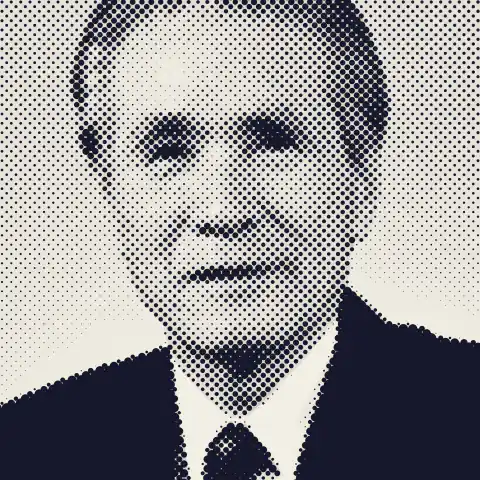
 Japan
Who was Tomiichi Murayama?
Tomiichi Murayama was born in 1924 in Oita Prefecture, the son of a fisherman, and graduated from Meiji University. He became a labor union official and rose through the Oita city and prefectural assemblies before entering the House of Representatives for the Japan Socialist Party in 1972. He became party chairman in 1993. In June 1994 the Liberal Democratic Party, out of power for the first time since 1955, joined the Socialists and New Party Sakigake in a coalition that made him prime minister. His government faced the Great Hanshin earthquake and the Tokyo subway sarin attack in 1995. He stepped down in January 1996, retired from the Diet in 2000 and died in Oita in October 2025, aged 101.
Political views
Declared in 1994 that the Self-Defense Forces were constitutional and that the Japan-US Security Treaty would be maintained, reversing long-held Socialist positions.
Source: en.wikipedia.orgIssued a statement on the 50th anniversary of the war's end expressing deep remorse and a heartfelt apology for Japan's colonial rule and aggression.
Source: japan.kantei.go.jpEncouraged the Asian Women's Fund, set up in 1995 to compensate former comfort women from private donations, and later led the fund.
Source: en.wikipedia.orgLed the government that passed the 1994 tax reform raising the consumption tax from 3 to 5 percent from 1997, paired with income tax cuts.
Source: nippon.comPassed the 1994 Atomic Bomb Survivors Relief Act, extending support to survivors of Hiroshima and Nagasaki.
Source: en.wikipedia.orgCame out of retirement in 2015 to lead opposition to the Abe government's security bills and urged a view of history based on facts.
Source: koreajoongangdaily.com
Legacy
Admirers remember Murayama for the 1995 statement, which later cabinets repeatedly pledged to uphold and which became the benchmark for how Japan speaks about its wartime past, and for a modest, consensual style. Critics on the left argue that he gave up the Socialist Party's core positions on defense and the US alliance in exchange for office, and the party never recovered, shrinking into the small Social Democratic Party. Critics on the right rejected the apology itself. His government was also faulted for a slow response to the 1995 Kobe earthquake, which killed more than 6,000 people.
In their words
I regard, in a spirit of humility, these irrefutable facts of history, and express here once again my feelings of deep remorse and state my heartfelt apology.