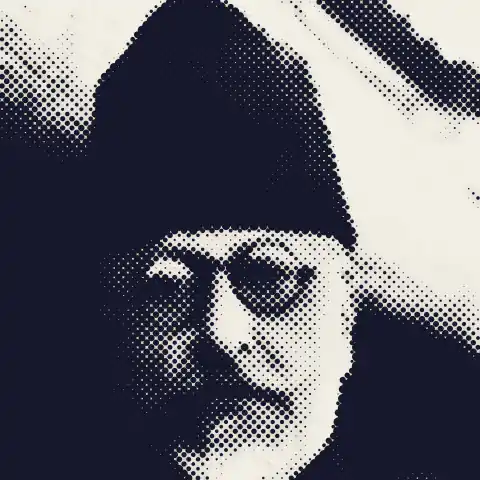
 India
Who was Maulana Abul Kalam Azad?
Abul Kalam Azad was born in Mecca in 1888 and raised in Calcutta in a family of Islamic scholars. He made his name as an Urdu journalist whose paper Al-Hilal attacked British rule, and he became a leader of the Khilafat movement and a close ally of Mohandas Gandhi. In 1923, aged 35, he became the youngest president of the Indian National Congress, which he led again from 1940 to 1946. From 1947 until his death in 1958 he served as India's first education minister under Jawaharlal Nehru.
Political views
Endorsed the end of separate electorates based on religion and called for an independent India committed to secularism.
Source: en.wikipedia.orgRepudiated the two-nation theory, calling it one of the greatest frauds to suggest that religion alone could unite regions that differed in every other way.
Source: web.archive.orgArgued that India's real problems were economic and differences of class, not of community.
Source: web.archive.orgOpposed partition and favoured a confederation of autonomous provinces sharing common defence and economy.
Source: makaias.gov.inSupported making socialism a Congress goal in 1936 and later backed Nehru's socialist economic and industrial policies.
Source: en.wikipedia.orgAs education minister pushed for free and compulsory schooling up to age 14, adult literacy and girls' education, and oversaw the first Indian Institute of Technology and the University Grants Commission.
Source: en.wikipedia.orgUrged Muslims to stay in India after partition and clashed with Vallabhbhai Patel over the safety and rehabilitation of Muslims in Delhi.
Source: en.wikipedia.org
Legacy
Azad is honoured in India as a symbol of secular nationalism and of the Muslims who rejected partition. His birthday, 11 November, is National Education Day, and he was posthumously awarded the Bharat Ratna in 1992. Muslim League leaders attacked him as a Congress show-boy who left Muslims to Hindu domination, and Pakistani histories largely ignore him. Historian Mushirul Hasan argues that he was a thinker more than a mass organiser, often sidelined by his own colleagues in key negotiations. His memoir India Wins Freedom, some pages of which were released only in 1988, portrayed Patel as having become more eager for partition than the Muslim League itself, a claim that remains debated.
In their words
I am proud of being an Indian. I am part of the indivisible unity that is Indian nationality.