 Italy
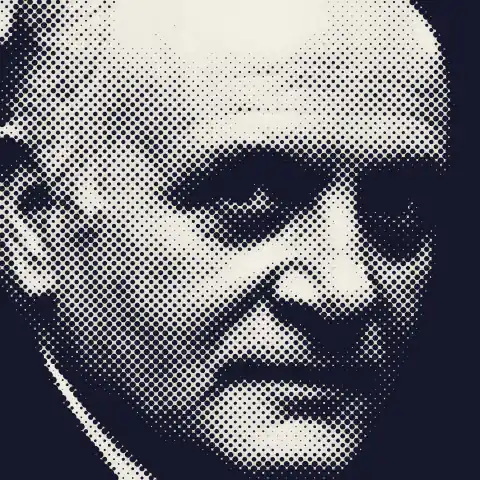
Who was Altiero Spinelli?
Altiero Spinelli was born in Rome and joined the Communist Party of Italy at 17. Arrested by the Fascist regime in 1927, he spent ten years in prison and six more in confinement, and broke with the communists in 1937 over Stalinism. Interned on the island of Ventotene, he wrote with Ernesto Rossi and Eugenio Colorni the 1941 manifesto For a Free and United Europe. After the war he led the European Federalist Movement and pressed governments to go beyond intergovernmental cooperation. He served on the European Commission from 1970 to 1976 and was elected to the European Parliament as an independent on the Communist list, where his Crocodile Club produced the Draft Treaty Establishing the European Union, adopted in 1984.
Political views
Argued in the Ventotene Manifesto that defeating fascism would be in vain if Europe returned to rival sovereign nation states.
Source: en.wikipedia.orgDeclared that the European revolution must be socialist, freeing the working classes, but without dogmatic rules on property.
Source: en.wikipedia.orgCriticized the small-steps approach to integration and the dominance of national governments over European bodies.
Source: en.wikipedia.orgPersuaded Alcide De Gasperi to seek a parliamentary assembly to draft a federal constitution for Europe in the defence community treaty.
Source: en.wikipedia.orgWrote the European Parliament's 1984 draft treaty for a European Union, which fed into the Single European Act and the Maastricht Treaty.
Source: en.wikipedia.orgHeld that only a united, federal Europe could halt Soviet expansion.
Source: en.wikipedia.org
Legacy
Spinelli is counted among the founding fathers of the European Union. The main building of the European Parliament in Brussels bears his name, and a cross-party Spinelli Group founded in 2010 campaigns for a federal Europe. Admirers credit him with turning federalism from a prison manifesto into a political programme and with strengthening the European Parliament. Federalists themselves note that governments buried his 1984 draft and that the treaties that followed fell well short of his aims. Eurosceptics and sovereigntists cite the Ventotene Manifesto as proof that European integration was designed to dissolve nation states, and some critics on the right point to its socialist language on property and revolution.