PoliticalTests
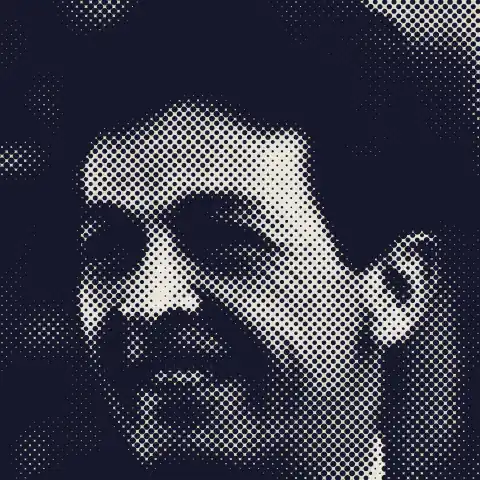
Portrait of Enrico Berlinguer
1922-1984Italy

Portrait: Unknown author, Public domain, via Wikimedia Commons

Enrico Berlinguer

General Secretary of the Italian Communist Party (1972-1984) · Member of the Italian Chamber of Deputies (1968-1984)

Italian Communist leader from 1972 to 1984 who distanced his party from Moscow, championed Eurocommunism and the historic compromise with Christian Democracy, and led the PCI to its best ever result in 1976.

ECONOMYSTATE AND LIBERTYSOCIETYWORLDOwnershipMarketsWelfareAuthoritySecurityStructureMoralityReligionTechnologyCultureTradeForeign
  • Position
  • Solid, past the ring: second pole
  • Short, inside the ring: first pole
  • Balanced

★ Enrico Berlinguer on 12 axes

Share of each pole

Economy

Equality / Markets
  • OwnershipModerate: Public
    PublicPrivate
  • MarketsModerate: Planned
    PlannedFree
  • WelfareModerate: Shared
    SharedSelf-reliant

State and liberty

Liberty / Authority
  • AuthorityMild: Democratic
    DemocraticStrong leader
  • SecurityMild: Order
    LibertyOrder
  • StructureNo clear record
    LocalCentral

Society

Progress / Tradition
  • MoralityNo clear record
    ProgressiveTraditional
  • ReligionMild: Secular
    SecularReligious
  • TechnologyNo clear record
    EmbraceCaution
  • CultureNo clear record
    MulticulturalNational identity

World

Global / Nation
  • TradeNo clear record
    GlobalProtected
  • Foreign policyModerate: Cooperation
    CooperationStrength

How we placed it

Judgment calls

Positions summarize typical stances from primary sources and reference works. Where an axis is genuinely contested, the reasoning is below.

Ownership
Remained committed to a radical transformation of society beyond capitalism, while ruling out the Soviet model.
Authority
Committed the party to pluralist democracy and condemned Soviet interference, though the PCI kept its centralized internal discipline; scored moderately democratic.
Security
Took the "front of firmness" during the Moro kidnapping, refusing any deal with the Red Brigades, and backed tougher state action against terrorism.
Structure
No clear documented position on regional power, although his party governed several regions; left null.
Morality
No documented personal position on family or moral questions; left null.
Religion
Sought an alliance with the Catholic world through the historic compromise; scored near neutral.
Foreign policy
Accepted Italy's place in NATO, saying he felt safer under its umbrella, and broke with Moscow over Afghanistan and Poland.

5 axes are marked as no clear record: there is no reasonable basis to place Enrico Berlinguer there, so matching leaves them out.

Who was Enrico Berlinguer?

Enrico Berlinguer was born in Sassari, Sardinia, into a family of anti-fascist lawyers and joined the Communist Party in 1943. He led its youth federation and rose through the party apparatus, entering the Chamber of Deputies in 1968 and becoming general secretary in 1972. After the 1973 coup in Chile he proposed a historic compromise between communists, socialists and Catholics to protect Italian democracy. The party won 34.4 percent in 1976 and then gave outside support to governments of national solidarity until 1979. He condemned the Soviet invasion of Afghanistan and martial law in Poland. He collapsed while speaking at a rally in Padua in June 1984 and died days later.

Political views

  • Proposed in 1973, after the coup in Chile, a historic compromise between the communist, socialist and Catholic traditions.

    Source: en.wikipedia.org
  • Laid out the principles of Eurocommunism with the Spanish and French communist leaders in Madrid in 1977.

    Source: en.wikipedia.org
  • Said in 1976 that he felt safer under NATO's umbrella than in the Soviet bloc.

    Source: en.wikipedia.org
  • Refused any negotiation with the Red Brigades during the kidnapping of Aldo Moro in 1978.

    Source: en.wikipedia.org
  • Presented austerity as an ethical and political choice that pointed toward a different kind of society.

    Source: treccani.it
  • Said in 1981 that the progressive force of the October Revolution was exhausted, completing the break with Moscow.

    Source: en.wikipedia.org

Legacy

Berlinguer is remembered in Italy as a leader of unusual personal integrity, and more than a million people attended his funeral in Rome. Admirers credit him with making the PCI a democratic, Western party that defended the Republic during the years of terrorism and with raising the "moral question" of corruption in Italian politics. Critics on the left argued that the historic compromise tied the communists to Christian Democracy for little reward and cost the party its base. Anticommunists and the United States government doubted the sincerity of his break with Moscow, noting that the party kept taking Soviet money for years, and others say he never completed the move to social democracy.

In their words

We are communists. We are communists with originality and peculiarity, distinguishing ourselves from all the other communist parties: but we are communists, we remain communists.
Interview with Oriana Fallaci, 1980, as translated on Wikipedia

★ Free · 12 Axes Political Test ★

How close are you to Enrico Berlinguer?

Take the free 12 Axes test to see your match with Enrico Berlinguer and 347 other historical figures, axis by axis.

OptionalWant every axis explained? The Full Political Profile is an optional $9.99 deep dive. See what is inside

FAQ

Enrico Berlinguer: questions

What was the historic compromise?

Berlinguer's 1973 proposal for cooperation between the Communist Party and Christian Democracy to defend Italian democracy, which led to communist support for national solidarity governments in 1976-1979.

What is Eurocommunism?

A current led by the Italian, Spanish and French communist parties in the 1970s that accepted pluralist democracy and independence from the Soviet Union.

Was Berlinguer a democrat or a Leninist?

He committed the PCI to parliamentary democracy and broke with Moscow, while insisting that the party remained communist and aimed to transform society.