PoliticalTests
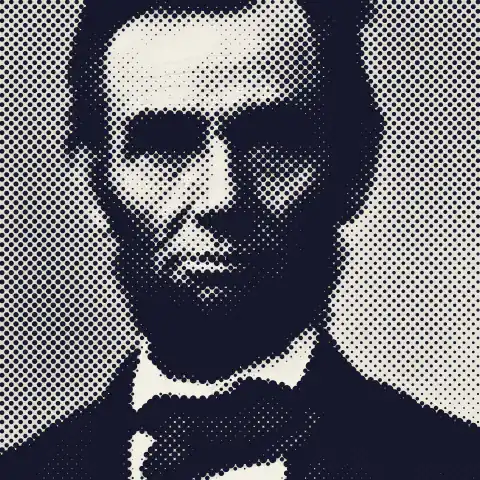
Portrait of Abraham Lincoln
1809-1865United States

Portrait: Alexander Gardner, Public domain, via Wikimedia Commons

Abraham Lincoln

16th President of the United States · U.S. Representative from Illinois · Illinois state legislator · Lawyer

Illinois lawyer and first Republican president who opposed the expansion of slavery, led the Union through the Civil War, issued the Emancipation Proclamation and backed tariffs, homesteads and land-grant colleges.

ECONOMYSTATE AND LIBERTYSOCIETYWORLDOwnershipMarketsWelfareAuthoritySecurityStructureMoralityReligionTechnologyCultureTradeForeign
  • Position
  • Solid, past the ring: second pole
  • Short, inside the ring: first pole
  • Balanced

★ Abraham Lincoln on 12 axes

Share of each pole

Economy

Equality / Markets
  • OwnershipMild: Private
    PublicPrivate
  • MarketsMild: Planned
    PlannedFree
  • WelfareMild: Self-reliant
    SharedSelf-reliant

State and liberty

Liberty / Authority
  • AuthorityMild: Strong leader
    DemocraticStrong leader
  • SecurityModerate: Order
    LibertyOrder
  • StructureModerate: Central
    LocalCentral

Society

Progress / Tradition
  • MoralityMild: Traditional
    ProgressiveTraditional
  • ReligionMild: Religious
    SecularReligious
  • TechnologyMild: Embrace
    EmbraceCaution
  • CultureNo clear record
    MulticulturalNational identity

World

Global / Nation
  • TradeModerate: Protected
    GlobalProtected
  • Foreign policyNo clear record
    CooperationStrength

How we placed it

Judgment calls

Positions summarize typical stances from primary sources and reference works. Where an axis is genuinely contested, the reasoning is below.

Markets
A Whig-style supporter of tariffs, a national banking system, land grants and internal improvements within a market economy.
Authority
Expanded wartime executive power, including acting without congressional appropriation, yet held the 1864 election as scheduled; scored near the middle.
Security
Scored toward order mainly for suspending habeas corpus and wartime arrests.
Technology
Scored toward embrace for support of railroads, land-grant colleges and internal improvements; no view on modern technology.
Culture
No sustained, documented position on immigration in the sources used here; left null.
Foreign policy
Foreign policy was dominated by preventing European recognition of the Confederacy; no clear doctrine, left null.

2 axes are marked as no clear record: there is no reasonable basis to place Abraham Lincoln there, so matching leaves them out.

Who was Abraham Lincoln?

Abraham Lincoln was born in Kentucky, grew up on the frontier and taught himself law in Illinois, where he served in the legislature as a Whig and one term in Congress. He returned to politics in the 1850s to oppose the spread of slavery into the territories, debated Stephen Douglas in 1858 and won the presidency in 1860 as the first Republican president. He led the Union through the Civil War, issued the Emancipation Proclamation in 1863 and supported the Thirteenth Amendment abolishing slavery. He was assassinated in April 1865, days after the Confederate surrender at Appomattox.

Political views

Legacy

Lincoln is consistently ranked by historians among the most consequential U.S. presidents, and admirers credit him with preserving the Union, ending slavery and articulating a democratic creed in the Gettysburg Address and Second Inaugural. Both major U.S. parties have claimed him, Republicans as their first president and others for his use of national power to expand opportunity. Critics take several positions. Contemporary Democrats and later civil-libertarian writers condemned his suspension of habeas corpus and arrests of civilians. Some historians argue that he moved too slowly on emancipation, noting his early support for colonization and his willingness in 1861 to accept an amendment protecting slavery where it existed. Defenders of states' rights, then and now, criticize his use of force to prevent secession. His racial views also changed over time, from public statements opposing social equality in 1858 to support for limited Black suffrage in 1865.

In their words

With malice toward none, with charity for all, with firmness in the right as God gives us to see the right, let us strive on to finish the work we are in, to bind up the nation's wounds.
Second Inaugural Address, 1865

★ 12 Axes Political Test ★

How close are you to Abraham Lincoln?

Answer plain statements on 12 axes and see your match with Abraham Lincoln and every other profile on the site, axis by axis.

FAQ

Abraham Lincoln: questions

What political party was Abraham Lincoln?

Lincoln began as a Whig and became the first president elected from the Republican Party in 1860. He ran for re-election in 1864 on the National Union ticket, a wartime coalition of Republicans and pro-war Democrats.

What were Abraham Lincoln's main political beliefs?

He opposed the spread of slavery, believed the Union was permanent and supported tariffs, a national banking system, homesteads and federal aid for railroads and colleges.

Did Lincoln free the slaves?

The 1863 Emancipation Proclamation declared enslaved people in Confederate-held areas free, and Lincoln then pushed for the Thirteenth Amendment, ratified in December 1865, which abolished slavery nationwide.