PoliticalTests
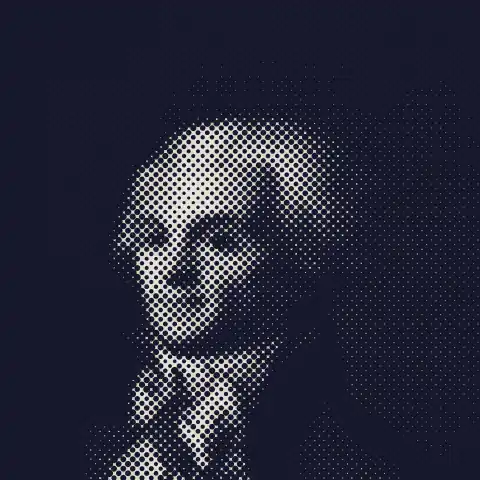
Portrait of Maximilien Robespierre
1758-1794France

Portrait: Unidentified painter, CC0, via Wikimedia Commons

Maximilien Robespierre

Member of the Committee of Public Safety (1793-1794) · Deputy for Paris to the National Convention (1792-1794) · Deputy to the National Constituent Assembly (1789-1791) · Leader of the Jacobins in the French Revolution

French revolutionary lawyer and Jacobin leader who championed equal rights and universal male suffrage, then became the leading figure of the Committee of Public Safety during the Reign of Terror.

ECONOMYSTATE AND LIBERTYSOCIETYWORLDOwnershipMarketsWelfareAuthoritySecurityStructureMoralityReligionTechnologyCultureTradeForeign
  • Position
  • Solid, past the ring: second pole
  • Short, inside the ring: first pole
  • Balanced

★ Maximilien Robespierre on 12 axes

Share of each pole

Economy

Equality / Markets
  • OwnershipMild: Public
    PublicPrivate
  • MarketsModerate: Planned
    PlannedFree
  • WelfareModerate: Shared
    SharedSelf-reliant

State and liberty

Liberty / Authority
  • AuthorityModerate: Strong leader
    DemocraticStrong leader
  • SecurityStrong: Order
    LibertyOrder
  • StructureStrong: Central
    LocalCentral

Society

Progress / Tradition
  • MoralityNo clear record
    ProgressiveTraditional
  • ReligionMild: Religious
    SecularReligious
  • TechnologyNo clear record
    EmbraceCaution
  • CultureMild: Multicultural
    MulticulturalNational identity

World

Global / Nation
  • TradeNo clear record
    GlobalProtected
  • Foreign policyMild: Cooperation
    CooperationStrength

How we placed it

Judgment calls

Positions summarize typical stances from primary sources and reference works. Where an axis is genuinely contested, the reasoning is below.

Ownership
Proposed in 1793 that property be limited by the rights of others and duties to society, without calling for its abolition.
Authority
Defended universal male suffrage and press freedom in 1789-1791, then led a revolutionary government that suspended the constitution "until peace"; scored on his record in power.
Security
Argued that terror was a necessary part of revolutionary virtue, and the Law of 22 Prairial of 1794 stripped suspects of most means of defence.
Structure
A Jacobin who backed a single, indivisible republic run from Paris against the federalist revolts of 1793.
Morality
No clear documented position on family or personal moral questions beyond public virtue; left null.
Religion
Opposed both the Catholic Church and atheist dechristianization, and launched a state cult of the Supreme Being in 1794.
Culture
Defended equal rights for Protestants, Jews and free people of colour, though he did not push for the immediate abolition of slavery.
Foreign policy
Opposed the 1792 war, warning that no one loves armed missionaries, but then helped direct the war effort; scored mildly toward cooperation.

3 axes are marked as no clear record: there is no reasonable basis to place Maximilien Robespierre there, so matching leaves them out.

Who was Maximilien Robespierre?

Maximilien Robespierre was a lawyer from Arras elected to the Estates-General in 1789. In the Constituent Assembly he opposed property qualifications for voting, spoke against the death penalty and defended the rights of marginalized groups, earning the name "the Incorruptible". He led the Jacobin Club, opposed the war of 1792 and, as a deputy for Paris in the National Convention, voted for the execution of Louis XVI. Appointed to the Committee of Public Safety in July 1793, he became the best-known figure of the revolutionary government during the Terror. The Convention turned against him in July 1794 (9 Thermidor), and he was guillotined the next day without trial.

Political views

  • Asked the Constituent Assembly in 1791 to abolish the death penalty.

    Source: marxists.org
  • Opposed property requirements for voting and holding office, demanding that public posts be open to all citizens.

    Source: en.wikipedia.org
  • Argued in 1792 that the right to subsistence came before the right to trade freely in grain.

    Source: marxists.org
  • Proposed a declaration of rights in April 1793 that limited property by social obligations and called for progressive taxation.

    Source: en.wikipedia.org
  • Told the Convention in February 1794 that a popular government in revolution needed both virtue and terror.

    Source: marxists.org
  • Promoted the Cult of the Supreme Being, a deist civic religion, against both the Catholic Church and dechristianization.

    Source: en.wikipedia.org

Legacy

Robespierre remains one of the most divisive figures in French history. His defenders, especially on the left, stress his early stand for universal suffrage, equal rights and the poor, and see him as made a scapegoat for a Terror shaped by war, civil war and many other leaders. His critics see him as the embodiment of revolutionary dictatorship: during the Terror at least 300,000 suspects were arrested, about 16,600 people were sentenced to death by courts and an estimated 10,000 to 20,000 more were executed without trial or died in prison. The Law of 22 Prairial, passed with his support, doubled the pace of executions in Paris. Historians continue to debate how much personal power he held.

In their words

If virtue be the spring of a popular government in times of peace, the spring of that government during a revolution is virtue combined with terror: virtue, without which terror is destructive; terror, without which virtue is impotent.
Report on the Principles of Political Morality, National Convention, February 1794

★ Free · 12 Axes Political Test ★

How close are you to Maximilien Robespierre?

Take the free 12 Axes test to see your match with Maximilien Robespierre and 347 other historical figures, axis by axis.

OptionalWant every axis explained? The Full Political Profile is an optional $9.99 deep dive. See what is inside

FAQ

Maximilien Robespierre: questions

What did Robespierre believe?

He believed in a democratic republic based on popular sovereignty and civic virtue, equal rights and the right to subsistence, and argued that the Revolution had to defend itself by terror.

Was Robespierre left or right?

He sat with the radical Montagnards on the left of the Convention and is a reference for the revolutionary left, though his government's methods were authoritarian.

How many people died in the Terror?

About 16,600 death sentences were carried out after trials from June 1793 to July 1794, and an estimated 10,000 to 20,000 more people were killed without trial or died in prison.