PoliticalTests
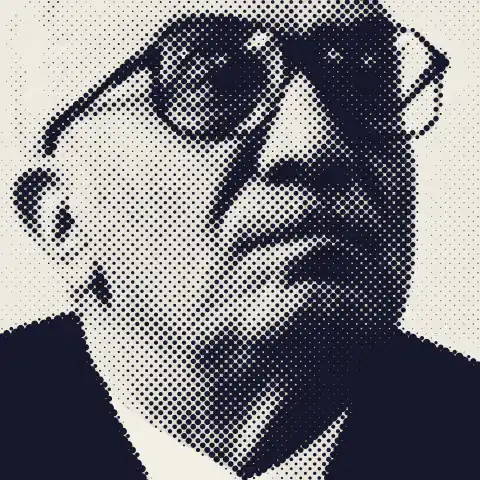
Portrait of Amintore Fanfani
1908-1999Italy

Portrait: Rob Croes for Anefo, CC BY-SA 3.0 nl, via Wikimedia Commons. Halftone version: CC BY-SA 3.0 nl

Amintore Fanfani

Prime Minister of Italy (1954, 1958-1959, 1960-1963, 1982-1983, 1987) · President of the Italian Senate (1968-1973, 1976-1982, 1985-1987) · Secretary of Christian Democracy (1954-1959, 1973-1975) · Economic historian and professor

Italian Christian Democrat who was prime minister five times and led the opening to the Socialists that nationalized electricity, then headed the failed 1974 campaign to repeal divorce.

ECONOMYSTATE AND LIBERTYSOCIETYWORLDOwnershipMarketsWelfareAuthoritySecurityStructureMoralityReligionTechnologyCultureTradeForeign
  • Position
  • Solid, past the ring: second pole
  • Short, inside the ring: first pole
  • Balanced

★ Amintore Fanfani on 12 axes

Share of each pole

Economy

Equality / Markets
  • OwnershipModerate: Public
    PublicPrivate
  • MarketsModerate: Planned
    PlannedFree
  • WelfareModerate: Shared
    SharedSelf-reliant

State and liberty

Liberty / Authority
  • AuthorityMild: Strong leader
    DemocraticStrong leader
  • SecurityNo clear record
    LibertyOrder
  • StructureNo clear record
    LocalCentral

Society

Progress / Tradition
  • MoralityStrong: Traditional
    ProgressiveTraditional
  • ReligionModerate: Religious
    SecularReligious
  • TechnologyNo clear record
    EmbraceCaution
  • CultureNo clear record
    MulticulturalNational identity

World

Global / Nation
  • TradeMild: Global
    GlobalProtected
  • Foreign policyMild: Cooperation
    CooperationStrength

How we placed it

Judgment calls

Positions summarize typical stances from primary sources and reference works. Where an axis is genuinely contested, the reasoning is below.

Ownership
His 1962 government, backed by the Socialists, nationalized the electricity industry into ENEL.
Markets
A lifelong believer in corporatism and state direction of the economy, who served as minister of budget and economic planning.
Welfare
Extended compulsory schooling through a unified middle school and introduced a more progressive tax system.
Authority
Rejected his early Fascist writings after the war and governed within parliament, but critics described his concentration of party and government power as authoritarian in style; scored slightly toward strong leadership.
Security
No consistent documented position on policing or civil liberties; left null.
Structure
His governments left the creation of ordinary regions unfinished because of opposition in his party; no clear personal position, left null.
Morality
Led the 1974 referendum campaign to repeal Italy's divorce law, defending the traditional family, and lost by 59 to 41 percent.
Religion
Saw Christian Democracy as the political arm of Catholic social teaching, though as party secretary he reduced its dependence on the Church hierarchy.
Trade
A strong supporter of European integration and the common market.
Foreign policy
Pursued "neo-Atlanticism": loyal to NATO but more independent of Washington, with Italy as a Mediterranean power open to the Arab world.

4 axes are marked as no clear record: there is no reasonable basis to place Amintore Fanfani there, so matching leaves them out.

Who was Amintore Fanfani?

Amintore Fanfani was a Tuscan economic historian who, under Fascism, joined the National Fascist Party and wrote in favor of corporatism. After the war he joined Christian Democracy, became a protégé of Alcide De Gasperi and led the reformist current Democratic Initiative. As party secretary from 1954 he built a mass organization less dependent on the Church. He was prime minister five times between 1954 and 1987, most importantly in 1960-1963, when Socialist support allowed major reforms. He presided over the Senate for three terms, briefly acted as head of state in 1978 and became a senator for life in 1972. He died in Rome in 1999.

Political views

  • Opened Christian Democracy to cooperation with the Socialist Party, laying the ground for the centre-left coalitions of the 1960s.

    Source: en.wikipedia.org
  • Nationalized the electricity industry, created a unified compulsory middle school and introduced taxation of share dividends in 1962-1963.

    Source: treccani.it
  • Promoted a more autonomous foreign policy within NATO, presenting Italy as the leading power of the Mediterranean and opening to Arab countries.

    Source: en.wikipedia.org
  • Supported European integration throughout his career.

    Source: en.wikipedia.org
  • Staked his leadership on the 1974 referendum to abolish divorce, campaigning on the defence of the traditional family.

    Source: en.wikipedia.org
  • Kept a belief in corporatism, describing Fascism as a temporary aberration of corporatist ideas, while openly admitting he had been wrong to support the regime.

    Source: en.wikipedia.org

Legacy

Admirers credit Fanfani, with Aldo Moro, as a founder of the Italian centre-left and a reformer whose governments modernized schools, energy and taxation during the economic miracle. Critics within his own party disliked his activism and state intervention, and opponents across the spectrum condemned what they saw as an authoritarian, centralizing style that cost him the leadership more than once. His defeat in the 1974 divorce referendum marked the decline of the Church's influence over Italian law. Historians also recall his Fascist past: in the 1930s he wrote for the racist review La difesa della razza and in 1938 signed the Manifesto of Race that preceded the antisemitic laws, a past he later repudiated.

★ Free · 12 Axes Political Test ★

How close are you to Amintore Fanfani?

Take the free 12 Axes test to see your match with Amintore Fanfani and 347 other historical figures, axis by axis.

OptionalWant every axis explained? The Full Political Profile is an optional $9.99 deep dive. See what is inside

FAQ

Amintore Fanfani: questions

What political party was Amintore Fanfani?

Fanfani belonged to Christian Democracy, which he led twice as secretary, heading its reformist left-leaning current for much of his career.

What was Fanfani's role in the divorce referendum?

As party secretary he led the 1974 campaign to repeal the 1970 divorce law. Voters kept the law by 59.3 to 40.7 percent, a heavy defeat that forced his resignation.

Sources

  1. 01treccani.it
  2. 02storia.camera.it
  3. 03en.wikipedia.org
  4. 04en.wikipedia.org

Image credits

Portrait of Amintore Fanfani: Amintore Fanfani 1983-04-14.jpg by Rob Croes for Anefo, licensed CC BY-SA 3.0 nl, via Wikimedia Commons. Cropped, converted to grayscale and printed as a halftone by politicaltests.org; the halftone version is licensed CC BY-SA 3.0 nl.

All portrait credits and licenses