
PoliticalTests
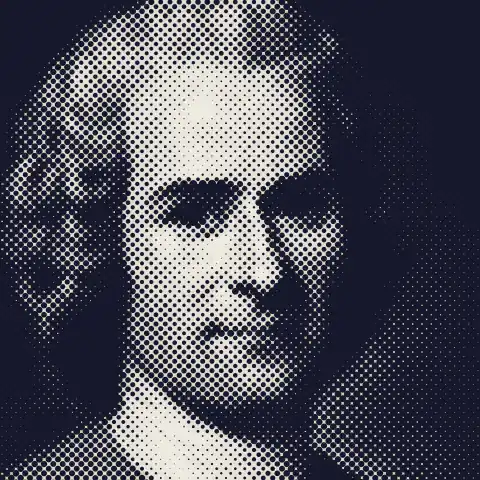
Portrait of Jean-Jacques Rousseau
1712-1778France

Portrait: Maurice Quentin de La Tour, Public domain, via Wikimedia Commons

Jean-Jacques Rousseau

Political philosopher · Author of The Social Contract · Citizen of Geneva · Novelist and composer

Genevan-born philosopher whose Social Contract (1762) argues that legitimate government rests on the general will of a sovereign people.

ECONOMYSTATE AND LIBERTYSOCIETYWORLDOwnershipMarketsWelfareAuthoritySecurityStructureMoralityReligionTechnologyCultureTradeForeign
  • Position
  • Solid, past the ring: second pole
  • Short, inside the ring: first pole
  • Balanced

★ Jean-Jacques Rousseau on 12 axes

Share of each pole

Economy

Equality / Markets
  • OwnershipMild: Public
    PublicPrivate
  • MarketsModerate: Planned
    PlannedFree
  • WelfareModerate: Shared
    SharedSelf-reliant

State and liberty

Liberty / Authority
  • AuthorityModerate: Democratic
    DemocraticStrong leader
  • SecurityMild: Order
    LibertyOrder
  • StructureModerate: Local
    LocalCentral

Society

Progress / Tradition
  • MoralityModerate: Traditional
    ProgressiveTraditional
  • ReligionMild: Religious
    SecularReligious
  • TechnologyModerate: Caution
    EmbraceCaution
  • CultureModerate: National identity
    MulticulturalNational identity

World

Global / Nation
  • TradeModerate: Protected
    GlobalProtected
  • Foreign policyMild: Strength
    CooperationStrength

How we placed it

Judgment calls

Positions summarize typical stances from primary sources and reference works. Where an axis is genuinely contested, the reasoning is below.

Authority
He placed sovereignty directly in the people, but his general will, the figure of the Legislator and the phrase forced to be free have led some critics to see authoritarian potential.
Security
His civil religion allows the state to banish those who reject its articles of social faith, which pushes this axis toward order despite his focus on freedom.
Morality
He challenged inherited social hierarchies yet held conventional views on gender roles in Emile and opposed a public theater in Geneva on moral grounds.
Technology
Scored from his Discourse on the Arts and Sciences, which questioned whether progress in the arts and sciences improves morals; he wrote nothing on modern technology.
Culture
In his Considerations on the Government of Poland he urged cultivating national customs and patriotism.

Who was Jean-Jacques Rousseau?

Jean-Jacques Rousseau was born in the Republic of Geneva and lived mostly in France, where he moved among the Encyclopedists before breaking with many of them. His Discourse on the Arts and Sciences (1750) and Discourse on the Origin of Inequality (1755) argued that civilization had corrupted natural human goodness and produced unjust inequality. In The Social Contract and Emile, both published in 1762 and condemned by the Paris authorities, he set out a theory of popular sovereignty and a program of education. He later wrote Considerations on the Government of Poland, along with autobiographical works such as the Confessions, and developed a serious interest in botany.

Political views

  • Argued that legitimate authority arises only from a social contract in which citizens together form a sovereign guided by the general will.

    Source: plato.stanford.edu
  • Held that sovereignty cannot be represented, so laws must be approved by the assembled people rather than elected deputies.

    Source: plato.stanford.edu
  • Traced inequality to the institution of private property, while later accepting property under the authority of law.

    Source: iep.utm.edu
  • Wrote that no citizen should be rich enough to buy another, nor poor enough to be forced to sell himself.

    Source: gutenberg.org
  • Proposed a civil religion with simple articles of faith, under which those who rejected it could be banished as anti-social.

    Source: gutenberg.org
  • Questioned whether advances in the arts and sciences had improved morals, answering that they had not.

    Source: iep.utm.edu
  • Assigned a founding Legislator the task of framing a people's basic laws, a figure scholars link to his concern with civic virtue.

    Source: plato.stanford.edu

Legacy

Rousseau became a central reference for the French revolutionaries, and his ideas of popular sovereignty and equality influenced democratic, republican and socialist thought. Romantic writers and educational reformers drew heavily on Emile and his novels. Admirers see him as a defender of freedom and self-government against inequality. Liberal critics have argued that his general will could justify coercion of dissenters, and Mary Wollstonecraft and later feminist writers criticized his exclusion of women from his ideals of freedom.

In their words

Man is born free; and everywhere he is in chains.
The Social Contract, Book I, Chapter 1, 1762 (G. D. H. Cole translation)

★ 12 Axes Political Test ★

How close are you to Jean-Jacques Rousseau?

Answer plain statements on 12 axes and see your match with Jean-Jacques Rousseau and every other profile on the site, axis by axis.

FAQ

Jean-Jacques Rousseau: questions

What did Rousseau mean by the general will?

He used it for the collective will of citizens directed at the common good, as distinct from the sum of private interests. Legitimate laws, in his view, express this general will.

Was Rousseau left or right?

The labels postdate him. His focus on equality and popular sovereignty is often linked to the left, while his emphasis on patriotism, civil religion and moral tradition has drawn interest from conservatives.

Where would Rousseau sit on a political compass?

On these axes he leans toward shared welfare, popular sovereignty and small self-governing communities, with traditional scores on morality, national culture and technology.