PoliticalTests
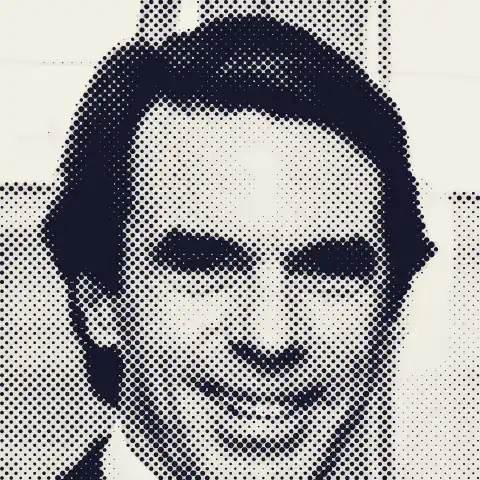
Portrait of José María Aznar
Born 1953Spain

Portrait: Xavier Lejeune, CC BY 4.0, via Wikimedia Commons. Halftone version: CC BY 4.0

José María Aznar

Prime Minister of Spain (1996-2004) · President of the People's Party (PP) (1990-2004) · President of the Junta of Castile and León (1987-1989) · Deputy in the Congress of Deputies · Tax inspector

Conservative Spanish prime minister who privatized major state companies, met the criteria for the euro, took a hard line against ETA and backed the 2003 invasion of Iraq.

ECONOMYSTATE AND LIBERTYSOCIETYWORLDOwnershipMarketsWelfareAuthoritySecurityStructureMoralityReligionTechnologyCultureTradeForeign
  • Position
  • Solid, past the ring: second pole
  • Short, inside the ring: first pole
  • Balanced

★ José María Aznar on 12 axes

Share of each pole

Economy

Equality / Markets
  • OwnershipModerate: Private
    PublicPrivate
  • MarketsModerate: Free
    PlannedFree
  • WelfareMild: Self-reliant
    SharedSelf-reliant

State and liberty

Liberty / Authority
  • AuthorityMild: Democratic
    DemocraticStrong leader
  • SecurityModerate: Order
    LibertyOrder
  • StructureMild: Central
    LocalCentral

Society

Progress / Tradition
  • MoralityModerate: Traditional
    ProgressiveTraditional
  • ReligionMild: Religious
    SecularReligious
  • TechnologyNo clear record
    EmbraceCaution
  • CultureModerate: National identity
    MulticulturalNational identity

World

Global / Nation
  • TradeModerate: Global
    GlobalProtected
  • Foreign policyModerate: Strength
    CooperationStrength

How we placed it

Judgment calls

Positions summarize typical stances from primary sources and reference works. Where an axis is genuinely contested, the reasoning is below.

Security
Scored on his hard line against ETA, including the 2002 Political Parties Law used to ban Batasuna, and his support for the Iraq war; he also ended compulsory military service.
Structure
In his first term he relied on Catalan, Basque and Canarian nationalists and gave the regions 30 percent of income tax revenue; later he firmly opposed Basque and Catalan nationalist projects, so the score is only slightly central.
Morality
He left the 1985 abortion law in place, while his party opposed later same-sex marriage legislation; scored moderately traditional.
Technology
No documented position on technology regulation; left null.
Culture
His government tightened the foreigners law in 2000 and promoted a constitutional patriotism centered on Spanish unity.

One axis is marked as no clear record: there is no reasonable basis to place José María Aznar there, so matching leaves it out.

Who is José María Aznar?

José María Aznar López, a Madrid-born tax inspector, joined the conservative Alianza Popular in 1979, governed the region of Castile and León from 1987 and became national leader of the refounded People's Party (PP) in 1989 and 1990, succeeding Manuel Fraga. He survived an ETA car bomb in April 1995. He won the 1996 election and governed with the support of Catalan, Basque and Canarian nationalists, then won an absolute majority in 2000. He did not stand again in 2004 and named Mariano Rajoy as his successor. The PP lost that election three days after the Madrid train bombings of 11 March 2004.

Political views

  • Sold the state's holdings in Telefónica, Endesa, Repsol, Argentaria and other large companies through public share offerings.

    Source: cidob.org
  • Made meeting the Maastricht convergence criteria his top priority, cutting the deficit so that Spain joined the euro in 1999.

    Source: lamoncloa.gob.es
  • Signed the 2002 Political Parties Law, under which the courts banned Batasuna, the political wing linked to ETA.

    Source: boe.es
  • Ended compulsory military service, moving to a fully professional army from the end of 2001.

    Source: boe.es
  • Tightened the law on foreigners' rights and residence in 2000, after a more permissive version passed against his government's wishes.

    Source: boe.es
  • Joined George W. Bush, Tony Blair and José Manuel Durão Barroso at the Azores summit of March 2003 that preceded the invasion of Iraq.

    Source: govinfo.gov

Legacy

Supporters credit Aznar with a long period of growth, falling unemployment, a balanced Social Security system, entry into the euro and a firm stance against ETA after the 1997 murder of councillor Miguel Ángel Blanco. Critics argue that his privatizations created private near-monopolies, that his alignment with the United States over Iraq ignored strong public opposition, and that his government wrongly insisted ETA was behind the March 2004 Madrid bombings, which were carried out by jihadists. Nationalists in Catalonia and the Basque Country, his allies in 1996, came to see him as a centralizer. After leaving office he became honorary president of the PP and head of the FAES foundation, a centre-right think tank.

In their words

Spain, regrettably, does not currently meet any of the convergence criteria.
Investiture speech to the Congress of Deputies, May 1996, translated from Spanish

★ Free · 12 Axes Political Test ★

How close are you to José María Aznar?

Take the free 12 Axes test to see your match with José María Aznar and 347 other historical figures, axis by axis.

OptionalWant every axis explained? The Full Political Profile is an optional $9.99 deep dive. See what is inside

FAQ

José María Aznar: questions

What political party is José María Aznar?

He led the People's Party (PP), Spain's main centre-right party, from 1990 to 2004 and was prime minister from 1996 to 2004.

Why did Aznar support the Iraq war?

He aligned Spain closely with the United States after the September 2001 attacks and joined the Azores summit of March 2003, although most Spaniards opposed the war.

Was Aznar left or right?

He is placed on the right as a liberal conservative, favoring privatization, tax and spending restraint, a strong line on terrorism and an Atlanticist foreign policy.

Sources

  1. 01lamoncloa.gob.es
  2. 02cidob.org
  3. 03lamoncloa.gob.es
  4. 04boe.es
  5. 05govinfo.gov

Image credits

Portrait of José María Aznar: Aznar Kyriakides 2020 (cropped).jpg by Xavier Lejeune, licensed CC BY 4.0, via Wikimedia Commons. Cropped, converted to grayscale and printed as a halftone by politicaltests.org; the halftone version is licensed CC BY 4.0.

All portrait credits and licenses