PoliticalTests
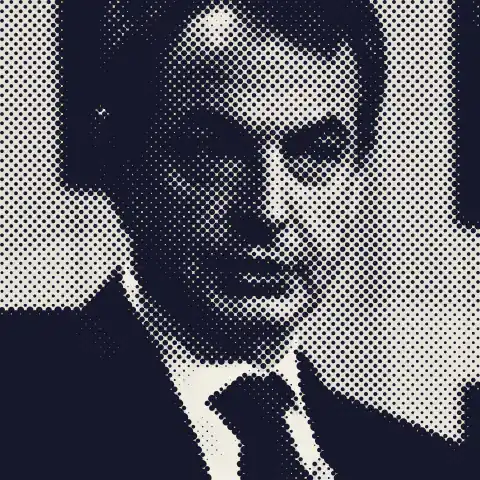
Portrait of José Luis Rodríguez Zapatero
Born 1960Spain

Portrait: Monika Flueckiger, World Economic Forum from Cologny, Switzerland, CC BY-SA 2.0, via Wikimedia Commons. Halftone version: CC BY-SA 2.0

José Luis Rodríguez Zapatero

Prime Minister of Spain (2004-2011) · Secretary General of the Spanish Socialist Workers' Party (PSOE) (2000-2012) · Deputy for León in the Congress of Deputies (1986-2011) · Lecturer in constitutional law

Socialist prime minister of Spain who withdrew troops from Iraq, legalized same-sex marriage, expanded social rights and then turned to austerity during the euro crisis.

ECONOMYSTATE AND LIBERTYSOCIETYWORLDOwnershipMarketsWelfareAuthoritySecurityStructureMoralityReligionTechnologyCultureTradeForeign
  • Position
  • Solid, past the ring: second pole
  • Short, inside the ring: first pole
  • Balanced

★ José Luis Rodríguez Zapatero on 12 axes

Share of each pole

Economy

Equality / Markets
  • OwnershipBalanced
    PublicPrivate
  • MarketsMild: Planned
    PlannedFree
  • WelfareModerate: Shared
    SharedSelf-reliant

State and liberty

Liberty / Authority
  • AuthorityModerate: Democratic
    DemocraticStrong leader
  • SecurityMild: Liberty
    LibertyOrder
  • StructureModerate: Local
    LocalCentral

Society

Progress / Tradition
  • MoralityStrong: Progressive
    ProgressiveTraditional
  • ReligionModerate: Secular
    SecularReligious
  • TechnologyNo clear record
    EmbraceCaution
  • CultureModerate: Multicultural
    MulticulturalNational identity

World

Global / Nation
  • TradeModerate: Global
    GlobalProtected
  • Foreign policyModerate: Cooperation
    CooperationStrength

How we placed it

Judgment calls

Positions summarize typical stances from primary sources and reference works. Where an axis is genuinely contested, the reasoning is below.

Welfare
Scored on the 2006 dependency care law and other new social rights of his first term, tempered by the deep spending cuts he adopted in 2010 and the 2011 constitutional deficit rule.
Structure
He backed a new Catalan Statute of Autonomy in 2006 and a new regional financing system, although he accepted limits on the statute's use of the word nation.
Technology
No sustained documented position on technology regulation; left null.
Culture
Reflects the 2005 regularization of irregular migrant workers with job contracts and the Alliance of Civilizations initiative; his governments also stepped up border controls later on.
Foreign policy
Withdrew troops from Iraq in 2004 and said Spain would only take part in missions decided by the United Nations or similar multinational bodies.

One axis is marked as no clear record: there is no reasonable basis to place José Luis Rodríguez Zapatero there, so matching leaves it out.

Who is José Luis Rodríguez Zapatero?

José Luis Rodríguez Zapatero was born in Valladolid in 1960, studied law in León and taught constitutional law there before entering Congress in 1986 as one of its youngest deputies. He was elected PSOE secretary general in 2000 and won the March 2004 election, held three days after the Madrid train bombings. His first cabinet was the first in Spain with equal numbers of women and men. He was reelected in 2008, as the global financial crisis hit Spain's property boom. In May 2011, amid high unemployment and market pressure, he announced that he would not seek a third term, and the PSOE lost the November 2011 election.

Political views

  • Ordered the withdrawal of Spanish troops from Iraq shortly after taking office in April 2004.

    Source: cidob.org
  • Legalized same-sex marriage in 2005 by amending the Civil Code, with full equality of rights for married couples.

    Source: boe.es
  • Passed a 2010 law allowing abortion on request in the first 14 weeks of pregnancy.

    Source: boe.es
  • Created a public system of care for dependent elderly and disabled people through the 2006 dependency law.

    Source: boe.es
  • Opened a 2005 regularization process that let employers apply for residence and work permits for migrants already living in Spain.

    Source: boe.es
  • Opened talks with ETA after its 2006 ceasefire, which ended with the Barajas airport bombing that December; ETA announced the end of its armed activity in October 2011.

    Source: cidob.org
  • Agreed with the opposition in 2011 on a reform of Article 135 of the Constitution that set binding limits on structural deficits.

    Source: boe.es

Legacy

Supporters see Zapatero as the prime minister who extended civil rights the furthest, with same-sex marriage, laws against gender violence, the 2007 historical memory law and a care system for dependent people, and who kept his promise to leave Iraq. Critics on the right accused him of reopening the wounds of the Civil War, of weakening national unity by backing the Catalan statute, which the Constitutional Court partly struck down in 2010, and of negotiating with ETA. Economists and critics across the spectrum fault him for denying the crisis in 2008 and for the sharp 2010 cuts, which angered his own voters, and unemployment passed 20 percent. Many on the left still credit his social reforms with changing Spanish society.

★ Free · 12 Axes Political Test ★

How close are you to José Luis Rodríguez Zapatero?

Take the free 12 Axes test to see your match with José Luis Rodríguez Zapatero and 347 other historical figures, axis by axis.

OptionalWant every axis explained? The Full Political Profile is an optional $9.99 deep dive. See what is inside

FAQ

José Luis Rodríguez Zapatero: questions

What political party is José Luis Rodríguez Zapatero?

He led the Spanish Socialist Workers' Party (PSOE) as secretary general from 2000 to 2012 and was prime minister from 2004 to 2011.

What is Zapatero known for?

He withdrew Spanish troops from Iraq, legalized same-sex marriage in 2005, passed laws on gender violence, equality, historical memory and dependent care, and governed during the first years of the euro crisis.

Was Zapatero left or right?

He is placed on the centre-left. He was a social liberal on rights and a social democrat on welfare, although the crisis led him to adopt austerity measures in 2010 and 2011.

Sources

  1. 01lamoncloa.gob.es
  2. 02cidob.org
  3. 03lamoncloa.gob.es
  4. 04boe.es
  5. 05en.wikipedia.org

Image credits

Portrait of José Luis Rodríguez Zapatero: José Luis Rodríguez Zapatero en el Foro Económico Mundial (cropped) 2.jpg by Monika Flueckiger, World Economic Forum from Cologny, Switzerland, licensed CC BY-SA 2.0, via Wikimedia Commons. Cropped, converted to grayscale and printed as a halftone by politicaltests.org; the halftone version is licensed CC BY-SA 2.0.

All portrait credits and licenses