PoliticalTests
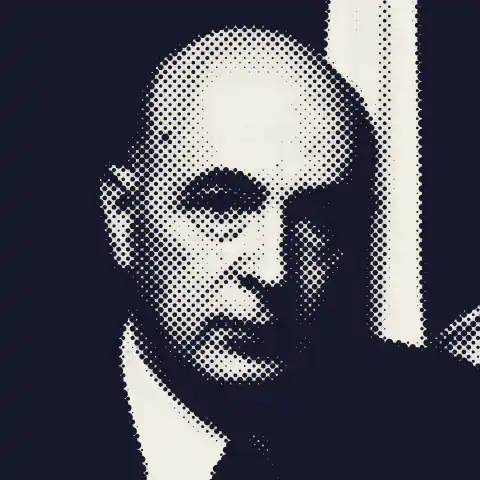
Portrait of Giorgio Napolitano
1925-2023Italy

Portrait: Camera dei Deputati, CC BY-SA 4.0, via Wikimedia Commons. Halftone version: CC BY-SA 4.0

Giorgio Napolitano

President of Italy (2006-2015) · Minister of the Interior (1996-1998) · President of the Italian Chamber of Deputies (1992-1994) · Leader of the reformist wing of the Italian Communist Party

Italian former Communist who became the first ex-Communist President of Italy in 2006, the first to be re-elected in 2013, and a central figure during the eurozone debt crisis.

ECONOMYSTATE AND LIBERTYSOCIETYWORLDOwnershipMarketsWelfareAuthoritySecurityStructureMoralityReligionTechnologyCultureTradeForeign
  • Position
  • Solid, past the ring: second pole
  • Short, inside the ring: first pole
  • Balanced

★ Giorgio Napolitano on 12 axes

Share of each pole

Economy

Equality / Markets
  • OwnershipMild: Public
    PublicPrivate
  • MarketsMild: Planned
    PlannedFree
  • WelfareModerate: Shared
    SharedSelf-reliant

State and liberty

Liberty / Authority
  • AuthorityMild: Democratic
    DemocraticStrong leader
  • SecurityMild: Order
    LibertyOrder
  • StructureNo clear record
    LocalCentral

Society

Progress / Tradition
  • MoralityMild: Progressive
    ProgressiveTraditional
  • ReligionNo clear record
    SecularReligious
  • TechnologyNo clear record
    EmbraceCaution
  • CultureBalanced
    MulticulturalNational identity

World

Global / Nation
  • TradeModerate: Global
    GlobalProtected
  • Foreign policyModerate: Cooperation
    CooperationStrength

How we placed it

Judgment calls

Positions summarize typical stances from primary sources and reference works. Where an axis is genuinely contested, the reasoning is below.

Ownership
Led the migliorista current of the Communist Party, which sought to reform and improve capitalism gradually rather than abolish it.
Authority
A parliamentarian for decades and a guardian of the constitution as president, though critics said he turned a largely ceremonial office into a political one, notably by appointing Mario Monti's technocratic government in 2011; scored moderately democratic.
Security
As interior minister he co-wrote the 1998 Turco-Napolitano immigration law, which combined legal entry quotas with detention centres for expulsion; scored near neutral.
Structure
No clear documented position on regional power; left null.
Morality
Refused in 2009 to sign a government decree meant to stop the withdrawal of feeding from the coma patient Eluana Englaro; scored mildly progressive with low confidence.
Religion
No documented position on religion in public life; left null.
Technology
No documented view on technology as a value question; left null.
Culture
His immigration law paired managed legal migration with tougher controls on irregular entry; scored neutral.
Trade
A committed pro-European who backed Italy's place in the single market and the euro.
Foreign policy
Moved from the pro-Soviet line of 1956, which he later regretted, to firm support for European integration and the Atlantic alliance.

3 axes are marked as no clear record: there is no reasonable basis to place Giorgio Napolitano there, so matching leaves them out.

Who was Giorgio Napolitano?

Giorgio Napolitano was born in Naples, took part in the Resistance and joined the Communist Party in 1945. First elected to the Chamber of Deputies in 1953, he followed the party line in backing the Soviet suppression of the 1956 Hungarian revolution, a choice he later described as a source of painful self-criticism. He became the leader of the party's reformist wing and followed it into the Democratic Party of the Left. He presided over the Chamber in 1992-1994 and was the first former Communist to serve as interior minister, under Romano Prodi. Elected President of Italy in 2006, he was re-elected in 2013 to break a parliamentary deadlock and resigned in January 2015, aged 89. He died in 2023.

Political views

  • Led the migliorista wing of the Communist Party, which looked to social democracy and aimed to reform capitalism by gradual means.

    Source: en.wikipedia.org
  • Co-wrote the 1998 Turco-Napolitano Act on immigration control as interior minister.

    Source: en.wikipedia.org
  • Refused in 2009 to sign an emergency decree overriding a final court ruling in the Eluana Englaro case.

    Source: en.wikipedia.org
  • Appointed the former European commissioner Mario Monti as prime minister in November 2011, as Italy faced the sovereign debt crisis.

    Source: en.wikipedia.org
  • Agreed to an unprecedented second term in 2013 and steered the parties into a grand coalition under Enrico Letta.

    Source: en.wikipedia.org
  • Opened his party to reformism, social democracy and Europe, building ties with European socialist parties, and backed turning the PCI into the Democratic Party of the Left in 1989.

    Source: treccani.it

Legacy

Supporters credit Napolitano with steering Italy through the eurozone crisis and repeated political deadlocks, and with completing the long journey of a large part of the Italian left from communism to European social democracy; Henry Kissinger reportedly called him his favourite communist. Critics, especially in the Five Star Movement and parts of the right, accused him of acting as a kingmaker who stretched the presidency's powers, calling the Monti cabinet a "government of the president", and an impeachment motion was filed and dismissed in 2014. Others still recall his support for the Soviet intervention in Hungary in 1956. He was given a secular state funeral in 2023.

★ Free · 12 Axes Political Test ★

How close are you to Giorgio Napolitano?

Take the free 12 Axes test to see your match with Giorgio Napolitano and 347 other historical figures, axis by axis.

OptionalWant every axis explained? The Full Political Profile is an optional $9.99 deep dive. See what is inside

FAQ

Giorgio Napolitano: questions

What political party was Giorgio Napolitano?

He belonged to the Italian Communist Party from 1945, leading its reformist wing, and then to its successors the Democratic Party of the Left and the Democrats of the Left.

Why was Napolitano re-elected president?

After the 2013 election left parliament unable to agree on a successor in five ballots, the main parties asked him to stay on. He was the first Italian president elected to a second term.

Sources

  1. 01treccani.it
  2. 02storia.camera.it
  3. 03en.wikipedia.org
  4. 04en.wikipedia.org

Image credits

Portrait of Giorgio Napolitano: Giorgio Napolitano daticamera.jpg by Camera dei Deputati, licensed CC BY-SA 4.0, via Wikimedia Commons. Cropped, converted to grayscale and printed as a halftone by politicaltests.org; the halftone version is licensed CC BY-SA 4.0.

All portrait credits and licenses