PoliticalTests
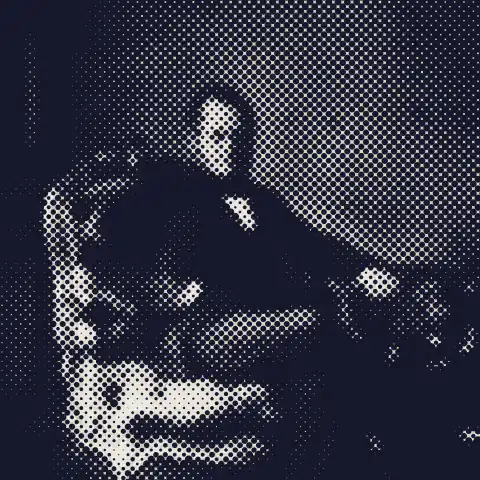
Portrait of Camillo Cavour
1810-1861Italy

Portrait: Léopold-Ernest Mayer, Pierre-Louis Pierson, Public domain, via Wikimedia Commons

Camillo Cavour

Prime Minister of Italy (1861) · Prime Minister of the Kingdom of Sardinia (1852-1859, 1860-1861) · Minister of Finance of the Kingdom of Sardinia (1851-1852) · Founder of the newspaper Il Risorgimento

Piedmontese liberal statesman who as prime minister of Sardinia engineered the alliances and annexations that united most of Italy, and who became the first prime minister of the Kingdom of Italy in 1861.

ECONOMYSTATE AND LIBERTYSOCIETYWORLDOwnershipMarketsWelfareAuthoritySecurityStructureMoralityReligionTechnologyCultureTradeForeign
  • Position
  • Solid, past the ring: second pole
  • Short, inside the ring: first pole
  • Balanced

★ Camillo Cavour on 12 axes

Share of each pole

Economy

Equality / Markets
  • OwnershipModerate: Private
    PublicPrivate
  • MarketsModerate: Free
    PlannedFree
  • WelfareMild: Self-reliant
    SharedSelf-reliant

State and liberty

Liberty / Authority
  • AuthorityBalanced
    DemocraticStrong leader
  • SecurityMild: Order
    LibertyOrder
  • StructureMild: Central
    LocalCentral

Society

Progress / Tradition
  • MoralityNo clear record
    ProgressiveTraditional
  • ReligionModerate: Secular
    SecularReligious
  • TechnologyModerate: Embrace
    EmbraceCaution
  • CultureNo clear record
    MulticulturalNational identity

World

Global / Nation
  • TradeStrong: Global
    GlobalProtected
  • Foreign policyModerate: Strength
    CooperationStrength

How we placed it

Judgment calls

Positions summarize typical stances from primary sources and reference works. Where an axis is genuinely contested, the reasoning is below.

Ownership
A wealthy landowner and businessman who saw private enterprise, banks and railways as the engines of progress.
Welfare
A liberal of the British school who relied on economic growth rather than public relief; scored moderately toward self-reliance with low confidence.
Authority
A parliamentary liberal who governed through a coalition in the chamber, but historians such as Denis Mack Smith note his use of emergency powers, pressure on newspapers and interference in elections; scored neutral.
Structure
Built Italy by extending Piedmont's institutions to the annexed regions, though he did not live to settle how centralized the new kingdom would be.
Morality
No documented position on family or personal moral questions; left null.
Religion
Sought "a free Church in a free State": an independent Church without temporal power, and a secular state.
Technology
An enthusiast for steam power, railways, canals and scientific farming, including chemical fertilizers.
Culture
No documented position on immigration or national identity as a policy question; left null.
Foreign policy
Joined the Crimean War to win allies, then made a secret alliance with France and went to war with Austria in 1859.

2 axes are marked as no clear record: there is no reasonable basis to place Camillo Cavour there, so matching leaves them out.

Who was Camillo Cavour?

Camillo Benso, Count of Cavour, was a Turin aristocrat who left the army as a young man, studied British and French politics and economics and modernized his family's estates. After the 1848 revolutions he founded the newspaper Il Risorgimento and entered the Piedmontese parliament, serving as minister of agriculture, commerce and finance. In 1852 his alliance with the centre-left, the connubio, made him prime minister of the Kingdom of Sardinia. He sent troops to the Crimean War, secured French help against Austria in 1859 and annexed central Italy, ceding Savoy and Nice to France. After Garibaldi's conquest of the south he became the first prime minister of united Italy in March 1861 and died that June.

Political views

  • Held that economic progress had to come before political change and sponsored the building of railways and canals.

    Source: en.wikipedia.org
  • Believed in free trade and liberal government, and opposed republicans and revolutionaries as a threat to social order.

    Source: en.wikipedia.org
  • Supported the Siccardi laws of 1850, which abolished Church courts and other clerical privileges in Piedmont.

    Source: treccani.it
  • Built a centre-left and centre-right coalition, the connubio, to govern through parliament.

    Source: treccani.it
  • Entered the Crimean War in 1855 to win a seat at the peace conference and allies for Piedmont.

    Source: en.wikipedia.org
  • Agreed to cede Savoy and Nice to France in exchange for annexing Tuscany and Emilia, approved by plebiscites in 1860.

    Source: en.wikipedia.org
  • Called for Rome to become the capital of Italy while keeping "a free Church in a free State".

    Source: en.wikipedia.org

Legacy

Cavour is honoured as the diplomatic architect of Italian unity, and streets and squares across the country bear his name alongside those of Mazzini and Garibaldi. Admirers praise his mastery of parliament and diplomacy and his economic modernization of Piedmont. Critics, notably the British historian Denis Mack Smith, argue that he was not especially democratic, often ignored colleagues and parliament, used emergency powers and manipulated elections and the press, and practised the deal-making later called trasformismo. Democrats and Garibaldians resented his caution and the sacrifice of Nice, and later southern critics blamed his annexations for imposing northern rule on the south.

★ Free · 12 Axes Political Test ★

How close are you to Camillo Cavour?

Take the free 12 Axes test to see your match with Camillo Cavour and 347 other historical figures, axis by axis.

OptionalWant every axis explained? The Full Political Profile is an optional $9.99 deep dive. See what is inside

FAQ

Camillo Cavour: questions

What political party was Cavour?

Cavour led the moderate liberals of the Historical Right in the Piedmontese and Italian parliaments, governing through a coalition with the centre-left.

What did Cavour mean by a free Church in a free State?

He wanted the Catholic Church to keep its spiritual independence while giving up the Pope's temporal rule, with Rome as capital of a secular Italian state.

How did Cavour help unify Italy?

He won French support against Austria, annexed Lombardy and central Italy in 1859-1860 and brought Garibaldi's conquests in the south under the Savoy crown.