PoliticalTests
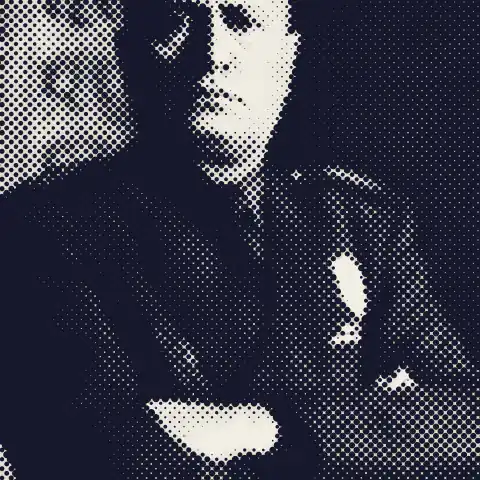
Portrait of Benito Mussolini
1883-1945Italy

Portrait: Unknown author, Public domain, via Wikimedia Commons

Benito Mussolini

Prime Minister of Italy (1922-1943) · Founder and leader of the National Fascist Party · Head of the Italian Social Republic (1943-1945) · Editor of the Socialist Party newspaper Avanti! (1912-1914)

Italian journalist and former socialist who founded Fascism in 1919, ruled Italy as dictator from 1922 to 1943, allied the country with Nazi Germany and was killed by partisans in 1945.

ECONOMYSTATE AND LIBERTYSOCIETYWORLDOwnershipMarketsWelfareAuthoritySecurityStructureMoralityReligionTechnologyCultureTradeForeign
  • Position
  • Solid, past the ring: second pole
  • Short, inside the ring: first pole
  • Balanced

★ Benito Mussolini on 12 axes

Share of each pole

Economy

Equality / Markets
  • OwnershipMild: Public
    PublicPrivate
  • MarketsModerate: Planned
    PlannedFree
  • WelfareBalanced
    SharedSelf-reliant

State and liberty

Liberty / Authority
  • AuthorityStrong: Strong leader
    DemocraticStrong leader
  • SecurityStrong: Order
    LibertyOrder
  • StructureStrong: Central
    LocalCentral

Society

Progress / Tradition
  • MoralityStrong: Traditional
    ProgressiveTraditional
  • ReligionModerate: Religious
    SecularReligious
  • TechnologyNo clear record
    EmbraceCaution
  • CultureStrong: National identity
    MulticulturalNational identity

World

Global / Nation
  • TradeStrong: Protected
    GlobalProtected
  • Foreign policyStrong: Strength
    CooperationStrength

How we placed it

Judgment calls

Positions summarize typical stances from primary sources and reference works. Where an axis is genuinely contested, the reasoning is below.

Ownership
Averages two phases: early privatizations under finance minister Alberto De Stefani, then the 1933 creation of IRI, which left the state owning a large share of Italian banking and heavy industry.
Markets
The corporative state placed employers and state-run unions in government-supervised corporations, and after 1935 the economy was steered toward autarky.
Welfare
The regime expanded social insurance and leisure programs while banning independent unions and holding down wages, so a neutral score is used.
Religion
Personally anticlerical in his youth, he made Catholicism the state religion in the 1929 Lateran agreements while competing with the Church for control of youth organizations.
Technology
No reasonable basis for views on modern technology questions.

One axis is marked as no clear record: there is no reasonable basis to place Benito Mussolini there, so matching leaves it out.

Who was Benito Mussolini?

Benito Mussolini was born in Predappio in 1883, the son of a socialist blacksmith. He rose in the Italian Socialist Party and edited its newspaper Avanti! until 1914, when the party expelled him for campaigning to bring Italy into the First World War. In March 1919 he founded the Fasci di Combattimento in Milan. After the March on Rome in October 1922, King Victor Emmanuel III appointed him prime minister. Following the murder of the socialist deputy Giacomo Matteotti in 1924, he took full dictatorial power, and by 1926 all other parties were banned. He took Italy into the Second World War as Germany's ally in 1940. The Fascist Grand Council voted against him in July 1943 and the king had him arrested; German troops freed him, and he led the Italian Social Republic in German-occupied northern Italy until partisans captured and shot him in April 1945.

Political views

  • Built a one-party state: opposition parties and independent unions were dissolved in 1926, the press was censored and a special tribunal and political police pursued opponents.

    Source: dhm.de
  • Signed the 1929 Lateran agreements with the Holy See, which recognized Vatican City and made Catholicism the sole religion of the Italian state.

    Source: en.wikipedia.org
  • Created the Institute for Industrial Reconstruction (IRI) in 1933 to rescue failing banks and companies, making the state a major owner of Italian industry.

    Source: en.wikipedia.org
  • In Libya, his regime confined much of the population of Cyrenaica in camps from 1930, where by 1933 about 40,000 of 100,000 internees had died.

    Source: en.wikipedia.org
  • Invaded Ethiopia in 1935, where Italian forces used poison gas, and answered League of Nations sanctions with a drive for economic self-sufficiency.

    Source: en.wikipedia.org
  • Enacted the 1938 racial laws, which expelled Jews from schools, universities, the civil service and the armed forces and banned marriages between Jews and other Italians.

    Source: en.wikipedia.org

Legacy

Mussolini is remembered as the founder of fascism, the model that Hitler and other European movements copied in the 1920s and 1930s. Historians record the violence of the Fascist squads, the dictatorship, the colonial wars in Libya and Ethiopia, the racial laws and a disastrous war that ended with Italy invaded and divided. Under the Salò republic, Jews in Italy were arrested and deported to German camps. Some Italians at the time credited the regime with public works and the settlement with the Church. The postwar constitution of 1948 bans the reorganization of the Fascist party, and the legacy of the regime remains contested in Italian politics.

★ Free · 12 Axes Political Test ★

How close are you to Benito Mussolini?

Take the free 12 Axes test to see your match with Benito Mussolini and 347 other historical figures, axis by axis.

OptionalWant every axis explained? The Full Political Profile is an optional $9.99 deep dive. See what is inside

FAQ

Benito Mussolini: questions

Was Mussolini left wing or right wing?

He began as a revolutionary socialist, but the Fascist movement he founded in 1919 fought the left, and historians place Italian Fascism on the far right: nationalist, anticommunist and authoritarian, with a state-directed economy.

How did Mussolini come to power?

After the March on Rome in October 1922, King Victor Emmanuel III appointed him prime minister. He turned the government into a dictatorship between 1924 and 1926.

How did Mussolini die?

Italian partisans captured him near Lake Como while he tried to flee in April 1945 and shot him on 28 April. His body was displayed in Piazzale Loreto in Milan.