PoliticalTests
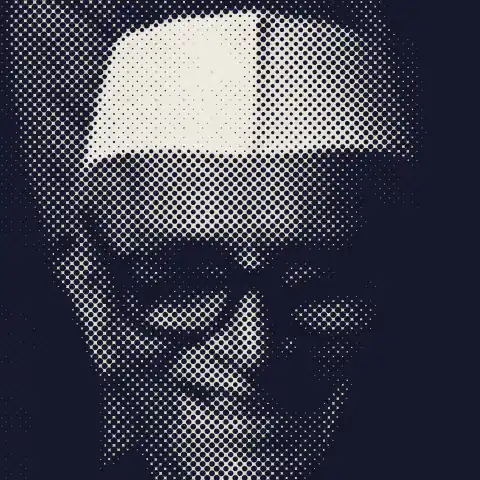
Portrait of Morarji Desai
1896-1995India

Portrait: Unknown author, Public domain, via Wikimedia Commons

Morarji Desai

4th Prime Minister of India (1977-1979) · Deputy Prime Minister and Minister of Finance of India (1967-1969) · Chief Minister of Bombay State (1952-1956) · Leader of the Janata Party

Gandhian Congress veteran who became India's first non-Congress prime minister in 1977, undid the Emergency, made peace overtures to China and Pakistan and favoured free enterprise and prohibition.

ECONOMYSTATE AND LIBERTYSOCIETYWORLDOwnershipMarketsWelfareAuthoritySecurityStructureMoralityReligionTechnologyCultureTradeForeign
  • Position
  • Solid, past the ring: second pole
  • Short, inside the ring: first pole
  • Balanced

★ Morarji Desai on 12 axes

Share of each pole

Economy

Equality / Markets
  • OwnershipMild: Private
    PublicPrivate
  • MarketsMild: Free
    PlannedFree
  • WelfareBalanced
    SharedSelf-reliant

State and liberty

Liberty / Authority
  • AuthorityModerate: Democratic
    DemocraticStrong leader
  • SecurityMild: Order
    LibertyOrder
  • StructureModerate: Central
    LocalCentral

Society

Progress / Tradition
  • MoralityModerate: Traditional
    ProgressiveTraditional
  • ReligionMild: Religious
    SecularReligious
  • TechnologyNo clear record
    EmbraceCaution
  • CultureMild: National identity
    MulticulturalNational identity

World

Global / Nation
  • TradeModerate: Protected
    GlobalProtected
  • Foreign policyModerate: Cooperation
    CooperationStrength

How we placed it

Judgment calls

Positions summarize typical stances from primary sources and reference works. Where an axis is genuinely contested, the reasoning is below.

Welfare
Known as pro-business and for fiscal discipline, while also passing tenancy laws for poor farmers in Bombay; scored at the middle.
Authority
Jailed during the Emergency, he led the government that restored civil liberties and made a future emergency harder to declare; scored toward democratic checks.
Security
Ordered police to fire on Samyukta Maharashtra protesters in Bombay in 1956, when 105 people were killed, and enforced prohibition, though as prime minister he dismantled Emergency decrees and cut back the external intelligence agency; scored toward order.
Structure
Opposed the movements for separate linguistic states in Bombay and proposed making the city a union territory, and his government pressed nine Congress-ruled states into fresh elections; scored toward the centre.
Religion
A devout Gandhian Hindu who led a coalition that included the Hindu nationalist Jana Sangh, and some colleagues saw him as favouring it; scored mildly religious.
Technology
His documented record covers nuclear weapons, which belong to foreign policy, but no broader stance on new technology, so left unscored.
Trade
His government required multinational firms to take Indian partners in the name of self-reliance, which led Coca-Cola and IBM to leave India; scored toward protection.

One axis is marked as no clear record: there is no reasonable basis to place Morarji Desai there, so matching leaves it out.

Who was Morarji Desai?

Morarji Desai was born in 1896 in what is now Gujarat and worked as a deputy collector before leaving government service in 1930 to join Gandhi's independence campaign. He was jailed several times by the British. He became chief minister of Bombay State in 1952 and later finance minister under Nehru and Indira Gandhi, resigning in 1969 when she took the finance portfolio from him. Jailed during the Emergency, he led the Janata Party to victory in 1977, becoming India's first non-Congress prime minister at the age of 81. His coalition broke apart in 1979. He died in 1995 at 99.

Political views

  • Was socially conservative, pro-business and in favour of free enterprise, in contrast to Nehru's socialist policies.

    Source: en.wikipedia.org
  • Opposed the campaigns to split Bombay State into Marathi and Gujarati states, and as chief minister ordered police to fire on protesters in 1956, when 105 people were killed.

    Source: en.wikipedia.org
  • Was known as an ardent follower of Mahatma Gandhi and a strict prohibitionist.

    Source: upi.com
  • As prime minister, ended the Emergency and its censorship and amended the constitution to make a future state of emergency harder to declare.

    Source: en.wikipedia.org
  • Restored normal relations with China for the first time since 1962 and built friendly ties with Pakistan, while refusing to sign the nuclear Non-Proliferation Treaty.

    Source: en.wikipedia.org
  • Reaffirmed that India would not build nuclear weapons and would refrain even from peaceful nuclear explosions.

    Source: en.wikipedia.org
  • Led a government that sought economic self-reliance by requiring multinational corporations to go into partnership with Indian firms.

    Source: en.wikipedia.org

Legacy

Admirers remember Desai as an incorruptible Gandhian who stood up to Indira Gandhi, restored civil liberties after the Emergency and pursued peace with China and Pakistan; Pakistan gave him its highest civilian award in 1990. Critics in Maharashtra still recall the 1956 police firing in Bombay, and the square where protesters died was renamed Martyrs' Square. His government is faulted for infighting, the stalled prosecution of Emergency abuses and a foreign investment policy that drove out firms such as Coca-Cola and IBM. Former intelligence officials criticised his cuts to the external spy agency, and he was dogged by unproven allegations of ties to the CIA, which he contested in court.

★ Free · 12 Axes Political Test ★

How close are you to Morarji Desai?

Take the free 12 Axes test to see your match with Morarji Desai and 347 other historical figures, axis by axis.

OptionalWant every axis explained? The Full Political Profile is an optional $9.99 deep dive. See what is inside

FAQ

Morarji Desai: questions

What political party was Morarji Desai?

Desai spent most of his career in the Indian National Congress. After the 1969 split he led the Congress (Organisation), and in 1977 he became prime minister as leader of the Janata Party, a coalition of parties opposed to the Emergency.

Why is Morarji Desai important?

He was India's first prime minister from outside the Congress party. His government ended the Emergency, restored press freedom and changed the constitution to make it harder to suspend civil liberties again.

Was Morarji Desai right wing?

He is usually placed on the right of the Congress tradition: he favoured free enterprise and fiscal discipline over Nehru's socialism and was socially conservative, while also following Gandhi's teachings.