PoliticalTests
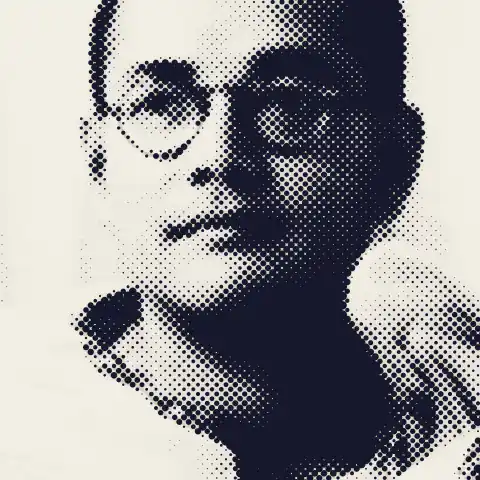
Portrait of Subhas Chandra Bose
1897-1945India

Portrait: Unknown (Netaji Research Bureau, Calcutta), Public domain, via Wikimedia Commons

Subhas Chandra Bose

President of the Indian National Congress (1938-1939) · Founder of the All India Forward Bloc · Commander of the Indian National Army · Leader in the Indian independence movement

Radical independence leader known as Netaji, who twice led the Congress, broke with Gandhi over methods and allied with Germany and Japan to fight British rule with the Indian National Army.

ECONOMYSTATE AND LIBERTYSOCIETYWORLDOwnershipMarketsWelfareAuthoritySecurityStructureMoralityReligionTechnologyCultureTradeForeign
  • Position
  • Solid, past the ring: second pole
  • Short, inside the ring: first pole
  • Balanced

★ Subhas Chandra Bose on 12 axes

Share of each pole

Economy

Equality / Markets
  • OwnershipModerate: Public
    PublicPrivate
  • MarketsModerate: Planned
    PlannedFree
  • WelfareModerate: Shared
    SharedSelf-reliant

State and liberty

Liberty / Authority
  • AuthorityStrong: Strong leader
    DemocraticStrong leader
  • SecurityModerate: Order
    LibertyOrder
  • StructureModerate: Central
    LocalCentral

Society

Progress / Tradition
  • MoralityModerate: Progressive
    ProgressiveTraditional
  • ReligionMild: Secular
    SecularReligious
  • TechnologyNo clear record
    EmbraceCaution
  • CultureMild: National identity
    MulticulturalNational identity

World

Global / Nation
  • TradeNo clear record
    GlobalProtected
  • Foreign policyStrong: Strength
    CooperationStrength

How we placed it

Judgment calls

Positions summarize typical stances from primary sources and reference works. Where an axis is genuinely contested, the reasoning is below.

Authority
Once described democracy as the best option for India, but by the war years wrote that free India would need an authoritarian state and a strong central government with dictatorial powers for some years; scored toward strong leadership.
Structure
Called in the 1920s for an independent federal republic, then later for a strong, dictatorial central government during reconstruction; scored moderately toward the centre.
Morality
Spoke repeatedly for the rights of women, the depressed classes and workers, and gave women a role in his army; scored toward reform.
Religion
Drew personal inspiration from the Bhagavad Gita and Swami Vivekananda, but treated the Hindu-Muslim divide as largely a colonial creation and built a mixed-faith army; scored slightly secular.
Technology
His sources here document no clear position on technology, so left unscored.
Culture
A fierce nationalist whose idea of the nation included Hindus, Muslims and Sikhs on equal terms; scored mildly toward national identity.
Trade
No documented position on trade, so left unscored.
Foreign policy
Sought armed liberation with the help of Nazi Germany and imperial Japan rather than negotiation; scored strongly toward strength.

2 axes are marked as no clear record: there is no reasonable basis to place Subhas Chandra Bose there, so matching leaves them out.

Who was Subhas Chandra Bose?

Subhas Chandra Bose was born in Cuttack in 1897, studied in Calcutta and Cambridge and passed the Indian Civil Service examination before resigning to join the freedom movement in 1921. He became a leader of the Congress left alongside Jawaharlal Nehru and was elected Congress president in 1938 and 1939, but resigned after a clash with Mohandas Gandhi. Escaping house arrest in 1941, he went to Germany and then Japanese-held Southeast Asia, where he led the Indian National Army. He died in August 1945 after a plane crash in Taiwan.

Political views

  • Demanded complete independence rather than dominion status in 1928 and said India should become an independent federal republic.

    Source: web.archive.org
  • Said in 1930 that the justice and equality at the root of socialism should be combined with the efficiency and discipline of fascism.

    Source: frontline.thehindu.com
  • As Congress president clashed with its Gandhian wing over his opposition to the federal scheme of the 1935 Act, planning for socialism and inner-party democracy.

    Source: web.archive.org
  • Held that the distinction between Hindus and Muslims was largely an artificial creation in which British rulers had a hand.

    Source: archive.org
  • Went to Berlin in 1941 to seek Hitler's help in driving the British out of India and recruited a Free India Legion from Indian prisoners of war.

    Source: news.bbc.co.uk
  • Wrote that free India would need an authoritarian state with a strong central government holding dictatorial powers for some years.

    Source: en.wikipedia.org
  • Led the Indian National Army with Japanese support and proclaimed a Provisional Government of Free India, enlisting soldiers of every faith and a women's force.

    Source: web.archive.org

Legacy

Bose is revered by many Indians as Netaji, the leader who chose armed struggle, and parties across the spectrum honour him; since 2021 his birthday has been marked as Parakram Diwas. The British trials of INA officers in 1945 and 1946 stirred wide nationalist sympathy. Critics, including historians who admire his patriotism, point to his alliance with Nazi Germany and imperial Japan, his admiration for authoritarian methods and his silence on Nazi crimes against Jews. Gandhi called him a patriot, though misguided. Official accounts hold that he died of burns after the 1945 crash, but some supporters have long disputed this.

In their words

History will bear me out when I say that it is a misnomer to talk of Muslim rule when describing the political order in India prior to the advent of the British.
An Indian Pilgrim, his unfinished autobiography, written in 1937

★ Free · 12 Axes Political Test ★

How close are you to Subhas Chandra Bose?

Take the free 12 Axes test to see your match with Subhas Chandra Bose and 347 other historical figures, axis by axis.

OptionalWant every axis explained? The Full Political Profile is an optional $9.99 deep dive. See what is inside

FAQ

Subhas Chandra Bose: questions

What political party was Subhas Chandra Bose?

Bose was a leader of the Indian National Congress and its president in 1938 and 1939. After resigning he founded the All India Forward Bloc in 1939 as a left-wing group within, and later outside, the Congress.

Why did Bose ally with Germany and Japan?

He saw Britain's enemies as potential allies for India's freedom and sought their help to raise an army from Indian prisoners of war. Historians debate how far this was pragmatism and how far admiration for authoritarian rule.

How did Subhas Chandra Bose die?

According to official accounts and most historians, he died of burns on 18 August 1945 after his plane crashed on take-off in Taiwan. Some of his admirers have long refused to accept this account.