 France
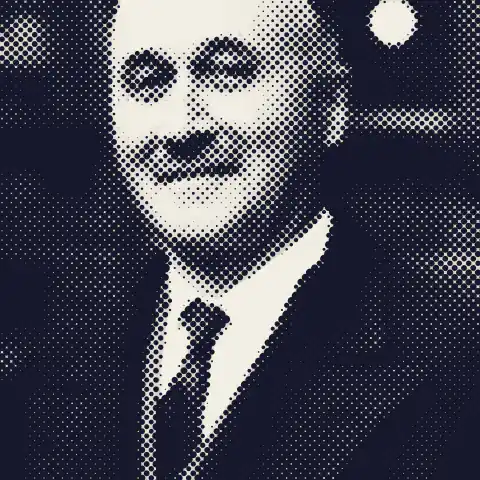
Who was Jean Monnet?
Jean Monnet came from a family of cognac merchants in Cognac and left school without the baccalauréat to learn the family business in London. During the First World War he organized the pooling of Allied supplies, and in 1919 he became deputy secretary-general of the new League of Nations. After years in international finance, he coordinated Franco-British war supplies in 1939, proposed a Franco-British union in June 1940 and then worked in Washington on American arms production. From 1946 he headed France's General Planning Commission. He prepared the Schuman Declaration of 1950, became the first president of the Coal and Steel Community's High Authority and in 1955 founded the Action Committee for the United States of Europe.
Political views
Proposed a full union of France and Britain in June 1940, arguing that the two countries could win only by acting as one people.
Source: en.wikipedia.orgUrged President Roosevelt to make America the "arsenal of democracy" through a vast arms programme.
Source: en.wikipedia.orgDesigned the 1946 Modernization and Re-equipment Plan, a form of indicative planning that set national production targets.
Source: en.wikipedia.orgPrepared the Schuman Declaration of 9 May 1950, which placed French and German coal and steel under a common high authority to make war between them impossible.
Source: european-union.europa.euFavored a gradual approach to unity, building common institutions step by step.
Source: en.wikipedia.orgUsed his Action Committee to rally parties and trade unions behind the Common Market, British membership and a directly elected European Parliament.
Source: en.wikipedia.org
Legacy
Monnet is honoured as a founder of European integration: in 1976 European leaders made him the first Honorary Citizen of Europe, and his remains were moved to the Panthéon in 1988. Keynes reportedly judged that his wartime coordination had shortened the Second World War by a year. Admirers credit his method of small, concrete steps for decades of peace and prosperity in Western Europe. Critics, from de Gaulle's supporters to later Eurosceptics, argue that his preference for appointed, expert institutions created the European Union's democratic deficit and moved power away from national parliaments. Others see him as too close to American interests, while some federalists thought his gradualism too slow.
In their words
Continue, continue, there is no future for the people of Europe other than in union.