 France
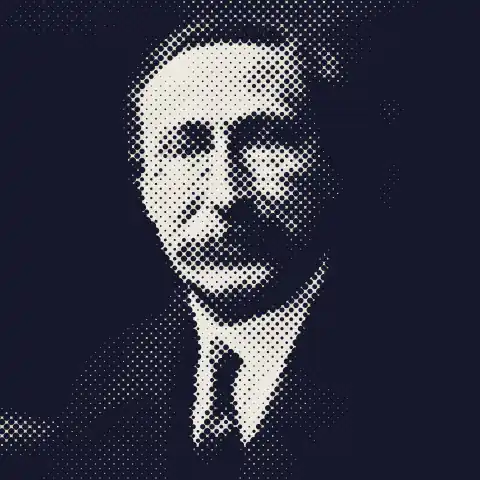
Who was Léon Blum?
Léon Blum was a Paris-born writer and jurist who entered politics through the Dreyfus Affair and the socialism of Jean Jaurès. After the 1920 Congress of Tours, where a majority of socialists joined the Communist International, he rebuilt the SFIO and led it for the next two decades. The Popular Front coalition of socialists, radicals and communists won the 1936 election, and Blum became prime minister in June 1936. He voted against granting full powers to Marshal Pétain in July 1940, was put on trial by Vichy at Riom in 1942 and was later held by the Germans at Buchenwald. He returned to lead a short all-socialist government in 1946-1947.
Political views
Refused the conditions for joining the Communist International in 1920, seeing them as submission to Moscow, and kept the SFIO as a separate democratic socialist party.
Source: www2.assemblee-nationale.frPassed a rapid series of laws in 1936 creating paid holidays, the 40-hour week and collective agreements, alongside the Matignon Agreements between unions and employers.
Source: www2.assemblee-nationale.frNationalized the arms industries, extended compulsory schooling to age 14 and set up a public wheat office to stabilize farm prices.
Source: en.wikipedia.orgDissolved the armed far-right leagues and backed a large rearmament programme from September 1936.
Source: en.wikipedia.orgTried to extend political rights to part of the Muslim population of Algeria, a plan blocked by settler opposition.
Source: en.wikipedia.orgDefended the Popular Front and its arms spending at the Riom trial so effectively that Vichy suspended the proceedings.
Source: www2.assemblee-nationale.frCalled after the war for a European federation built together with Germany.
Source: en.wikipedia.org
Legacy
For the French left, Blum's government stands for the social rights it created, above all the first paid holidays, and his refusal of Bolshevism shaped French democratic socialism for decades. Many also admire his conduct at Riom and in captivity. Critics on the right blamed the 40-hour week and wage rises for inflation and weak industrial output on the eve of war, and the far right attacked him with antisemitic violence, including a 1936 assault in Paris. On the left, communists and some socialists condemned his decision not to arm the Spanish Republic, taken largely to keep in step with Britain. Historians still debate how far the Popular Front's economic record weakened France before 1940.