 France
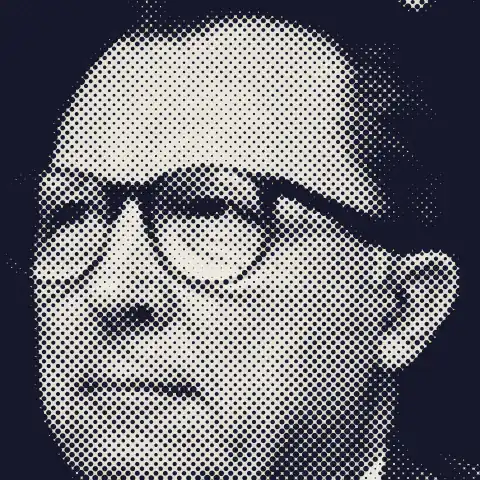
Who was Jacques Delors?
Jacques Delors was born in Paris and worked at the Bank of France and in state planning before entering politics. A Catholic trade unionist, he helped turn the Christian workers' confederation into the secular CFDT, then advised the Gaullist prime minister Jacques Chaban-Delmas on social policy in 1969. He joined the Socialist Party in 1974, sat in the European Parliament and served as François Mitterrand's finance minister from 1981 to 1984. As president of the European Commission for ten years, the longest of any holder, he pushed through the single market and chaired the committee whose report led to the euro. He declined to run for the French presidency in 1994 and died in Paris in 2023.
Political views
As finance minister, argued for a pause in new social spending, acceptance of the market economy and keeping the franc in the European Monetary System.
Source: en.wikipedia.orgMade the completion of a single European market by 1992 his first priority, with free movement of goods, services, capital and people.
Source: en.wikipedia.orgPersuaded governments to adopt qualified majority voting in the Single European Act so that one member could not block single market laws.
Source: en.wikipedia.orgChaired the committee that in 1989 proposed economic and monetary union in three stages, leading to the euro.
Source: en.wikipedia.orgPromoted a European model that joined markets with redistribution, protection of the weakest and a strong industrial base, as an alternative to American neoliberalism.
Source: en.wikipedia.orgTold the British Trades Union Congress in 1988 that the single market needed a social dimension for workers.
Source: en.wikipedia.orgSupported the Spinelli Group in 2010, which campaigns for a more federal European Union.
Source: en.wikipedia.org
Legacy
Admirers regard Delors as the most influential president the European Commission has had, the architect of the single market and the euro who revived a stalled Community and paired economic integration with a social agenda. He was honoured as an Honorary Citizen of Europe in 2015, and the Paris think tank he founded now bears his name. In Britain he became a hate figure for Eurosceptics: his 1988 speech to the unions helped turn Labour toward Europe and the Conservatives against it, and Margaret Thatcher rejected his plans for deeper union. Critics on the left argue that the single market and the euro's rules did more for capital than for the social Europe he promised, while some federalists, Altiero Spinelli among them, thought he was too cautious.