PoliticalTests
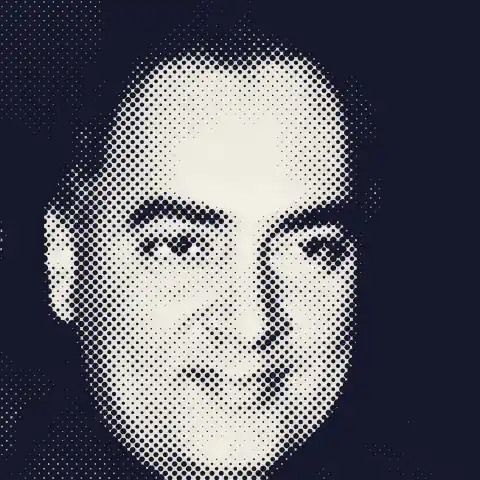
Portrait of Rajiv Gandhi
1944-1991India

Portrait: Bart Molendijk / Anefo, CC BY-SA 3.0 nl, via Wikimedia Commons. Halftone version: CC BY-SA 3.0 nl

Rajiv Gandhi

6th Prime Minister of India (1984-1989) · President of the Indian National Congress · Leader of the Opposition in the Lok Sabha (1989-1990) · Airline pilot

India's youngest prime minister, who took office after his mother's assassination in 1984, began opening the economy, promoted computers and telecoms, and was assassinated in 1991.

ECONOMYSTATE AND LIBERTYSOCIETYWORLDOwnershipMarketsWelfareAuthoritySecurityStructureMoralityReligionTechnologyCultureTradeForeign
  • Position
  • Solid, past the ring: second pole
  • Short, inside the ring: first pole
  • Balanced

★ Rajiv Gandhi on 12 axes

Share of each pole

Economy

Equality / Markets
  • OwnershipMild: Private
    PublicPrivate
  • MarketsMild: Free
    PlannedFree
  • WelfareMild: Shared
    SharedSelf-reliant

State and liberty

Liberty / Authority
  • AuthorityMild: Democratic
    DemocraticStrong leader
  • SecurityMild: Order
    LibertyOrder
  • StructureMild: Local
    LocalCentral

Society

Progress / Tradition
  • MoralityMild: Traditional
    ProgressiveTraditional
  • ReligionBalanced
    SecularReligious
  • TechnologyStrong: Embrace
    EmbraceCaution
  • CultureMild: Multicultural
    MulticulturalNational identity

World

Global / Nation
  • TradeMild: Global
    GlobalProtected
  • Foreign policyMild: Strength
    CooperationStrength

How we placed it

Judgment calls

Positions summarize typical stances from primary sources and reference works. Where an axis is genuinely contested, the reasoning is below.

Ownership
Gave incentives to private industry, but built public telecom companies such as MTNL and VSNL; scored near the middle.
Authority
Governed with the largest majority in Indian history and passed the anti-defection law, while elections and opposition parties worked as normal; scored slightly toward democratic checks.
Security
Police stood by during the 1984 anti-Sikh violence in the first days of his premiership, and Punjab and the northeast saw insurgencies, though he also freed jailed Akali leaders and ordered an inquiry; scored mildly toward order.
Structure
Signed accords with Punjab, Assam and Mizo leaders and made Mizoram and Arunachal Pradesh full states; scored mildly local.
Morality
The Shah Bano law limited the maintenance owed to divorced Muslim women, deferring to religious personal law; scored slightly traditional.
Religion
Led the secular Congress, but reversed the Shah Bano ruling on maintenance for divorced Muslim women after protests from some Muslims who saw it as an encroachment on Muslim personal law; scored at the middle.
Foreign policy
Sent troops to Sri Lanka, the Maldives and Siachen, but proposed a plan to abolish nuclear weapons and visited China and Pakistan; scored slightly toward strength.

Who was Rajiv Gandhi?

Rajiv Gandhi was born in Bombay in 1944, the elder son of Indira Gandhi and grandson of Jawaharlal Nehru. He studied in Britain and worked as an airline pilot, entering politics only after his brother Sanjay died in 1980. He became prime minister on the day his mother was assassinated in October 1984 and won a record majority that December. His government was hit by the Bofors arms scandal, and Congress lost the 1989 election. In May 1991, while campaigning, he was killed by a suicide bomber from the Sri Lankan Tamil Tigers.

Political views

  • Encouraged foreign investment and a freer economy, and worked to rid the Congress party of his mother's unelected associates.

    Source: news.bbc.co.uk
  • Cut import quotas, taxes and tariffs on technology industries such as computers, airlines and telecommunications, and expanded state support for science.

    Source: en.wikipedia.org
  • Launched a National Policy on Education in 1986 and free residential Navodaya schools for rural children.

    Source: en.wikipedia.org
  • Passed a law in 1986 that overturned the Supreme Court's Shah Bano ruling, limiting maintenance for divorced Muslim women after protests that the ruling encroached on Muslim personal law.

    Source: en.wikipedia.org
  • Signed accords to end unrest in Punjab, Assam and Mizoram, giving statehood to Mizoram and Arunachal Pradesh.

    Source: en.wikipedia.org
  • Proposed at the United Nations in 1988 a staged plan to eliminate all nuclear weapons, calling nuclear deterrence the ultimate expression of the philosophy of terrorism.

    Source: thehindu.com
  • Sent Indian peacekeeping forces to Sri Lanka in 1987 in an attempt to impose peace, a move that proved unpopular and ended with withdrawal in 1990.

    Source: news.bbc.co.uk

Legacy

Supporters credit Rajiv Gandhi with starting India's economic opening, the telecom and computer revolution, and peace accords in Punjab, Assam and Mizoram. His premiership began amid anti-Sikh violence in which more than 3,000 Sikhs died; an official inquiry later found that local Congress leaders incited mobs and that police stayed passive, but found no evidence that he organised the attacks. His remark weeks later that the earth shakes when a mighty tree falls was widely condemned. Critics also fault the Shah Bano law and the costly Sri Lanka intervention. The Bofors bribery allegations contributed to his 1989 defeat, though the Delhi High Court cleared him of wrongdoing in 2004.

★ Free · 12 Axes Political Test ★

How close are you to Rajiv Gandhi?

Take the free 12 Axes test to see your match with Rajiv Gandhi and 347 other historical figures, axis by axis.

OptionalWant every axis explained? The Full Political Profile is an optional $9.99 deep dive. See what is inside

FAQ

Rajiv Gandhi: questions

What political party was Rajiv Gandhi?

Rajiv Gandhi belonged to the Indian National Congress, which he led as president from 1985 until his death. Under him the party won 414 Lok Sabha seats in 1984, its largest majority ever.

What was the Bofors scandal?

It concerned allegations that the Swedish arms maker Bofors paid bribes to win a 1986 contract for artillery guns. The scandal hurt Rajiv Gandhi in the 1989 election, but the Delhi High Court found no evidence against him in 2004.

Did Rajiv Gandhi start India's economic reforms?

He took early steps, easing import controls and taxes on technology industries and encouraging private and foreign investment. The larger liberalisation of 1991 came under P. V. Narasimha Rao and Manmohan Singh after his death.

Sources

  1. 01en.wikipedia.org
  2. 02news.bbc.co.uk
  3. 03news.bbc.co.uk
  4. 04news.bbc.co.uk
  5. 05thehindu.com

Image credits

Portrait of Rajiv Gandhi: Rajiv Gandhi (1987).jpg by Bart Molendijk / Anefo, licensed CC BY-SA 3.0 nl, via Wikimedia Commons. Cropped, converted to grayscale and printed as a halftone by politicaltests.org; the halftone version is licensed CC BY-SA 3.0 nl.

All portrait credits and licenses