PoliticalTests
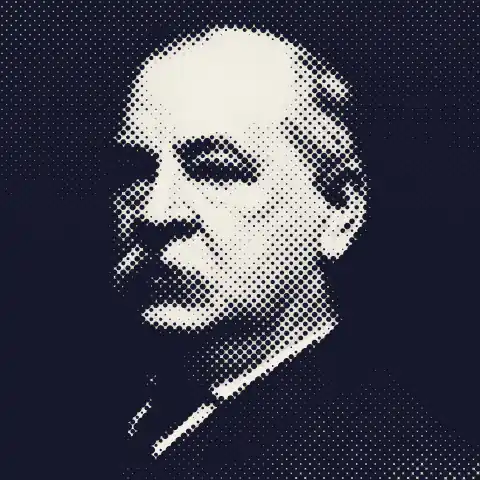
Portrait of Grover Cleveland
1837-1908United States

Portrait: Unknown author, Public domain, via Wikimedia Commons

Grover Cleveland

22nd and 24th President of the United States (1885-1889, 1893-1897) · Governor of New York · Mayor of Buffalo · Lawyer

The only president to serve two non-consecutive terms, a conservative Democrat who championed low tariffs, the gold standard and limited government and sent troops into the Pullman strike.

ECONOMYSTATE AND LIBERTYSOCIETYWORLDOwnershipMarketsWelfareAuthoritySecurityStructureMoralityReligionTechnologyCultureTradeForeign
  • Position
  • Solid, past the ring: second pole
  • Short, inside the ring: first pole
  • Balanced

★ Grover Cleveland on 12 axes

Share of each pole

Economy

Equality / Markets
  • OwnershipModerate: Private
    PublicPrivate
  • MarketsModerate: Free
    PlannedFree
  • WelfareStrong: Self-reliant
    SharedSelf-reliant

State and liberty

Liberty / Authority
  • AuthorityMild: Democratic
    DemocraticStrong leader
  • SecurityModerate: Order
    LibertyOrder
  • StructureMild: Local
    LocalCentral

Society

Progress / Tradition
  • MoralityNo clear record
    ProgressiveTraditional
  • ReligionNo clear record
    SecularReligious
  • TechnologyNo clear record
    EmbraceCaution
  • CultureMild: National identity
    MulticulturalNational identity

World

Global / Nation
  • TradeModerate: Global
    GlobalProtected
  • Foreign policyMild: Cooperation
    CooperationStrength

How we placed it

Judgment calls

Positions summarize typical stances from primary sources and reference works. Where an axis is genuinely contested, the reasoning is below.

Ownership
No public ownership debate in his era; scored from his defense of private enterprise and opposition to federal subsidies.
Markets
A hard-money advocate who forced repeal of the Sherman Silver Purchase Act and sold bonds to bankers to defend the gold standard, though he signed the Interstate Commerce Act regulating railroads.
Welfare
Vetoed a 1887 bill for drought relief seed in Texas, writing that though the people support the government, the government should not support the people; he also vetoed many private pension bills.
Authority
Restored the use of the veto as a check on Congress and governed within constitutional limits; scored toward the democratic side.
Security
Sent federal troops to end the 1894 Pullman strike over the objection of the governor of Illinois.
Structure
Favored limited federal power in economic and social matters, but overrode a state governor to deploy troops in the Pullman strike; scored mildly toward local.
Morality
No documented position on family or social norms beyond the conventions of his era; left null.
Religion
No documented position on religion in public life in the sources used here; left null.
Technology
No documented view; 19th-century context.
Culture
Condemned violence against Chinese immigrants but came to support their exclusion and signed the Dawes Act to assimilate Native Americans, while later vetoing a literacy test for immigrants.
Trade
Made tariff reduction a central cause and campaigned on it in 1888 and 1892.
Foreign policy
Withdrew the Hawaii annexation treaty after concluding Americans had helped overthrow the Hawaiian queen, but threatened Britain over the Venezuela boundary; scored near the middle.

3 axes are marked as no clear record: there is no reasonable basis to place Grover Cleveland there, so matching leaves them out.

Who was Grover Cleveland?

Grover Cleveland (1837-1908), a Buffalo lawyer, built a reputation for honesty as sheriff, mayor of Buffalo and governor of New York. In 1884 he became the first Democrat elected president since the Civil War. He lost the 1888 election to Benjamin Harrison despite winning the popular vote and won a rematch in 1892, making him the only president to serve two non-consecutive terms. His second term was dominated by the Panic of 1893 and the depression that followed, the Pullman strike and a split in his party over silver, which led the Democrats to nominate William Jennings Bryan in 1896.

Political views

  • Vetoed a 1887 bill to buy seed for drought-stricken Texas farmers, arguing that federal aid would weaken self-reliance and private charity.

    Source: millercenter.org
  • Campaigned for tariff reduction against Republican protectionism in 1888 and again in 1892.

    Source: millercenter.org
  • Blamed the Sherman Silver Purchase Act for the depression and won its repeal, then issued bonds to restore the gold reserve.

    Source: millercenter.org
  • Sent federal troops into the 1894 Pullman strike although the governor of Illinois did not want them.

    Source: millercenter.org
  • Signed the Dawes Act of 1887, which broke up reservation land into individual allotments.

    Source: millercenter.org
  • Opposed the annexation of Hawaii after concluding that Americans had conspired to overthrow its government.

    Source: millercenter.org
  • Pressed Britain to accept arbitration of its boundary dispute with Venezuela, sending naval vessels to the area.

    Source: millercenter.org

Legacy

Admirers have long praised Cleveland's integrity, his willingness to defy his own party and interest groups and his record use of the veto against special-interest and pension bills, and fiscal conservatives regard him as a model of limited government. Critics argue that his rigid adherence to the gold standard and refusal to provide relief deepened the suffering of the 1890s depression, and labor historians condemn his use of federal troops and injunctions to break the Pullman strike. His support for the Dawes Act contributed to the loss of most remaining Native American land over the following decades. Historians also note that he did little to oppose the spread of segregation and Black disenfranchisement in the South.

In their words

Though the people support the Government the Government should not support the people.
Veto of the Texas Seed Bill, 1887

★ 12 Axes Political Test ★

How close are you to Grover Cleveland?

Answer plain statements on 12 axes and see your match with Grover Cleveland and every other profile on the site, axis by axis.

FAQ

Grover Cleveland: questions

What political party was Grover Cleveland?

Cleveland was a Democrat, from the party's conservative, pro-business Bourbon wing.

Why did Grover Cleveland serve two non-consecutive terms?

He won in 1884, lost the electoral vote to Benjamin Harrison in 1888 while winning the popular vote, and defeated Harrison in a rematch in 1892.

What did Grover Cleveland do in the Pullman strike?

In 1894 he sent federal troops to Chicago to keep the mail and rail traffic moving, over the objection of Illinois Governor John Altgeld. The strike collapsed and its leaders were jailed.