 United States
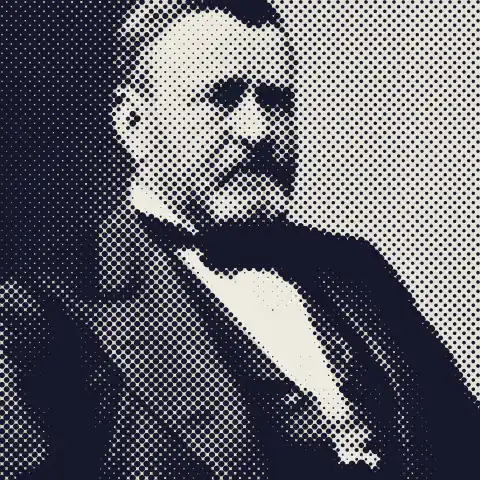
Who was Ulysses S. Grant?
Ulysses S. Grant (1822-1885), a West Point graduate and veteran of the war with Mexico, rose from obscurity in the Civil War to command all Union armies and accept Robert E. Lee's surrender at Appomattox in 1865. Elected president as a Republican in 1868 and re-elected in 1872, he backed the Fifteenth Amendment, enforced Reconstruction in the South and pursued a Peace Policy toward Native Americans. His administration also faced a severe depression after 1873 and a series of corruption scandals involving his appointees. After leaving office he lost his savings in a fraudulent investment firm and wrote his widely praised memoirs while dying of cancer.
Political views
Urged ratification of the Fifteenth Amendment, which barred denying the vote on account of race.
Source: millercenter.orgSigned the Ku Klux Klan Act of 1871 and used it to counter terrorist violence against Black Southerners.
Source: millercenter.orgSuspended habeas corpus in part of South Carolina in 1871 and sent federal troops to help marshals prosecute Klan members.
Source: en.wikipedia.orgVetoed the 1874 inflation bill and signed the Specie Resumption Act of 1875, returning the currency to a gold basis.
Source: millercenter.orgBecame the first president to recommend a professional civil service and appointed the first Civil Service Commission.
Source: millercenter.orgCalled in 1875 for a constitutional amendment requiring free public schools and banning public money for sectarian schools.
Source: en.wikipedia.orgSettled the Alabama Claims with Britain by sending them to international arbitration under the 1871 Treaty of Washington.
Source: millercenter.org
Legacy
Grant's reputation has risen sharply among historians since the late 20th century. Admirers credit him with doing more than any other 19th-century president to protect the rights of Black Americans, from the Fifteenth Amendment to the prosecution of the Ku Klux Klan, and with a successful foreign policy. Critics, then and now, point to the scandals of his administration, including the Whiskey Ring, which implicated his personal secretary, and argue that he was too trusting of associates. His Peace Policy sought to assimilate Native Americans and was followed by the Great Sioux War of 1876 and the loss of the Black Hills. Historians also cite his 1862 wartime order expelling Jews from his military district, which Lincoln revoked and Grant later regretted.