 Pakistan
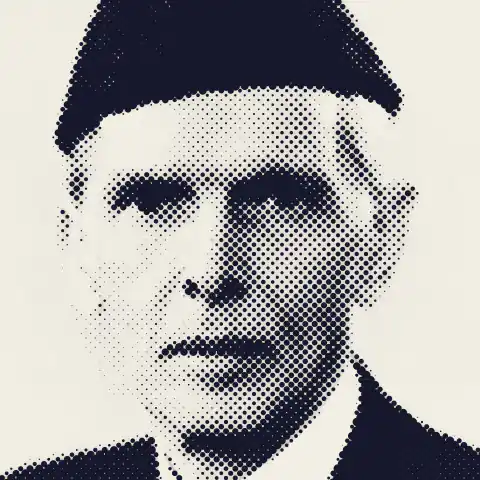
Who was Muhammad Ali Jinnah?
Muhammad Ali Jinnah was born in Karachi in 1876, trained as a barrister at Lincoln's Inn and built a leading law practice in Bombay. He joined the Indian National Congress as a moderate, defended Bal Gangadhar Tilak in a sedition case and helped bring about the 1916 Lucknow Pact between the Congress and the Muslim League. He left the Congress in 1920 over Gandhi's non-cooperation campaign. As president of the Muslim League he led the 1940 Lahore Resolution demanding Muslim-majority states, and the League won most Muslim seats in the 1946 elections. He became Pakistan's first governor-general in August 1947 and died in September 1948.
Political views
Opposed separate electorates and the claim of unelected Muslim leaders to speak for Indian Muslims in 1906, and was called an ambassador of Hindu-Muslim unity for his work on the Lucknow Pact.
Source: en.wikipedia.orgRegarded Gandhi's satyagraha campaign as political anarchy and argued that self-government should be won through constitutional means.
Source: en.wikipedia.orgLed the Muslim League to adopt the Lahore Resolution of 1940, which embraced the two-nation theory and called for autonomous Muslim-majority states.
Source: en.wikipedia.orgCalled for Direct Action Day on 16 August 1946 to press the demand for a Muslim homeland, a day of strikes that turned into communal riots in Calcutta in which more than 4,000 people died.
Source: en.wikipedia.orgTold Pakistan's Constituent Assembly on 11 August 1947 that citizens were free to go to their temples, mosques or other places of worship and that religion had nothing to do with the business of the state.
Source: bbc.comSaid in a 1948 broadcast that Pakistan would not be a theocracy ruled by priests, but that its constitution would be democratic and embody the essential principles of Islam.
Source: dawn.com
Legacy
In Pakistan, Jinnah is revered as Quaid-e-Azam, the great leader, and father of the nation, and his birthday is a national holiday. In India he is widely blamed for partition and the violence that came with it, and many Indian Muslims also view him negatively. Some historians, notably Ayesha Jalal and H. M. Seervai, argue that he used the Pakistan demand as a bargaining position for Muslim rights in a united India and that partition followed the Congress's unwillingness to share power, a view others dispute. Pakistanis also argue over his vision: liberals cite his 11 August speech as a call for a secular, tolerant state, while conservatives point to his references to Islamic principles. The Indian lawyer and historian A. G. Noorani has urged Indians to remember his early role as a fighter for Indian freedom alongside Tilak.
In their words
You may belong to any religion or caste or creed - that has nothing to do with the business of the state.