EU quiz
Twenty questions on the European Union drawn at random from a bank of 59, each answer explained with the Treaty Article or official source behind it.
- 20 questions
- Answers explained
- 59 in the bank
- Free, no signup
Ready?
20 questions.
Independent quiz, not affiliated with the European Union or any of its institutions. Answers checked against the Treaties and official EU sources.
About this quiz
How this quiz works
- Question bank
- 59
- Members
- 27
- Euro area
- 21
- MEPs
- 720
original questions
as of Oct 2026
since 1 Jan 2026
2024 to 2029
Each round draws 20 questions from the bank and shuffles the four options. You see the right answer and a short explanation as soon as you choose.
There is no pass mark. Your score out of 20 comes with a verdict and a link to share, and you can review every question you missed. Take another round for a fresh set.
The questions cover the EU's institutions (the Commission, Parliament, the Council, the European Council, the Court of Justice and the ECB), the treaties from Paris to Lisbon, its 27 members and every enlargement, the euro area, Schengen, citizens' rights and elections to the European Parliament.
Every answer is checked against the Treaty on European Union, the Treaty on the Functioning of the EU or the official EU page named with it. Counts that change, such as members of the euro area and Schengen, are stated as of the date below.
Sources, checked 30 October 2026
- EUR-Lex: the Treaties currently in force
- European Union: EU countries
- European Union: Countries using the euro
- European Commission: Schengen area
- European Parliament: Members
Independent quiz, not affiliated with the European Union or any of its institutions. Answers checked against the Treaties and official EU sources.
Question bank
EU quiz questions and answers
All 59 questions in the bank, grouped by topic, with the correct answer, a short explanation and the Treaty Article or source it rests on.
Show all 59 questions and answersHide the question bank
The institutions
- 1.
Which EU institution has the main right to propose new EU laws?
AnswerThe European Commission
Most EU laws can be adopted only on a Commission proposal. Parliament and the Council can ask it to make one, but cannot normally table laws themselves.
Source: Treaty on European Union, Article 17(2)
- 2.
As of October 2026, how many members does the European Commission have?
Answer27, one per member state
Can change: correct as of 30 October 2026
The College includes its President and the High Representative. The Lisbon Treaty allowed a smaller Commission, but EU leaders decided to keep one member per country.
Source: Treaty on European Union, Article 17(4) and (5); European Council Decision 2013/272/EU
- 3.
Who elects the President of the European Commission?
AnswerThe European Parliament, on a proposal from the European Council
The European Council proposes a candidate by qualified majority, taking the European elections into account. Parliament then elects them by a majority of its members.
Source: Treaty on European Union, Article 17(7)
- 4.
Which body brings together the heads of state or government of the member states, with its own President and the Commission President?
AnswerThe European Council
It sets the EU's direction and priorities but does not pass laws. The Council of Europe is a separate, larger organisation behind the European Court of Human Rights.
Source: Treaty on European Union, Article 15
- 5.
How long is the term of the President of the European Council?
AnswerTwo and a half years, renewable once
The European Council elects its President by qualified majority. The post was created by the Treaty of Lisbon and first filled in December 2009.
Source: Treaty on European Union, Article 15(5)
- 6.
How often does the presidency of the Council of the EU pass to another member state?
AnswerEvery six months
Each country chairs most Council meetings for six months, working in trios of three presidencies. The Foreign Affairs Council is chaired by the High Representative instead.
Source: Treaty on European Union, Article 16(9); European Council Decision 2009/881/EU
- 7.
What does a qualified majority in the Council normally require?
Answer55 per cent of member states, representing 65 per cent of the EU population
That means at least 15 of the 27 countries. A blocking minority must include at least four countries.
Source: Treaty on European Union, Article 16(4)
- 8.
In which city does the Court of Justice of the European Union sit?
AnswerLuxembourg
The Court of Justice and the General Court both sit in Luxembourg. The European Court of Human Rights in Strasbourg belongs to the Council of Europe, not the EU.
Source: Protocol (No 6) on the location of the seats of the institutions
- 9.
How many judges sit on the Court of Justice?
AnswerOne from each member state
Judges serve renewable six year terms, helped by Advocates General who give independent opinions. The General Court has two judges per member state.
Source: Treaty on European Union, Article 19(2)
- 10.
Where is the European Central Bank based?
AnswerFrankfurt am Main
The ECB sets monetary policy for the euro area. The Treaty gives it one main objective: to keep prices stable.
Source: Protocol (No 6) on the location of the seats of the institutions; TFEU, Article 127
- 11.
What inflation rate does the ECB aim for over the medium term?
Answer2 per cent
Since its 2021 strategy review the target is a symmetric 2 per cent: inflation too far below it is as unwelcome as inflation too far above it.
Source: ECB, Monetary policy strategy statement (2021); TFEU, Article 127(1)
- 12.
Besides leading EU foreign policy, the High Representative for Foreign Affairs and Security Policy is also what?
AnswerA Vice-President of the Commission
The double role is meant to help the EU speak with one voice abroad. The High Representative also chairs the Foreign Affairs Council and heads the European External Action Service.
Source: Treaty on European Union, Article 18
- 13.
What does the European Ombudsman do?
AnswerLooks into complaints of maladministration by EU bodies
Parliament elects the Ombudsman. Any EU citizen or resident can complain about EU institutions and agencies, but not about national authorities.
Source: TFEU, Article 228
- 14.
How is the EU's long term budget, the multiannual financial framework, adopted?
AnswerBy the Council unanimously, with Parliament's consent
Each framework covers at least five years, in practice seven, and caps spending by heading. The yearly budget must fit inside it.
Source: TFEU, Article 312
The treaties
- 15.
Which 1951 treaty created the European Coal and Steel Community?
AnswerThe Treaty of Paris
Six countries put their coal and steel industries under a common High Authority. The treaty was signed for 50 years and expired in July 2002.
Source: Treaty establishing the European Coal and Steel Community (1951)
- 16.
The Schuman Declaration, now marked as Europe Day, was made on which date?
Answer9 May 1950
French Foreign Minister Robert Schuman proposed pooling French and German coal and steel, so that war between them would become materially impossible.
Source: Schuman Declaration, 9 May 1950 (european-union.europa.eu)
- 17.
Which two communities did the Treaties of Rome create in 1957?
AnswerThe European Economic Community and Euratom
They were signed on 25 March 1957 and took effect on 1 January 1958. The EEC built a common market and customs union among the six founders.
Source: Treaty establishing the European Economic Community (1957)
- 18.
Which treaty created the European Union and set the path to the euro?
AnswerThe Maastricht Treaty
The Treaty on European Union was signed in Maastricht on 7 February 1992 and took effect on 1 November 1993.
Source: Treaty on European Union (Maastricht, 1992)
- 19.
Which treaty, in force since 1 December 2009, made the Charter of Fundamental Rights legally binding?
AnswerThe Treaty of Lisbon
Signed in December 2007, it took over much of the Constitutional Treaty that French and Dutch voters rejected in 2005, and gave the EU legal personality.
Source: Treaty of Lisbon (2007); Treaty on European Union, Article 6(1)
- 20.
Which 1986 agreement set the goal of completing the single market by the end of 1992?
AnswerThe Single European Act
It took effect in 1987, extended qualified majority voting so single market laws could pass faster, and gave Parliament more say.
Source: Single European Act (1986)
- 21.
Which Article of the Treaty on European Union sets out how a member state can leave?
AnswerArticle 50
The Treaties stop applying to the leaving state when a withdrawal agreement takes effect or two years after notice, unless extended. The UK gave notice in March 2017 and left on 31 January 2020.
Source: Treaty on European Union, Article 50
- 22.
Under Article 49 TEU, which countries may apply to join the EU?
AnswerAny European state that respects and promotes the EU's values
The Council decides by unanimity after consulting the Commission and with Parliament's consent, and every member state must ratify the accession treaty.
Source: Treaty on European Union, Articles 2 and 49
- 23.
Which Article of the TEU allows some of a member state's rights to be suspended for a serious breach of the EU's values?
AnswerArticle 7
Finding a serious and persistent breach needs unanimity in the European Council, leaving out the state concerned. Procedures were opened against Poland in 2017 and Hungary in 2018.
Source: Treaty on European Union, Article 7
- 24.
In which city was the Charter of Fundamental Rights first proclaimed, in December 2000?
AnswerNice
It was proclaimed at the Nice summit as a political declaration and only became binding, with the same legal value as the Treaties, nine years later.
Source: Charter of Fundamental Rights of the European Union (2000)
Members and enlargement
- 25.
How many countries are members of the EU, as of October 2026?
Answer27
Can change: correct as of 30 October 2026
The UK's departure on 31 January 2020 took the EU from 28 members to 27. Several candidate countries are negotiating, but none had joined by the date we checked.
Source: european-union.europa.eu, EU countries
- 26.
Which six countries founded the European communities in the 1950s?
AnswerBelgium, France, West Germany, Italy, Luxembourg and the Netherlands
The six signed the coal and steel treaty in 1951 and the Treaties of Rome in 1957.
Source: Treaty establishing the European Coal and Steel Community (1951), preamble
- 27.
Which three countries joined in the first enlargement, on 1 January 1973?
AnswerDenmark, Ireland and the United Kingdom
The enlargement took the communities from six members to nine, under the 1972 Treaty of Accession.
Source: Treaty of Accession (1972)
- 28.
In which year did ten countries, including Poland and the three Baltic states, join in the EU's largest enlargement?
Answer2004
On 1 May 2004 Cyprus, Czechia, Estonia, Hungary, Latvia, Lithuania, Malta, Poland, Slovakia and Slovenia joined. Bulgaria and Romania followed in 2007.
Source: Treaty of Accession (2003)
- 29.
Which country is the most recent to join the EU, as of October 2026?
AnswerCroatia
Can change: correct as of 30 October 2026
Croatia joined on 1 July 2013, as the 28th member. Montenegro is among the candidates still negotiating.
Source: Treaty of Accession of Croatia (2011)
- 30.
Which territory left the European Communities in 1985 after a referendum, while staying part of a member state's realm?
AnswerGreenland
Greenland, part of the Kingdom of Denmark, voted in 1982 to leave, largely over fisheries, and left on 1 February 1985. The Faroe Islands never joined.
Source: Greenland Treaty (1984)
- 31.
Which conditions, agreed in 1993, must a country meet before joining the EU?
AnswerThe Copenhagen criteria
Candidates need stable democratic institutions and the rule of law, a working market economy, and the capacity to take on the duties of membership. The Maastricht criteria are for the euro.
Source: European Council in Copenhagen, Presidency Conclusions, June 1993
- 32.
Which country's voters rejected EU membership in referendums in 1972 and 1994?
AnswerNorway
Norway negotiated accession twice and both times voters said No. It takes part in the single market through the European Economic Area, and in Schengen.
Source: Agreement on the European Economic Area (1992)
- 33.
Which countries joined the EU on 1 January 1995?
AnswerAustria, Finland and Sweden
All three had been members of the European Free Trade Association. The enlargement brought the EU to 15 members.
Source: Treaty of Accession (1994)
- 34.
In which year did Spain and Portugal join?
Answer1986
Both joined on 1 January 1986, about a decade after returning to democracy. Greece had joined in 1981.
Source: Treaty of Accession (1985)
The euro
- 35.
How many EU countries use the euro, as of October 2026?
Answer21
Can change: correct as of 30 October 2026
Twenty used it from 2023, after Croatia joined, and a 21st joined on 1 January 2026. Denmark has a legal opt-out; the other EU countries outside are due to adopt it once they qualify.
Source: european-union.europa.eu, Countries using the euro
- 36.
Which country joined the euro area on 1 January 2026, as its 21st member?
AnswerBulgaria
Bulgaria swapped the lev for the euro after meeting the convergence criteria in 2025. Croatia had joined three years earlier, in 2023.
Source: european-union.europa.eu, Countries using the euro
- 37.
When did euro banknotes and coins enter circulation?
Answer1 January 2002
The euro was launched for accounts and markets on 1 January 1999 in 11 countries. Notes and coins followed three years later.
Source: ECB, History of the euro
- 38.
Which EU country has a legal opt-out from adopting the euro?
AnswerDenmark
A protocol exempts Denmark, and Danish voters rejected the euro in 2000. Sweden has no opt-out but stays out by not joining the exchange rate mechanism.
Source: Protocol (No 16) on certain provisions relating to Denmark
- 39.
Which country joined the euro in 2001, two years after its launch?
AnswerGreece
Greece became the 12th euro country on 1 January 2001. Slovenia, in 2007, was the first of the 2004 entrants to join.
Source: ECB, History of the euro
- 40.
Which treaty set the convergence criteria a country must meet to adopt the euro?
AnswerThe Maastricht Treaty
They cover low inflation, sound public finances, two years in the exchange rate mechanism without strain, and low long term interest rates.
Source: TFEU, Article 140; Protocol (No 13) on the convergence criteria
- 41.
Which of these countries outside the EU uses the euro under a monetary agreement with the EU?
AnswerMonaco
Monaco, San Marino, Vatican City and Andorra use the euro by agreement and may issue a limited number of their own coins. Liechtenstein uses the Swiss franc.
Source: European Commission, The euro outside the euro area
Schengen, citizens and symbols
- 42.
How many countries are in the Schengen area, as of October 2026?
Answer29
Can change: correct as of 30 October 2026
It covers 25 EU countries and four others: Iceland, Liechtenstein, Norway and Switzerland. Bulgaria and Romania became full members on 1 January 2025.
Source: European Commission, Schengen area
- 43.
Which two EU countries are not full members of the Schengen area, as of October 2026?
AnswerIreland and Cyprus
Can change: correct as of 30 October 2026
Ireland has an opt-out and keeps the Common Travel Area with the UK. Cyprus is bound to join, but internal border checks have not yet been lifted.
Source: European Commission, Schengen area; Protocol (No 19) on the Schengen acquis
- 44.
Schengen, where the Schengen Agreement was signed in 1985, is a village in which country?
AnswerLuxembourg
Belgium, France, West Germany, Luxembourg and the Netherlands signed it on 14 June 1985, on a boat on the Moselle. Checks between the first countries ended in 1995.
Source: Schengen Agreement (14 June 1985)
- 45.
How many signatures does a European Citizens' Initiative need?
AnswerOne million, from at least seven member states
Once an initiative has enough signatures, the Commission must reply and explain what it will do, but it is not obliged to propose a law.
Source: Treaty on European Union, Article 11(4); Regulation (EU) 2019/788
- 46.
Which treaty created citizenship of the European Union?
AnswerThe Maastricht Treaty, in 1993
Every national of a member state is an EU citizen. It adds to national citizenship rather than replacing it, and includes the right to move and live freely in the EU.
Source: TFEU, Article 20
- 47.
An EU citizen living in another member state has what right in local elections there?
AnswerTo vote and stand on the same terms as nationals
The same right applies in European Parliament elections. Elections to national parliaments are not covered.
Source: TFEU, Article 22
- 48.
How many official languages does the EU have, as of October 2026?
Answer24
Can change: correct as of 30 October 2026
Irish gained full status in January 2022. EU laws are published in all 24, and anyone may write to the institutions in any of them and get a reply in the same language.
Source: Regulation No 1 determining the languages to be used (1958), as amended
- 49.
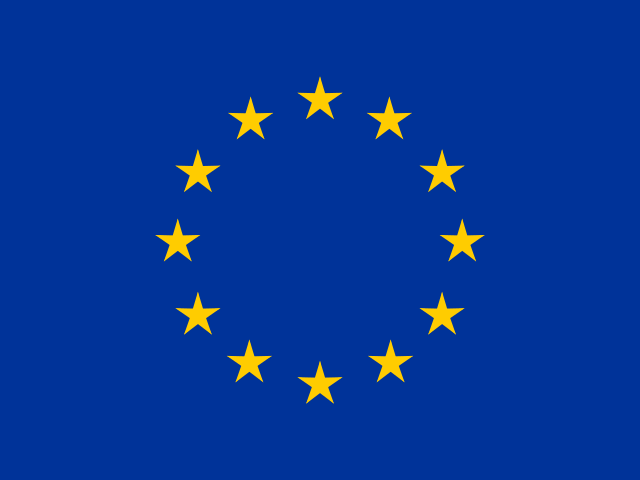
How many stars are on the flag of the European Union?
Answer12, whatever the number of members
The circle of twelve gold stars stands for unity and harmony. The Council of Europe adopted the flag in 1955, and the European communities in 1985.
Source: european-union.europa.eu, The European flag
- 50.
Which music is the anthem of the European Union?
AnswerOde to Joy, from Beethoven's Ninth Symphony
The Council of Europe adopted it in 1972 and EU leaders in 1985. The anthem has no official words.
Source: european-union.europa.eu, The European anthem
European Parliament elections
- 51.
In which year were the first direct elections to the European Parliament held?
Answer1979
Before June 1979, members were chosen by national parliaments from among their own members. Elections have been held every five years since.
Source: Act concerning the election of the representatives of the Assembly by direct universal suffrage (1976)
- 52.
How many MEPs were elected in the 2024 European elections?
Answer720
Seats rose from 705 to 720 for the 2024 to 2029 term. The Treaties cap the Parliament at 750 members plus its President.
Source: Treaty on European Union, Article 14(2); European Council Decision (EU) 2023/2061
- 53.
Under the Treaties, what are the fewest and the most seats a member state can have in the Parliament?
Answer6 and 96
The smallest states, such as Malta and Luxembourg, have six. In between, seats follow degressive proportionality: bigger countries have more MEPs, but each MEP represents more people.
Source: Treaty on European Union, Article 14(2)
- 54.
Which member state elects the most MEPs?
AnswerGermany
Germany has the Treaty maximum of 96 seats. France is next, with 81 for the 2024 to 2029 term.
Source: European Council Decision (EU) 2023/2061
- 55.
What kind of voting system must every country use for European Parliament elections?
AnswerProportional representation
The 1976 Act, as amended in 2002, requires proportional representation, using lists or the single transferable vote. Countries set other details, such as thresholds and voting age.
Source: Act concerning the election of the members of the European Parliament, Article 1
- 56.
Where does the European Parliament hold its twelve monthly plenary sessions each year?
AnswerStrasbourg
The Treaties fix the seat in Strasbourg. Committees and extra plenary sittings meet in Brussels, and the General Secretariat is in Luxembourg.
Source: Protocol (No 6) on the location of the seats of the institutions
- 57.
In 2024, which of these countries let 16 year olds vote in the European elections?
AnswerAustria
Austria has let 16 year olds vote since 2007. In 2024 Germany, Belgium and Malta did too, and Greece let 17 year olds vote.
Source: European Parliament, 2024 European elections: national rules
- 58.
What is the Spitzenkandidat, or lead candidate, process?
AnswerEuropean parties name a candidate for Commission President before the election
It was first used in 2014. The Treaties only say the European Council must take the election results into account, so it is a political practice, not a legal rule.
Source: Treaty on European Union, Article 17(7)
- 59.
Who elects the President of the European Parliament?
AnswerMEPs, for two and a half years
The President is elected by secret ballot and can be re-elected. They chair plenary sittings and sign the EU budget and laws adopted with the Council.
Source: Treaty on European Union, Article 14(4); European Parliament, Rules of Procedure
Independent quiz, not affiliated with the European Union or any of its institutions. Answers checked against the Treaties and official EU sources.
FAQ
Frequently asked questions
How many countries are in the EU?
Twenty seven, as of October 2026. The United Kingdom left on 31 January 2020, and the most recent country to join was Croatia, on 1 July 2013.
How many EU countries use the euro?
Twenty one, as of October 2026. Bulgaria became the newest member of the euro area on 1 January 2026. Denmark has an opt-out, and the other EU countries outside the euro area are expected to join once they meet the convergence criteria.
What is the difference between the European Council, the Council of the EU and the Council of Europe?
The European Council is the summit of EU heads of state or government and sets priorities. The Council of the EU is where national ministers adopt laws with the Parliament. The Council of Europe is a separate organisation of 46 countries that runs the European Court of Human Rights.
Who wrote these questions?
The PoliticalTests editorial team wrote every question, option and explanation. Nothing is copied from other quiz sites. Each answer cites the Treaty Article, act or official EU page it rests on, so you can check it yourself.
I think an answer is wrong. What can I do?
Tell us on the corrections page with the source. We check every report against the Treaties and official EU sources and fix confirmed errors.
★ You know how the system works ★
Now, where do
you stand?
Facts are one half of civics. The other half is what you believe. The Political Compass Test maps your views on 48 statements in about 6 minutes. Free, neutral, no signup.
More knowledge quizzes
- Citizenship test12/20 to pass
US civics test
Twenty random questions from the official 2025 list, the same pass mark as the real interview, and the answer explained after every question.
128 questions in the bank - Citizenship test15/20 to pass
Canadian citizenship test
Twenty random questions, the real pass mark of 15, and every answer explained with the chapter of Discover Canada it comes from.
80 questions in the bank - Citizenship test18/24 to pass
Life in the UK test
Twenty-four random questions, the real pass mark of 18, and every answer explained with the chapter of the official handbook it comes from.
80 questions in the bank - Citizenship test15/20 to pass
Australian citizenship test
Twenty questions with 5 on Australian values, scored like the real test: 15 right overall and every values question right to pass.
73 questions in the bank - Constitution quiz20 Qs
US Constitution quiz
Twenty questions drawn at random from a bank of 60, each answer explained with the Article, section or amendment it rests on.
60 questions in the bank - Constitution quiz15 Qs

Constitution of India quiz
Fifteen questions drawn at random from a bank of 44, each answer explained with the Article, Schedule or amendment it rests on.
44 questions in the bank - Polity quiz20 Qs
Indian polity quiz
Twenty polity MCQs drawn at random from a bank of 67, each answer explained with the Article, Act or judgment it rests on.
67 questions in the bank - Politics quiz20 Qs
UK politics quiz
Twenty questions on how Westminster works, drawn at random from a bank of 58, each answer explained with the Act, rule or ruling behind it.
58 questions in the bank - Politics quiz20 Qs
US politics quiz
Twenty politics trivia questions drawn at random from a bank of 61, each answer explained with the law, Senate rule, case or official result behind it.
61 questions in the bank - All quizzesPolitical quizzes