Australian citizenship test practice
Twenty questions with 5 on Australian values, scored like the real test: 15 right overall and every values question right to pass.
- 20 questions
- Pass with 15
- 73 in the bank
- Free, no signup
Ready?
20 questions.
5 of the 20 questions are on Australian values, marked as you go. As on the real test, you pass only with all 5 of them right and at least 15 of 20 overall.
Not affiliated with the Department of Home Affairs or the Australian Government. Original practice questions based on Our Common Bond; check immi.homeaffairs.gov.au before your test.
The real test
How the real test works
- Questions
- 20
- Time
- 45
- To pass
- 15
- Values
- 5/5
multiple choice, in English
minutes
of 20, or 75 per cent
values questions right
Most applicants for citizenship by conferral aged 18 to 59 sit the test. It is a computer based test in English with 20 multiple choice questions, and you have 45 minutes. There is no extra fee: the application fee covers it.
To pass you must get at least 15 of the 20 questions right (75 per cent) and all 5 questions on Australian values right. A score of 19 with one values question wrong is a fail. This rule has applied since 15 November 2020.
All test questions are based on the testable section of Our Common Bond: Parts 1 to 4. The booklet is free to download in English and a range of community languages, and Home Affairs also has an official practice test and a podcast.
Every question here is our own, written from facts in Australian Citizenship: Our Common Bond, the official resource booklet. Each answer names the part and page of the booklet it comes from, so you can read more.
A practice round mirrors the real test: 15 questions from Parts 1 to 3 (Australia and its people, democratic beliefs, and government and the law) and 5 from Part 4, Australian values. The bank has 19 values questions, so you meet them all over a few rounds.
Sources, checked 30 October 2026
- Home Affairs, Learn about the citizenship test (format and pass mark)
- Home Affairs, Prepare for the citizenship test
- Home Affairs, Australian Citizenship: Our Common Bond (booklet and podcast)
- Home Affairs, official citizenship practice test
- Home Affairs, Become an Australian citizen
Not affiliated with the Department of Home Affairs or the Australian Government. Original practice questions based on Our Common Bond; check immi.homeaffairs.gov.au before your test.
Question bank
Australian citizenship test questions and answers
All 73 practice questions in the bank, grouped by the four parts of Our Common Bond. The 19 questions in Australian values are the kind that must all be right on the real test.
Show all 73 questions and answersHide the question bank
Australia and its people
- 1.
Who were Australia's first inhabitants?
AnswerAboriginal and Torres Strait Islander peoples
They have the oldest continuous cultures and traditions in the world. Torres Strait Islander people come from the islands between Queensland and Papua New Guinea.
Source: Our Common Bond, Part 1, p. 8
- 2.
When did the First Fleet of 11 convict ships arrive from Great Britain?
Answer26 January 1788
Its arrival began European settlement in the new colony of New South Wales. Australia Day marks the anniversary each year.
Source: Our Common Bond, Part 1, p. 8
- 3.
Who was the first Governor of the colony of New South Wales?
AnswerCaptain Arthur Phillip
Phillip led the colony as more convicts and free settlers arrived. Early free settlers came from Great Britain and Ireland.
Source: Our Common Bond, Part 1, p. 8
- 4.
What began in 1851 in the colonies of New South Wales and Victoria?
AnswerA gold rush
People came from all over the world to seek their fortune. Within 10 years Australia's population had more than doubled.
Source: Our Common Bond, Part 1, p. 8
- 5.
During the gold rush, which group became the first large group of migrants from outside Europe?
AnswerChinese people
Chinese miners and traders arrived in large numbers in the 1850s.
Source: Our Common Bond, Part 1, p. 8
- 6.
What happened on 1 January 1901?
AnswerThe colonies united into a federation called the Commonwealth of Australia
Federation created Australia's national parliament, government and High Court under the new Constitution.
Source: Our Common Bond, Part 1, p. 9
- 7.
After which event were Aboriginal and Torres Strait Islander peoples included in official estimates of the population?
AnswerThe 1967 Referendum
More than 90 per cent of voters said Yes in 1967. Before that, official population counts left them out.
Source: Our Common Bond, Part 1, p. 9
- 8.
What is Australia's national language?
AnswerEnglish
Migrants are encouraged to learn English. More than 100 Aboriginal and Torres Strait Islander languages are also valued.
Source: Our Common Bond, Part 1, p. 9
- 9.
How many states and mainland territories does Australia have?
AnswerSix states and two mainland territories
The states are NSW, Victoria, Queensland, WA, SA and Tasmania. The mainland territories are the ACT and the Northern Territory.
Source: Our Common Bond, Part 1, p. 10
- 10.
What is the capital city of Australia?
AnswerCanberra
Canberra is in the Australian Capital Territory, between Sydney and Melbourne. Parliament House and the High Court are there.
Source: Our Common Bond, Part 1, p. 11
- 11.
What is the capital city of Queensland?
AnswerBrisbane
Queensland is the second largest state. The Great Barrier Reef runs along its eastern coast.
Source: Our Common Bond, Part 1, p. 10
- 12.
What is the capital city of Western Australia?
AnswerPerth
Western Australia is the largest state. Its icons include the Ningaloo Coast, Margaret River and the Kimberley.
Source: Our Common Bond, Part 1, p. 10
- 13.
What is the capital city of Tasmania?
AnswerHobart
Tasmania is the smallest state, separated from the mainland by Bass Strait.
Source: Our Common Bond, Part 1, p. 10
- 14.
What is the capital city of the Northern Territory?
AnswerDarwin
The Northern Territory is tropical in the north and red desert in the south. Its icons include Uluru, Kata Tjuta and Kings Canyon.
Source: Our Common Bond, Part 1, p. 11
- 15.
Which is the largest state?
AnswerWestern Australia
Queensland is the second largest. Victoria is the smallest mainland state and Tasmania the smallest state.
Source: Our Common Bond, Part 1, p. 11
- 16.
Which is the smallest mainland state?
AnswerVictoria
Victoria's capital is Melbourne. Much of its fine architecture was built from gold rush wealth.
Source: Our Common Bond, Part 1, p. 11
- 17.
Who performs a Welcome to Country?
AnswerAn Aboriginal or Torres Strait Islander custodian of the local area
A Welcome to Country is usually the first item at an event. Anyone can give an Acknowledgement of Country, which is a different practice.
Source: Our Common Bond, Part 1, p. 12
- 18.
On what date is Anzac Day commemorated each year?
Answer25 April
It is named after the Australian and New Zealand Army Corps, which landed at Gallipoli in Türkiye on 25 April 1915.
Source: Our Common Bond, Part 1, p. 13
- 19.
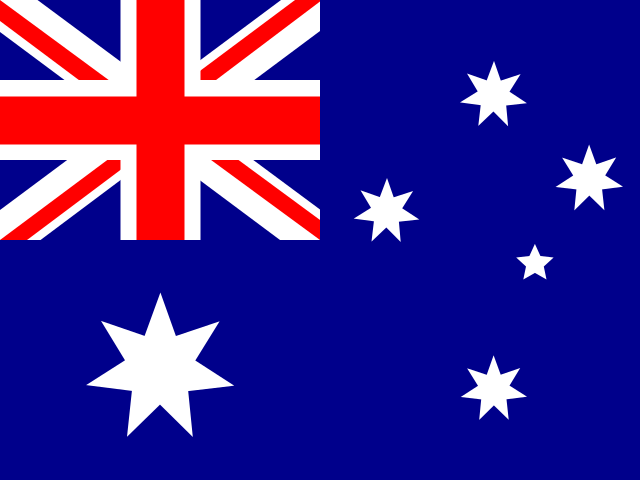
What does the seven pointed Commonwealth Star on the Australian National Flag stand for?
AnswerThe six states, with one point for the territories
The flag is blue, white and red. The Union Jack recalls British settlement and the Southern Cross is a group of stars seen in the southern sky.
Source: Our Common Bond, Part 1, p. 14
- 20.
What are the colours of the Australian Aboriginal Flag?
AnswerBlack, red and yellow
The black half stands for the Aboriginal peoples, the red half for the earth and the yellow circle for the sun.
Source: Our Common Bond, Part 1, p. 14
- 21.
On the Torres Strait Islander Flag, what do the green stripes represent?
AnswerThe land
The blue centre panel is the sea and the black lines are the people. The white dancer's headdress is a symbol for all Torres Strait Islanders.
Source: Our Common Bond, Part 1, p. 14
- 22.
Which two native animals support the shield on the Commonwealth Coat of Arms?
AnswerA kangaroo and an emu
The shield stands for the six states and federation. A gold Commonwealth Star sits above it, with golden wattle behind.
Source: Our Common Bond, Part 1, p. 15
- 23.
What is Australia's national flower?
AnswerThe golden wattle
Golden wattle flowers in spring. Its green and gold are Australia's national colours.
Source: Our Common Bond, Part 1, p. 15
- 24.
What is Australia's national gemstone?
AnswerThe opal
In an Aboriginal legend, a rainbow touched the earth and created the opal's colours.
Source: Our Common Bond, Part 1, p. 15
- 25.
What is the name of Australia's national anthem?
AnswerAdvance Australia Fair
It is sung at citizenship ceremonies, at major sporting events and on other occasions of national importance.
Source: Our Common Bond, Part 1, p. 16
Democratic beliefs, rights and liberties
- 26.
In Australia's parliamentary democracy, where does the government's power come from?
AnswerThe Australian people, who elect representatives
Representatives must answer to the people, through elections, for the decisions they make.
Source: Our Common Bond, Part 2, p. 18
- 27.
Which of these is a responsibility of Australian citizens?
AnswerServing on a jury if called
Citizens must also obey the law, vote in federal and state or territory elections and referendums, and defend Australia should the need arise.
Source: Our Common Bond, Part 2, p. 20
- 28.
Which of these is a privilege of Australian citizenship?
AnswerApplying for an Australian passport
Other privileges include voting, seeking election to parliament, consular help overseas and a job in the Australian Public Service or Defence Force.
Source: Our Common Bond, Part 2, p. 20
- 29.
Is voting compulsory in federal and state or territory elections?
AnswerYes, for citizens aged 18 or over
Voting may not be compulsory in local government elections in some states.
Source: Our Common Bond, Part 2, p. 21
- 30.
What is a referendum?
AnswerA vote to change the Australian Constitution
Voting in a referendum is compulsory for citizens aged 18 or over.
Source: Our Common Bond, Part 2, p. 21
- 31.
Who can seek election to the Australian Parliament?
AnswerAustralian citizens aged 18 or over who are not dual citizens
The same applies to state and territory parliaments. Serving in parliament is described as an honour and a serious responsibility.
Source: Our Common Bond, Part 2, p. 22
- 32.
Does Australia have an official national religion?
AnswerNo, and the government is secular
People are free to follow any religion, or none. Where a religious practice conflicts with Australian law, the law prevails.
Source: Our Common Bond, Part 2, p. 19
- 33.
What does a jury do?
AnswerListens to the evidence in a court case and decides if a person is guilty or not guilty
A jury is a group of ordinary citizens on the electoral roll. Jury service helps keep the courts open and fair.
Source: Our Common Bond, Part 2, p. 21
- 34.
Which organisation collects income tax in Australia?
AnswerThe Australian Taxation Office (ATO)
Taxes pay for services such as healthcare, education, defence, roads and social security.
Source: Our Common Bond, Part 2, p. 22
Government and the law
- 35.
Which body runs federal elections and referendums?
AnswerThe Australian Electoral Commission (AEC)
The AEC is independent of the government. It also keeps the Commonwealth electoral roll.
Source: Our Common Bond, Part 3, p. 24
- 36.
In Australian elections, who is allowed to know whom you voted for?
AnswerNo one, unless you choose to tell them
Voting is by secret ballot, so you are free and safe to vote for any candidate.
Source: Our Common Bond, Part 3, p. 24
- 37.
What is the name of the legal document that sets out the basic rules for the government of Australia?
AnswerThe Australian Constitution
It was passed as part of a British Act of Parliament in 1900 and came into effect on 1 January 1901.
Source: Our Common Bond, Part 3, p. 25
- 38.
What is needed for a referendum to change the Constitution?
AnswerA double majority: a national majority and a majority of voters in a majority of states
In 1967 more than 90 per cent of Australians voted Yes to count Aboriginal peoples in the Census.
Source: Our Common Bond, Part 3, p. 25
- 39.
The Constitution divides the power of government into which three parts?
AnswerLegislative, executive and judicial
Parliament makes the laws, the executive puts them into practice and judges interpret and apply them. This stops one person or group holding all the power.
Source: Our Common Bond, Part 3, p. 26
- 40.
As of October 2026, who is Australia's Head of State?
AnswerThe King of Australia, His Majesty King Charles III
Can change: correct as of 30 October 2026
Australia is a constitutional monarchy. The King has no day to day role in government and his powers are delegated to the Governor-General.
Source: Our Common Bond, Part 3, p. 26
- 41.
Who appoints the Governor-General?
AnswerThe King, on the advice of the Prime Minister
The Governor-General represents the King in Australia and acts independently of all political parties.
Source: Our Common Bond, Part 3, p. 26
- 42.
What is Royal Assent?
AnswerThe Governor-General signing a Bill passed by Parliament into law
The Governor-General also performs ceremonial duties, starts the process for federal elections and is Commander-in-Chief of the Defence Force.
Source: Our Common Bond, Part 3, p. 27
- 43.
Who is the leader of a state government?
AnswerThe Premier
The leader of a territory government is the Chief Minister. A state Governor represents the King.
Source: Our Common Bond, Part 3, p. 28
- 44.
What is another name for the House of Representatives?
AnswerThe People's House
It is also called the Lower House. Members of Parliament represent the voters of their federal electorate.
Source: Our Common Bond, Part 3, p. 28
- 45.
How many senators does each state elect?
Answer12
There are 76 senators: 12 from each of the six states and 2 each from the ACT and the Northern Territory.
Source: Our Common Bond, Part 3, p. 28
- 46.
In the Northern Territory, who has a role like that of a state Governor?
AnswerThe Administrator, appointed by the Governor-General
States have rights recognised by the Constitution. Territory laws can be changed by the Australian Government.
Source: Our Common Bond, Part 3, p. 28
- 47.
Which level of government is mainly responsible for hospitals and schools?
AnswerState and territory governments
States and territories also run police, public transport, and roads and railways. The Australian Government handles defence, immigration and foreign affairs.
Source: Our Common Bond, Part 3, p. 29
- 48.
Which level of government is responsible for rubbish collection and local libraries?
AnswerLocal government
Local councils also look after local roads, parks, building permits and animal control.
Source: Our Common Bond, Part 3, p. 29
- 49.
Which level of government is responsible for defence and immigration?
AnswerThe Australian Government
The Australian Government is also responsible for taxation, foreign affairs, trade and social security.
Source: Our Common Bond, Part 3, p. 29
- 50.
After a federal election, which party or coalition generally forms the government?
AnswerThe one with the majority of members in the House of Representatives
Its leader becomes Prime Minister. The party or coalition with the second largest number of members forms the Opposition.
Source: Our Common Bond, Part 3, p. 30
- 51.
What is a proposal for a new law or a change to a law called?
AnswerA Bill
If a majority in each House agrees, the Bill goes to the Governor-General for Royal Assent.
Source: Our Common Bond, Part 3, p. 30
- 52.
Which police force investigates crimes against federal laws, such as drug trafficking?
AnswerThe Australian Federal Police (AFP)
The AFP also does general police work in the ACT. The states and the Northern Territory have their own police forces.
Source: Our Common Bond, Part 3, p. 31
- 53.
In Australia, is it a crime to offer a bribe to a police officer?
AnswerYes, even offering a bribe is a crime
Police are independent of the government and keep peace and order. The courts, not the police, decide whether someone is guilty.
Source: Our Common Bond, Part 3, p. 31
- 54.
Is using a hand held mobile phone while driving allowed?
AnswerNo, it is against the law
Traffic laws are set by states and territories and are strict. Everyone in a car must wear a seatbelt.
Source: Our Common Bond, Part 3, p. 32
Australian values
- 55.
Under the Rule of Law in Australia, who is above the law?
AnswerNo one
Values question
All Australians are equal in relation to the law. You should follow the law even when no one is watching.
Source: Our Common Bond, Part 4, p. 34
- 56.
What legal status do religious laws have in Australia?
AnswerNone: Australian law must be followed by everyone
Values question
Religious practices must not break Australian law, even where it differs from religious law.
Source: Our Common Bond, Part 4, p. 35
- 57.
Is it legal in Australia to be married to more than one person at the same time?
AnswerNo, polygamy is against the law
Values question
Polygamy and forced marriage are against the law and can lead to severe penalties, including imprisonment.
Source: Our Common Bond, Part 4, p. 35
- 58.
Can Australians protest against the actions of the government?
AnswerYes, peacefully and within the law
Values question
Tolerating peaceful public protest is an essential part of democracy. Protests must not injure anyone or damage property.
Source: Our Common Bond, Part 4, p. 35
- 59.
Under freedom of association, can a person be forced to join a group such as a trade union?
AnswerNo, people are free to join or leave any legal group
Values question
People can join any legal organisation, such as a political party, trade union, religious, cultural or social group.
Source: Our Common Bond, Part 4, p. 35
- 60.
Is it acceptable to promote violence against a group because of its religion or culture?
AnswerNo, it is against Australian values and the law
Values question
Freedom of speech must stay within the law. Other people's lawful freedom of expression must also be respected.
Source: Our Common Bond, Part 4, p. 35
- 61.
Under Australian law, can two men or two women marry each other?
AnswerYes
Values question
Australian law values equal rights for all people, regardless of gender, sexual orientation, age, disability, religion, race or origin.
Source: Our Common Bond, Part 4, p. 36
- 62.
Who may apply to the courts for a divorce in Australia?
AnswerEither the husband or the wife, even if the other wishes to stay married
Values question
Men and women have the right to make their own choices on personal matters such as marriage and religion.
Source: Our Common Bond, Part 4, p. 36
- 63.
Is physical violence against a spouse or partner ever acceptable in Australia?
AnswerNo, it is never acceptable and is a criminal offence
Values question
Men and women are protected by the law from intimidation and violence.
Source: Our Common Bond, Part 4, p. 36
- 64.
What does a fair go mean in Australia?
AnswerWhat someone achieves should come from their hard work and talents
Values question
People should not be limited by class distinctions, and everyone is given an equal opportunity to succeed.
Source: Our Common Bond, Part 4, p. 36
- 65.
When an organisation fills a job, who does the law support it to choose?
AnswerThe person with the best skills and experience
Values question
A job should be given on skills and experience, not because of gender, wealth or ethnicity. A woman may get a job ahead of a man if she is better qualified.
Source: Our Common Bond, Part 4, p. 36
- 66.
What is the age of sexual consent in Australia?
Answer16 or 17, depending on the state or territory
Values question
The laws on the age of consent are very strict and apply to everyone in Australia.
Source: Our Common Bond, Part 4, p. 37
- 67.
Is it acceptable to share racially offensive material on the internet in Australia?
AnswerNo, racism has no place in Australia
Values question
This also covers racially abusive comments in a public place or at a sporting event.
Source: Our Common Bond, Part 4, p. 37
- 68.
What does mutual respect and tolerance mean?
AnswerListening to others and respecting their views, even when you disagree
Values question
Australians believe in peaceful disagreement and the right to be safe and free from violence and intimidation.
Source: Our Common Bond, Part 4, p. 37
- 69.
Should you obey a lawful request from the police?
AnswerYes, all Australians commit to following the law
Values question
The lawful actions of the police should be supported in Australia.
Source: Our Common Bond, Part 4, p. 37
- 70.
What does mateship mean?
AnswerHelping each other in times of need
Values question
For example, taking a meal to an elderly neighbour or visiting someone who is sick or lonely. Australia has a strong tradition of volunteering.
Source: Our Common Bond, Part 4, p. 38
- 71.
What should people living in Australia do about learning English?
AnswerMake an effort to learn it, as the national language
Values question
English helps people get an education and a job and take part in the community. Citizenship applicants must make reasonable efforts to learn it.
Source: Our Common Bond, Part 4, p. 38
- 72.
If you suspect someone may be planning a serious crime, what should you do?
AnswerReport it to Australian government authorities as soon as possible
Values question
We each have responsibilities to help keep Australian society safe. If you know of a child being abused, report it to the police.
Source: Our Common Bond, Part 4, p. 38
- 73.
An Australian who is also a citizen of another country is in Australia. Which laws must they follow?
AnswerAll Australian laws, at all times
Values question
Dual citizenship is allowed if the other country permits it, but loyalty to Australia and its laws comes with Australian citizenship.
Source: Our Common Bond, Part 4, p. 38
Not affiliated with the Department of Home Affairs or the Australian Government. Original practice questions based on Our Common Bond; check immi.homeaffairs.gov.au before your test.
FAQ
Frequently asked questions
How many questions are on the Australian citizenship test?
Twenty multiple choice questions, 5 of them on Australian values. You have 45 minutes. To pass you need at least 15 correct overall (75 per cent) and all 5 values questions correct.
What happens if I get a values question wrong?
You fail that test, even if your overall score is 75 per cent or more. All 5 values questions must be right. This practice test uses the same rule, so a round with a values question wrong shows as not yet passed.
What should I study for the Australian citizenship test?
The testable section of Australian Citizenship: Our Common Bond, Parts 1 to 4. Home Affairs says the booklet is all you need, and it does not endorse paid courses or apps. The booklet, podcast and an official practice test are free on the Home Affairs website.
Who has to sit the citizenship test?
Most applicants for citizenship by conferral aged 18 to 59. Some applicants, such as those aged 60 or over or with certain impairments, have an interview instead. Home Affairs tells you which applies when it contacts you.
Can I take the test in another language?
No. The test is in English only. Our Common Bond is available in many community languages to help you study, and text to speech is available during the test.
Are these the real test questions?
No. We wrote these questions ourselves from facts in Our Common Bond, and each one gives the part and page it comes from. PoliticalTests is not affiliated with the Department of Home Affairs or the Australian Government.
★ You know how the system works ★
Now, where do
you stand?
Facts are one half of civics. The other half is what you believe. The Political Compass Test maps your views on 48 statements in about 6 minutes. Free, neutral, no signup.
More knowledge quizzes
- Citizenship test12/20 to pass
US civics test
Twenty random questions from the official 2025 list, the same pass mark as the real interview, and the answer explained after every question.
128 questions in the bank - Citizenship test15/20 to pass
Canadian citizenship test
Twenty random questions, the real pass mark of 15, and every answer explained with the chapter of Discover Canada it comes from.
80 questions in the bank - Citizenship test18/24 to pass
Life in the UK test
Twenty-four random questions, the real pass mark of 18, and every answer explained with the chapter of the official handbook it comes from.
80 questions in the bank - Constitution quiz20 Qs
US Constitution quiz
Twenty questions drawn at random from a bank of 60, each answer explained with the Article, section or amendment it rests on.
60 questions in the bank - Constitution quiz15 Qs
Constitution of India quiz
Fifteen questions drawn at random from a bank of 44, each answer explained with the Article, Schedule or amendment it rests on.
44 questions in the bank - Polity quiz20 Qs
Indian polity quiz
Twenty polity MCQs drawn at random from a bank of 67, each answer explained with the Article, Act or judgment it rests on.
67 questions in the bank - Politics quiz20 Qs
UK politics quiz
Twenty questions on how Westminster works, drawn at random from a bank of 58, each answer explained with the Act, rule or ruling behind it.
58 questions in the bank - Politics quiz20 Qs
US politics quiz
Twenty politics trivia questions drawn at random from a bank of 61, each answer explained with the law, Senate rule, case or official result behind it.
61 questions in the bank - Politics quiz20 Qs

EU quiz
Twenty questions on the European Union drawn at random from a bank of 59, each answer explained with the Treaty Article or official source behind it.
59 questions in the bank - All quizzesPolitical quizzes