 United States
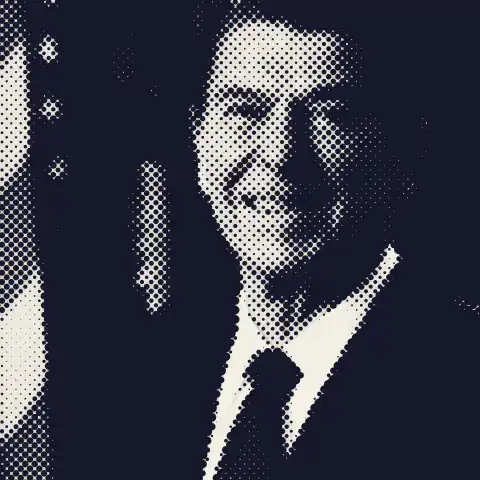
Who was Ronald Reagan?
Ronald Reagan (1911-2004) was a film actor and president of the Screen Actors Guild who moved from the Democratic to the Republican Party and became a leading conservative voice with his 1964 televised speech for Barry Goldwater. He served two terms as governor of California and won the presidency in 1980 and again in 1984 by large margins. His agenda centered on lower taxes, reduced domestic spending, deregulation, a military buildup and firm opposition to Soviet communism, followed in his second term by arms-control agreements with Mikhail Gorbachev.
Political views
Cut income taxes repeatedly; the top marginal rate fell from 70 percent when he took office to 28 percent when he left.
Source: millercenter.orgPromised to curb the growth of federal regulation, though Miller Center historians describe his deregulation record as mixed.
Source: millercenter.orgConfronted the 1981 strike by the Professional Air Traffic Controllers Organization, which had called an illegal walkout.
Source: millercenter.orgEndorsed a conservative social agenda that opposed abortion rights and favored prayer in public schools.
Source: millercenter.orgPresided over large increases in military spending and launched the Strategic Defense Initiative, a proposed missile-defense system.
Source: millercenter.orgBacked anticommunist insurgencies abroad under the Reagan Doctrine and ordered the 1983 intervention in Grenada.
Source: millercenter.orgNegotiated the 1987 Intermediate Nuclear Forces Treaty with Soviet leader Mikhail Gorbachev.
Source: millercenter.org
Legacy
Admirers credit Reagan with restoring economic growth after the inflation of the 1970s, reviving national confidence and contributing to the peaceful end of the Cold War, and he remains a central reference point for American conservatives. Critics argue that his tax cuts and defense spending produced large federal deficits, that his policies widened income inequality and that his administration responded slowly to the AIDS epidemic. The Iran-Contra affair, in which arms were sold to Iran and proceeds diverted to Nicaraguan rebels, drew bipartisan criticism. Scholars still debate how much his policies, as opposed to internal Soviet changes, shaped the Cold War's end.
In their words
In this present crisis, government is not the solution to our problem; government is the problem.