 United States
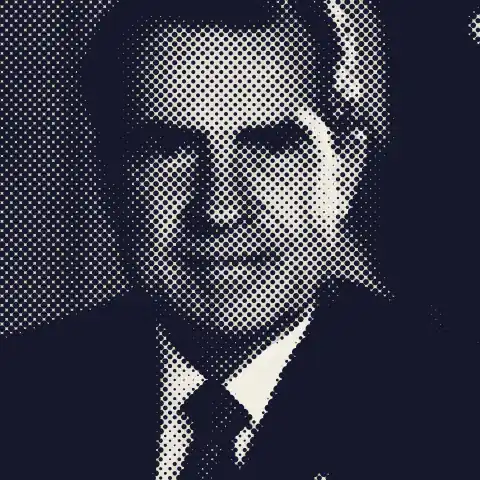
Who was Richard Nixon?
Richard Nixon (1913-1994), a California Republican, rose to national prominence as an anticommunist congressman, served as a senator and as Dwight Eisenhower's vice president, and lost the 1960 presidential race to John F. Kennedy. He won the presidency in 1968 and a landslide re-election in 1972. In office he combined appeals to a 'silent majority' and to law and order with a pragmatic domestic agenda that expanded federal environmental and workplace regulation. His foreign policy, developed with Henry Kissinger, sought to ease Cold War tensions. The Watergate scandal led to his resignation in August 1974.
Political views
Signed the law creating the Occupational Safety and Health Administration and proposed the Environmental Protection Agency in 1970.
Source: millercenter.orgSigned Clean Air Act amendments requiring reductions in automobile emissions and national air-quality testing.
Source: millercenter.orgAnnounced a wage-and-price freeze and temporarily closed the gold window in 1971 to address inflation and pressure on the dollar.
Source: millercenter.orgProposed a Family Assistance Plan to overhaul welfare and give recipients incentives to work, which Congress did not pass.
Source: millercenter.orgPursued Vietnamization, shifting combat responsibility to South Vietnamese forces while secretly bombing supply lines in Cambodia.
Source: millercenter.orgSought improved relations with the Soviet Union and established relations with the People's Republic of China.
Source: millercenter.org
Legacy
Admirers point to the opening to China, arms control with the Soviet Union, the end of U.S. ground combat in Vietnam and domestic measures such as the EPA, and some scholars describe his domestic record as more moderate than his rhetoric. Critics emphasize the Watergate cover-up, the secret expansion of the war into Cambodia, opposition to Chile's elected government and campaign strategies they say exploited racial and cultural divisions. Facing likely impeachment, he resigned in 1974 and was pardoned by Gerald Ford. In later life he wrote on foreign policy and partly restored his standing.
In their words
North Vietnam cannot defeat or humiliate the United States. Only Americans can do that.