 United Kingdom
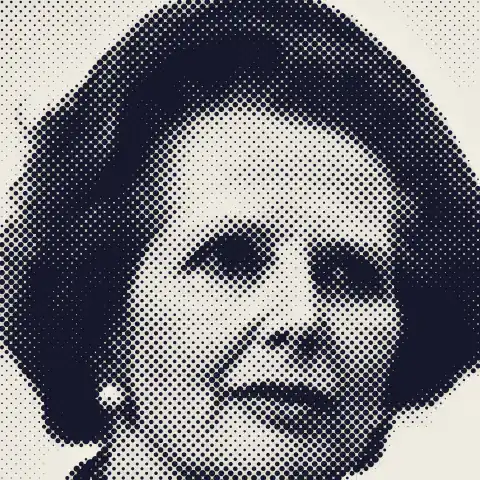
Who was Margaret Thatcher?
Margaret Thatcher was born in Grantham in 1925, the daughter of a shopkeeper and local mayor. She studied chemistry at Oxford, trained as a barrister and was elected MP for Finchley in 1959. She served as Education Secretary under Edward Heath and defeated him for the party leadership in 1975. She became Prime Minister in 1979, won further elections in 1983 and 1987, and led Britain during the 1982 Falklands War. She resigned in November 1990 after a leadership challenge and later sat in the House of Lords. Her early years in office saw very high unemployment before the economy recovered, and her government faced a year-long miners' strike in 1984-1985. She died in London in 2013.
Political views
Pursued a programme of privatisation, deregulation, tax cuts and trade union reform aimed at reducing the role of government.
Source: gov.ukIntroduced market mechanisms into health and education services.
Source: gov.ukThe Housing Act 1980 gave council tenants the right to buy their homes.
Source: gov.ukLed the country in the 1982 conflict with Argentina over the Falkland Islands.
Source: gov.ukBuilt a close partnership with US President Ronald Reagan during the Cold War.
Source: gov.ukRejected proposals to give the European Parliament and Commission greater powers and opposed a single currency.
Source: api.parliament.uk
Legacy
Supporters credit Thatcher with reversing economic decline, curbing inflation and union power, widening home and share ownership and helping to end the Cold War. Critics hold her policies responsible for high unemployment in the early 1980s, deindustrialisation in parts of Scotland, Wales and northern England, rising inequality and the unpopular community charge. Her approach became known as Thatcherism and continues to divide opinion. Her disagreements with colleagues over Europe contributed to her resignation in 1990. Later governments, including Labour governments, kept much of her economic framework, such as privatised utilities and trade union law, which supporters cite as evidence of a lasting shift.
In their words
he wanted the European Parliament to be the democratic body of the Community, he wanted the Commission to be the Executive and he wanted the Council of Ministers to be the Senate. No. No. No.