
PoliticalTests
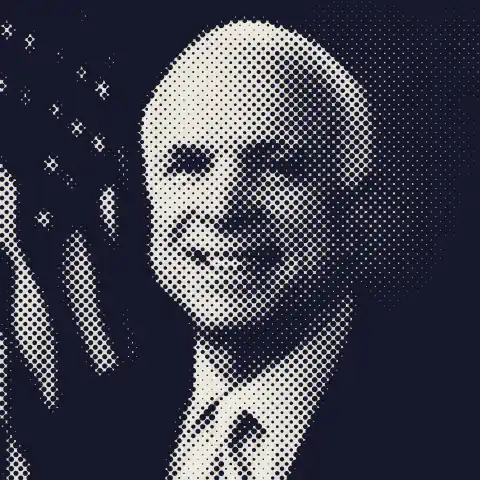
Portrait of John McCain
1936-2018United States

Portrait: United States Congress, Public domain, via Wikimedia Commons

John McCain

U.S. Senator from Arizona (1987-2018) · U.S. Representative from Arizona (1983-1987) · Republican presidential nominee (2008) · U.S. Navy aviator and prisoner of war in Vietnam (1967-1973)

Navy pilot and Vietnam prisoner of war who became a six-term Arizona senator, a defense hawk and the Republican presidential nominee in 2008.

ECONOMYSTATE AND LIBERTYSOCIETYWORLDOwnershipMarketsWelfareAuthoritySecurityStructureMoralityReligionTechnologyCultureTradeForeign
  • Position
  • Solid, past the ring: second pole
  • Short, inside the ring: first pole
  • Balanced

★ John McCain on 12 axes

Share of each pole

Economy

Equality / Markets
  • OwnershipModerate: Private
    PublicPrivate
  • MarketsModerate: Free
    PlannedFree
  • WelfareModerate: Self-reliant
    SharedSelf-reliant

State and liberty

Liberty / Authority
  • AuthorityModerate: Democratic
    DemocraticStrong leader
  • SecurityMild: Order
    LibertyOrder
  • StructureMild: Local
    LocalCentral

Society

Progress / Tradition
  • MoralityModerate: Traditional
    ProgressiveTraditional
  • ReligionMild: Religious
    SecularReligious
  • TechnologyNo clear record
    EmbraceCaution
  • CultureMild: Multicultural
    MulticulturalNational identity

World

Global / Nation
  • TradeModerate: Global
    GlobalProtected
  • Foreign policyStrong: Strength
    CooperationStrength

How we placed it

Judgment calls

Positions summarize typical stances from primary sources and reference works. Where an axis is genuinely contested, the reasoning is below.

Markets
Called for low taxes and fiscal discipline but co-sponsored a cap-and-trade climate bill and campaign finance regulation, so he sits short of the free-market pole.
Authority
Championed limits on money in politics and a statutory ban on abusive interrogations, both read as support for checks on power.
Security
Supported the Iraq war and a strong military, but opposed torture and indefinite detention without trial at Guantanamo; the tendencies partly offset.
Technology
No documented view on regulating new technologies in the sources consulted.
Culture
Backed comprehensive immigration reform with paths to legal status in 2006, 2007 and 2013, the main basis for a score toward the open pole.

One axis is marked as no clear record: there is no reasonable basis to place John McCain there, so matching leaves it out.

Who was John McCain?

John McCain (1936-2018) was born in the Panama Canal Zone into a Navy family and graduated from the U.S. Naval Academy in 1958. Shot down over Hanoi in 1967, he spent about five and a half years as a prisoner of war, was tortured and refused an early release. He served two terms in the House and from 1987 until his death six terms in the Senate, where he chaired the Commerce and Armed Services committees. He lost the 2000 Republican nomination to George W. Bush, won it in 2008 and lost the general election to Barack Obama. The press often called him a maverick.

Political views

  • Co-wrote the Bipartisan Campaign Reform Act of 2002 with Democrat Russ Feingold, limiting unregulated soft money in federal campaigns.

    Source: en.wikipedia.org
  • Sponsored the 2005 Detainee Treatment amendment limiting military interrogations to Army Field Manual techniques; the Senate passed it 90-9.

    Source: en.wikipedia.org
  • Supported the 2003 Iraq war and argued in 2007 for the troop surge, opposing deadlines for withdrawal.

    Source: presidency.ucsb.edu
  • Worked with Ted Kennedy and later the 'Gang of Eight' on comprehensive immigration reform combining border enforcement with legal status for many undocumented immigrants.

    Source: en.wikipedia.org
  • Co-sponsored the 2003 Climate Stewardship Act with Joe Lieberman, a cap-and-trade proposal that failed 55-43.

    Source: en.wikipedia.org
  • Voted against the Bush tax cuts in 2001 as one of two Senate Republicans, but later supported extending them.

    Source: en.wikipedia.org
  • Opposed the Affordable Care Act, yet in July 2017 cast the deciding vote against a partial repeal that failed 49-51.

    Source: en.wikipedia.org

Legacy

Admirers across party lines remember McCain for his conduct as a prisoner of war, his campaign finance and anti-torture laws and his willingness to break with his party; he shared the 1999 Profile in Courage Award and received a posthumous Presidential Medal of Freedom in 2022. Critics on the left faulted his early support for the Iraq war and his calls for intervention in Libya and Syria, while some conservatives objected to his immigration and climate positions. The Senate Ethics Committee rebuked him for 'poor judgment' in the Keating Five savings-and-loan affair, and his choice of Sarah Palin as running mate in 2008 drew criticism.

In their words

For my part, I would rather lose a campaign than a war.
Speech on Iraq at the Virginia Military Institute, Lexington, 2007

★ 12 Axes Political Test ★

How close are you to John McCain?

Answer plain statements on 12 axes and see your match with John McCain and every other profile on the site, axis by axis.

FAQ

John McCain: questions

Why was John McCain called a maverick?

The press used the label for his breaks with Republican leaders, including campaign finance reform, his 2001 vote against the Bush tax cuts, immigration reform and his 2017 vote against repealing parts of the Affordable Care Act.

Was John McCain a prisoner of war?

Yes. He was shot down over Hanoi in October 1967 and held for about five and a half years until March 1973. He was tortured and refused an early release that would have broken the military Code of Conduct.

Who beat John McCain in 2008?

Barack Obama defeated him, winning 365 electoral votes to McCain's 173 and about 53 percent of the popular vote to McCain's 46 percent.