PoliticalTests
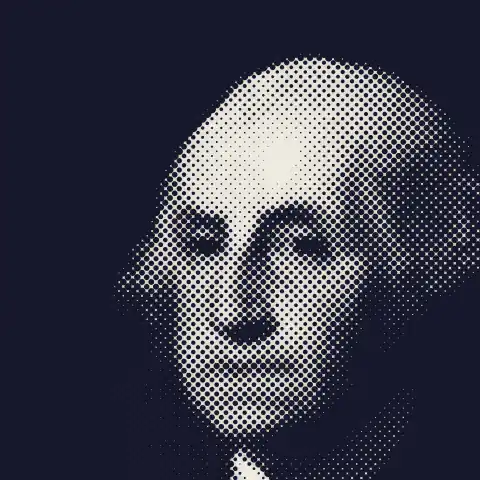
Portrait of George Washington
1732-1799United States

Portrait: Gilbert Stuart, Public domain, via Wikimedia Commons

George Washington

1st President of the United States · Commander in Chief of the Continental Army · President of the Constitutional Convention · Virginia planter

Virginia planter, Continental Army commander and first U.S. president who backed a stronger national government, presidential neutrality abroad and the precedent of leaving office after two terms.

ECONOMYSTATE AND LIBERTYSOCIETYWORLDOwnershipMarketsWelfareAuthoritySecurityStructureMoralityReligionTechnologyCultureTradeForeign
  • Position
  • Solid, past the ring: second pole
  • Short, inside the ring: first pole
  • Balanced

★ George Washington on 12 axes

Share of each pole

Economy

Equality / Markets
  • OwnershipModerate: Private
    PublicPrivate
  • MarketsMild: Free
    PlannedFree
  • WelfareModerate: Self-reliant
    SharedSelf-reliant

State and liberty

Liberty / Authority
  • AuthorityMild: Democratic
    DemocraticStrong leader
  • SecurityMild: Order
    LibertyOrder
  • StructureModerate: Central
    LocalCentral

Society

Progress / Tradition
  • MoralityModerate: Traditional
    ProgressiveTraditional
  • ReligionMild: Religious
    SecularReligious
  • TechnologyNo clear record
    EmbraceCaution
  • CultureNo clear record
    MulticulturalNational identity

World

Global / Nation
  • TradeMild: Protected
    GlobalProtected
  • Foreign policyModerate: Strength
    CooperationStrength

How we placed it

Judgment calls

Positions summarize typical stances from primary sources and reference works. Where an axis is genuinely contested, the reasoning is below.

Welfare
No modern welfare state existed; the score reflects his era's limited, locally run poor relief and his support for a small federal government.
Authority
He backed a stronger executive than the Articles allowed, yet set limits by stepping down after two terms.
Technology
No documented view; 18th-century context.
Culture
No sustained, documented position on immigration or cultural pluralism; left null.
Foreign policy
Scored toward sovereignty for his neutrality policy and warning against permanent alliances, not for militarism.

2 axes are marked as no clear record: there is no reasonable basis to place George Washington there, so matching leaves them out.

Who was George Washington?

George Washington led the Continental Army through the American Revolutionary War, presided over the 1787 Constitutional Convention and served as the first President of the United States from 1789 to 1797. He set many precedents for the office, including the cabinet and the two-term tradition. Politically he sided with those who wanted a stronger national government than the Articles of Confederation provided, and in office he often supported the financial program of his Treasury Secretary, Alexander Hamilton. He was also a large landowner who held hundreds of people in slavery.

Political views

Legacy

Washington is widely regarded in the United States as the central figure of the founding era. Admirers point to his refusal to seek greater power, his voluntary retirement and his role in holding the new union together, and he is often ranked among the most influential presidents. Critics and historians also stress that he owned hundreds of enslaved people and that his wealth, produced by slavery, made his public career possible. The Miller Center calls his ownership of enslaved people the most challenging part of his legacy. His views on slavery evolved, and his will provided for the freeing of the people he owned after his wife's death. Jeffersonian opponents in the 1790s accused his administration of favoring commercial and creditor interests, and debates over his Federalist-leaning policies shaped the first party system.

In their words

It is our true policy to steer clear of permanent alliances with any portion of the foreign world.
Farewell Address, 1796
Of all the dispositions and habits which lead to political prosperity, religion and morality are indispensable supports.
Farewell Address, 1796

★ 12 Axes Political Test ★

How close are you to George Washington?

Answer plain statements on 12 axes and see your match with George Washington and every other profile on the site, axis by axis.

FAQ

George Washington: questions

What political party was George Washington?

Washington did not belong to a political party and warned against the spirit of party in his Farewell Address. In practice his administration often aligned with the Federalist positions of Alexander Hamilton.

What were George Washington's main political beliefs?

He favored a stronger national government than the Articles of Confederation, sound public credit and neutrality in European wars. He also saw religion and morality as supports of republican government.

Did George Washington own slaves?

Yes. He held hundreds of enslaved people at Mount Vernon over his lifetime. His will provided for the freeing of the people he owned after his wife's death.