 Germany
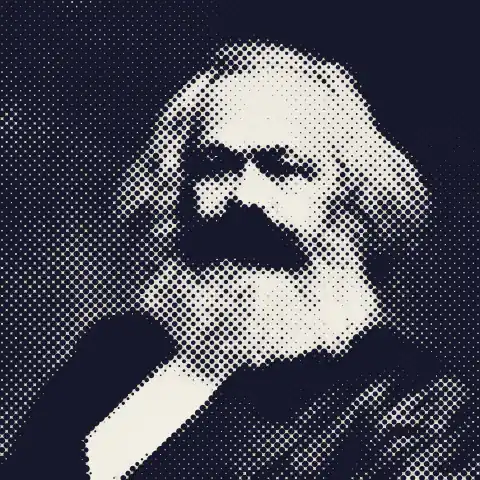
Who was Karl Marx?
Karl Marx was born in Trier, in the Prussian Rhineland, and studied law and philosophy in Bonn and Berlin, where he was shaped by Hegel's philosophy. After working as a radical journalist he was expelled from Germany, France and Belgium and settled in London in 1849, where he lived until his death. With Friedrich Engels he wrote The Communist Manifesto (1848), and his main economic work, Capital (volume one, 1867), analyzed capitalism as a system based on the extraction of surplus value from wage labor. He was a leading figure in the International Workingmen's Association.
Political views
Argued that history is driven by class struggle and that capitalism would be replaced by a classless communist society.
Source: marxists.orgCalled for the abolition of private property in the means of production, as distinct from personal property.
Source: marxists.orgHeld that wage labor under capitalism is a form of exploitation, because workers produce more value than they are paid.
Source: marxists.orgDescribed a transitional 'dictatorship of the proletariat' and a later stage organized on the principle 'from each according to his ability, to each according to his needs'.
Source: marxists.orgPresented the Paris Commune of 1871, with elected and recallable delegates, as a model of working-class government.
Source: marxists.orgViewed religion as a product of social conditions, calling it 'the opium of the people'.
Source: marxists.orgSupported free trade in 1848 on the grounds that it would sharpen class conflict and hasten revolution.
Source: marxists.org
Legacy
Marx is one of the most influential thinkers of the modern era. Lenin, Mao and other leaders of 20th-century communist states described their governments as Marxist, and scholars still debate how far those one-party regimes reflected his ideas. Social democrats, Western Marxist philosophers, sociologists and historians have drawn on his analysis of class, economic crises and alienation without endorsing revolution. Critics include Karl Popper, who argued that Marxist predictions were unfalsifiable, Ludwig von Mises and Friedrich Hayek, who argued that socialist economies cannot calculate prices efficiently, and conservatives who link his ideas to the repression and famines of communist regimes. Admirers point to his influence on labor rights and the study of inequality.
In their words
The philosophers have only interpreted the world, in various ways; the point is to change it.