
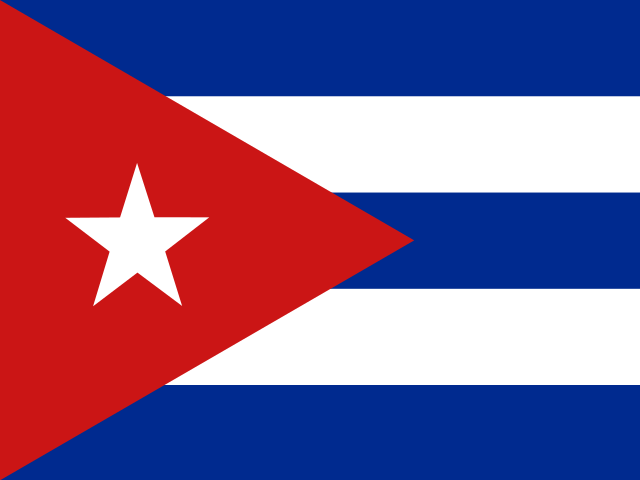
 Cuba
Who was José Martí?
José Julián Martí y Pérez was born in Havana to Spanish immigrant parents. As a teenager he backed the Ten Years' War for independence, was sentenced to hard labor and was then deported to Spain, where he studied law in Madrid and Zaragoza. He lived in Mexico, Guatemala and Venezuela, the last of which he left after his journal angered the government, before settling in New York from 1881, where he wrote for newspapers across Latin America and published poetry such as Versos sencillos (1891). In 1892 he founded the Cuban Revolutionary Party to organize a new war. He landed in Cuba in April 1895 and was killed in combat at Dos Ríos on 19 May 1895.
Political views
Argued that Latin American governments must grow out of each country's own realities rather than copy European or North American models.
Source: es.wikisource.orgRejected racial hierarchy, writing that there is no race hatred because there are no races.
Source: es.wikisource.orgInsisted that the independence war be short and fought with a republican method to forestall a military dictatorship.
Source: guides.loc.govDeclared the war free of hatred toward Spaniards and of racial fear, calling for unity between Black and white Cubans.
Source: es.wikisource.orgAdmired the energy and founders of the United States but denounced its imperialist attitude toward its southern neighbors.
Source: guides.loc.govSaw Cuban independence as a way to prevent the United States from extending over the Antilles and the rest of Latin America.
Source: es.wikisource.orgEnvisioned a multi-class, multiracial democratic republic with universal suffrage and an equitable distribution of land.
Source: en.wikipedia.org
Legacy
Martí is honored in Cuba as 'El Apóstol' and is a national symbol claimed by very different political camps. The Cuban government presents him as the intellectual forerunner of its revolution, while Cuban exiles and opponents of the government honor him as a defender of freedom and democracy. Scholars have read his work in both socialist and liberal terms, noting that he sympathized with workers but criticized Marx. Literary historians count him among the founders of Spanish American modernismo. His verses from Versos sencillos were adapted into the song 'Guantanamera'. Critics of the Cuban state argue that its use of Martí overlooks his sustained hostility to dictatorship, while its defenders stress his anti-imperialism.
In their words
Let the world be grafted onto our republics; but the trunk must be that of our republics.
I lived in the monster, and I know its entrails.